Feb 26, 2012

The N-word in Education

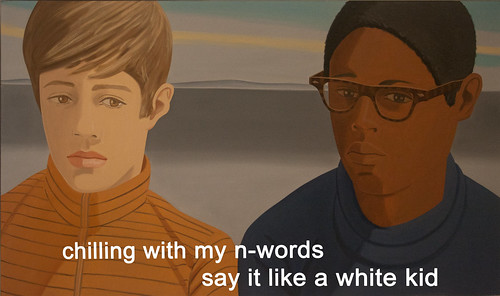
Image credit: Flickr/DJOtaku

A white coach in suburban Chicago posts a derogatory comment about Whitney Houston's death on Facebook and is suspended for a year. He says he didn't know he was writing that word. He says he only shares Facebook with friends and family, but now everyone knows he wrote it. He says that some of his best friends are black.  What did he write that stirred up all this controversy? "I'm so sick of reading about this dumb stupid N----- Whitney Houston."

The parent of a former player saw his comment and spread it around. She wonders if he felt that way about her black son when he played on the team...
-------
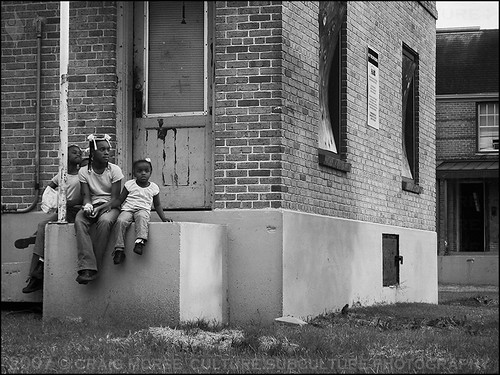
A white teacher gets suspended in a Chicago school when he begins a discussion about the N-word in his class. The teacher, Lincoln Brown, says that he intercepted a note that was being passed in class. The note had rap lyrics written on it that used the N-word and he thought it was a "teachable moment"---a great time to talk about the history of that word and how it relates the book Huckleberry Finn.  While in the midst of this discussion, his principal did a walk-through and deemed the conversation inappropriate. Lincoln Brown was suspended from teaching, and is now suing the principal for violating his 1st and 5th amendment rights.


According to a Sun Times piece, in class Mr. Brown said: “can anyone explain to me why blacks can call each other a n*****, and not get mad, but when whites do it, blacks get angry.” Brown allowed three students to answer the question.


Mr. Brown's students were 6th graders and mostly black. The principal who suspended him is also black.
-------
Both of these stories stirred up a lot of conversation. Comments on each story show that the n-word is still one of the most charged and powerful words in the American English lexicon. An interesting piece by Nick Chiles (a black man)  on My Brown Baby  argues that Mr. Brown shouldn't suspended because he is opening up a much needed discussion on race. If we don't talk about it, how do we progress towards becoming a multiracial / "post racial" society?


In my mind, the first story is about a stereotypical racist--how do you not know that you typed the n-word in your own Facebook status???  Who uses that word by accident and then follows it up with the cliche excuse "some of my best friends are black?"  But the second one...that one really gets me thinking. It makes me think a lot because the question Mr. Brown poses in class about rap music's use of the n-word is one that my own students ask all the time: "Why is it okay for them, but not for us?" I try to explain the idea of "reclaiming a word," the way the feminist movement tries to reclaim the word "bitch" turning it around to make it a positive. But for me, that whole explanation doesn't work...because no matter how many women reclaim the word "bitch", given a certain context it still hurts to hear it applied. The n-word is no different. No matter how many rappers try to reclaim it and make it their own, it still hurts when a white person says it--no matter how well-intentioned that white person may be. I think that's what Mr. Brown needs to realize. No matter what the motivation for his conversation, now matter how well-intentioned he may be, that word hurts.


As a teacher and a believer in the power of empathy, I am always looking for a way to help my students understand things from a different perspective. I have never been able to find a way to explain the pain caused by the n-word. There really is no way to explain to a white person what a degrading word it is...but the closest to a good explanation I've ever seen comes in the form of humor. White comedian Louis CK openly (and hilariously) discusses his skin privilege, and the fact that there is really nothing that anyone can say that hurts him because of that privilege.

Warning--Louis CK uses crude language


How do you feel about these stories? Is it appropriate to discuss the n-word in a classroom? If so, what's the best way to do it? If not, then how should teachers address questions from their students or address situations like the one Mr. Brown encountered with a student passing a note that included the n-word in rap lyrics?

Feb 19, 2012

Teaching is a Sport

The experience of student teaching is making me think and reflect on a whole lot of stuff...my brain is buzzing 24-7 with ideas (I have been teaching in an alternative h.s. program for 14 years, but am finishing up my degree in Special Education this semester!) As I share some of my thoughts with my husband, who is currently coaching our son's 5th/6th grade basketball team, I've noticed that he is taking on the role of one of those coaches in the movies. You know the ones: the motivator, the guy who gives the big speech at half time that motivates the team to go out there and give it their all!


warning--this video montage contains some crude language.


Last week I attended an in-service. A lot of teachers moan and groan about having to take the day away from grading papers or planning lessons, but confession time: I really enjoy in-service. I realize that part of the reason I like it is because I teach in an off-site alternative education classroom where I have an instructional aide, but no teaching colleagues; in-service is my chance to mingle with other teachers. But I also realized last week, that in-service is a lot like a pep talk from a coach. Teachers are gathered together to get a game plan together, to learn strategies in how to work as a team, and reflect on what works when we're all out in the field.

Here are some strategies that have been shared at many of the in-services I've attended that have been most helpful:

  • Greet each student by name EVERY DAY
  • Instead of criticizing one student who does something poorly, praise the many students who do something well (aka accentuating the positive)
  • Remember that not everyone has the same skills and abilities, so we need to differentiate instruction

That last one is a doozie that is featured at just about every conference, meeting, and in-service I've ever attended. The overall message is that one size doesn't fit all in teaching and learning. We need to offer a menu of options for students to choose from. We need to be flexible in how we grade student work. We need to realize that every kid comes to us with a different set of skills, background experiences, and life situations.

In sports, coaches make their teams practice skills. They run drills, they learn plays, the work on form. Games played against an opponent are where they put all their moves together, right? But what if what they practiced doesn't work? Do coaches sit on the side line and just let their team keep running the same ineffective plays over and over again? Not if they want to have a chance to win! They give the motivational half-time speech, change the plan, and start the second half fresh with a new set of plays.

In teaching, so many teachers have been running the same ineffective plays for years, not realizing that what they're doing isn't working. Many of us need to update our play books and incorporate some new moves. This doesn't mean that we're bad teachers...it means that we need to keep up with current practices and adapt our game. Just as an athlete needs to keep practicing, and a coach needs to keep adjusting the play book for each new opponent, so do teachers need to keep practicing and adapting. Our work is never done. We need to be constant students in the art teaching.

How do you keep your practice current?

_____

Here are some links to sites featured at  in-service meetings that I found really helpful. These links lead to plays I've added to my play book over the 14 years I've been a student in the art of teaching:

Pat Wolfe's Mind Matters : Did you know that the brain is "wired" to learn in specific ways? Pat blew me away at an inservice 6 years ago with her brain-based research on how to make instruction more effective by teaching in a way that allows the human brain to learn.

Todd Whitaker's What Great Teachers Do Differently helped me remember that we are working with individual kids who like to be acknowledged and recognized as individual people. He also reminded me that it feels better to be recognized for something positive than to watch someone else be chastised for something negative.

John Medina's Brain Rules taught me last week about simple, effective strategies I can use in class to help my students learn more effectively if I just keep in mind what science tells us is true about the human brain.

Whether you are a teacher or not, you need to stay current in your practice, right? What are some resources you use in your work to update your "play book"?

Feb 12, 2012

White Women Don't Steal? Debunking 5 Stereotypes

Stereotypes are powerful. Once in place it is hard to break them, especially because every stereotype starts somewhere...there is almost always someone who fits the mold. What's troubling is when someone doesn't fit the stereotype, but is treated poorly because of it.

I came across this story by Jessica LaShawn in Chicago Now recently that got me thinking about stereotypes. Jessica was on her way to Las Vegas for the Miss America Pageant. She was asked by the flight attendant to put her new Versace coat in the overhead compartment. At the end of her flight when she stood to retrieve her coat, she saw a woman wearing one just like it. She reflected on the woman's good taste, waited for the aisle to clear, then went to get her coat. But her coat was gone...and she realized that the woman, who she'd thought had similar good taste to her own, had stolen her coat. When Jessica reported this incident to airline security, they didn't believe that her coat was stolen. Why? Because Jessica is black and the woman who left the plane in her coat was white. Apparently, white women don't steal...

Debunking Stereotypes

1. White Women Don't Steal
Image Credit: Flickr/Diamond Geyser
Someone needs to inform Winona Ryder of this fact. I am a huge fan of her work, but she is living proof that those airline security folks that Jessica LaShawn met with are 100% wrong. There are definitely white women who steal.


2. Asians Can't Drive
Charles Kwan via Wikipedia
Marchy Lee via Wikipedia
Image via http://brianwongmotorsports.com/


If that's true, then someone needs to tell these guys that they can't drive! Charles Kwan and Marchy Lee race primarily in Asia, but Brian Wong is a Chinese-American racer who lives in California. He is a NASCAR driver, proving that it is not just a sport for white men. Read more about Brian Wong on the Angry Asian Man blog.


3. Black Musicians only play R&B or Hip Hop
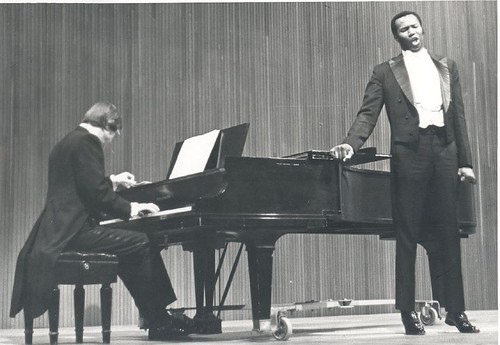
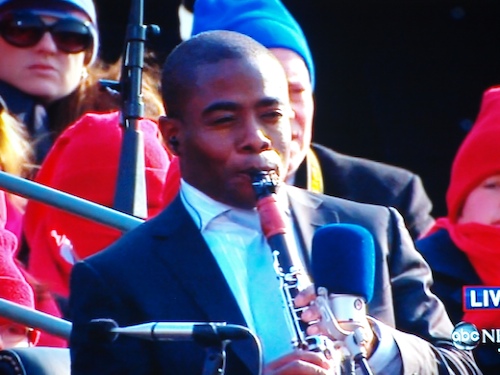
Someone better tell Iowa native Simon Estes that he needs to quit singing opera and try to get his groove on by singing some neo-soul or something... And then go on and tell Anthony McGill, the principal clarinetist at the Metropolitan Opera that he can't play any classical music because black folks don't do classical. Morris Robinson will need to figure out a new path for his life, since his bass singing with symphonies world-wide doesn't fit that stereotype. (Read and listen to more about some current black musicians in the field of classical music here in a podcast and post from WQXR classical radio in New Jersey.)
Image Credit: Flickr/Luther College Photos
Image Credit:Flickr/bo mackison
Image via http://www.morrisrobinson.com/
4. Latina Women are all Maids
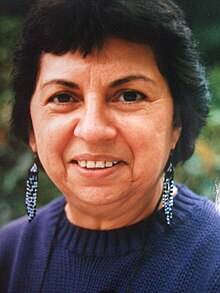
Check out the groundbreaking work of scholar Gloria E. Anzaldúa, expert on cultural and social marginalization who wrote poems, books, and changed the academic landscape with her work. She greatly influenced my own thinking when her book This Bridge Called My Back was part of my assigned reading in college. Read about Linda Chavez-Thompson, Vice Chairman of the Democratic National Committee. Learn about New Mexico's current governor, Susana Martinez. These women  most definitely are not maids. They are scholars, politicians, and world-changers...and there are many more Latinas like them across the country.


Gloria Anzaldúa via Wikipedia
Linda Chavez-Thompson via Wikipedia
Susana Martinez via Wikipedia


5. Muslims are Terrorists
Tell that to the children who go to school with my own children every day!

My neighborhood has never experienced an act of terrorism. My Muslim neighbors hand out candy on Halloween, take their children to the pool in the summertime, shovel their driveways on snowy days, and attend our school's family nights just like my family and I do. They go to work every day, and take their kids to the same before school program I take my kids to. There has never been an act of terrorism in my Iowa town. Our neighborhood school has never suffered from an act of terrorism. This stereotype is simply not true.

If all Muslims are terrorists, someone also better tell this lady about Dr. Oz...He is a Muslim born in Cleveland, Ohio...look out! His stethoscope must be doing something evil just because he's Muslim, right?
Image via Flickr/nayrb7

Sure, there are definitely white women who don't steal the way Winona Ryder did, and the way the thief who stole Jessica LaShawn's Versace coat did. And there are Asians who don't drive well, Black people who sing R&B, Latinas who are maids, and a very small number of Muslims who are terrorists. Stereotypes start because of a reality. BUT problems begin when people assume that stereotypes are true of ALL people who meet a particular description. 

Not all white women steal just because Winona Ryder does. But we can't assume that all white women are innocent of stealing. Not all Asians are bad drivers just because you've seen one or two who fit the description. Black people don't only perform R&B just because that's all you see on MTV. Latinas can be scholars and governors, despite the fact that the media seems to pigeon-hole them into being maids and nannies. And most Muslims are regular people, raising their kids, just like you and me.


Feb 5, 2012

Busy Life & Some Good Reads


On January 17, I started the last semester of my graduate program in Special Education. I am taking 6 semester hours--spending half-days in my own classroom, half-days in another teacher's classroom, then chauffeuring kids to dance/basketball/scouts, going to class, and keeping up (trying to) with my responsibilities for two volunteer board positions. I have been struggling to keep up with all my stuff, and even though I told myself that no matter what I would make sure to keep writing...I'm worried that this blog will fall by the wayside until May.

I hope that you all can stick with me for the next few months while I try on this whole micro-blogging thing that Multicultural Familia founder, Chantilly, recommended on her blog Bicultural Mom. Instead of me sorting out my thoughts in long-form, I'll be sharing little snippets of things I find interesting. I hope that you'll find them interesting, too.

I won this shirt on My American Meltingpot!
Here are a few posts that caught my attention this week:

My American Meltingpot takes on Black History Month
In honor of Black History Month, Lori is looking at white people who tell black folks' stories and profit from them. This fits right in with the series of done right here on empatheia regarding Inspiration vs. Appropriation. Lori's first post is about Kathryn Stockett and her best-selling book The Help. Check it out here.

Jesse Washington examines the phrase "African-American"
My husband has always referred to himself as Black. He dislikes being called African-American because he is not from Africa--he is American. My mom tells me stories of her time as an elementary school secretary when Nigerian-born or Senegalese-American families came in to fill out registration paperwork for school and checked the "African-American" box- because it truly explained their heritage and current citizenship. These issues and more are tackled in Jessie Washington's piece for the Associated Press which you can read here.


My daughter's hair story featured on Multicultural Familia
As a white person, I had no idea about Black people's hair... until my daughter was about 2 years old. It has been quite a journey for us. Read about it here. If you're as clueless as I was before my daughter was born, Chris Rock did an excellent documentary about the whole Black hair industry and the struggle that Black women face every day with their hair. I highly recommend that you watch Good Hair. And I sincerely thank all who have commented on Multicultural Familia, Facebook and Twitter! You have made my daughter feel even more positive about her decision to go natural in 2012!


What have you read lately that made you think? I'm short on time these days and would love for you all to point me towards the pieces that are worthwhile to read. Please share!


Jan 29, 2012

Other People's Children

Image Credit: Flickr/ 77krc
I recently read a piece by Sam Chaltain in the Huffington Post that had me shaking my head at the problem he exposes, and yelling "YES!" his suggested solution.

I find Sam Chaltain's piece to be a harsh reflection of reality, not just in the Ohio school district he writes about; but also in the school district where I live. People worry about educating their own children; but when it comes to educating ALL children...OUR nation's children...most people don't seem to care. Collectively, our society doesn't seem to worry about other people's children. Our education policy reflects that lack of feeling. That is why one school can be 30 miles from another geographically, but light years away when it comes to programming, achievement, and even structural integrity.

Image Credit: Flickr/reallyboring

Image Credit: Flickr/reallyboring 
Chaltain writes,
"Indeed, public education is our surest form of 'national security.' It provides the most likely path out of poverty, helps prepare young people to be successful workers and citizens, and reminds us all of who, on our best days, we aspire to be. And yet the reality is we continue to tolerate a system in which your zip code determines your access to the American Dream, and in which communities refuse to fund their schools because 'their' children no longer go there."
Equality in education is something we, as a nation, thought we achieved in 1954 with Brown v the Board of Education. Yet as Chaltain writes, a Texas case in 1974 challenged the constitutionality of funding schools by property taxes because that process leads to unequal schools. The Supreme Court ruling decided that education wasn't a Constitutional right.

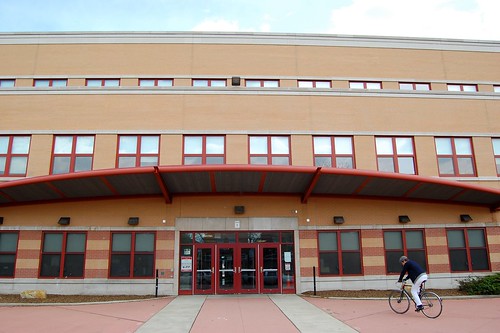
Maybe if we change that thinking, make an equal education a Constitutional right, then we can finally talk about "fixing" public education--by leveling the funding playing field. The pictures above are of 2 elementary schools in the same public school district--the Chicago Public Schools. The disparity in building quality is obvious from the pictures.

Think about where you live. Within your school district, are the schools in one neighborhood nicer than those in another?  Shouldn't we be offering all of our kids the same opportunities and the same access to education?

Read the Sam Chaltain piece here: Sam Chaltain: Other People's Children

Jan 22, 2012

Teaching Slavery in Schools through Empathy Writing: Insensitive or Powerful?


I remember it pretty clearly--as clearly as someone can remember something that happened 30 years ago. The fact that I remember it at all really means something, because most of what happened 30 years ago is pretty hazy.  I was in junior high school. 7th grade. He was my history teacher. A big, burly, flannel-shirt wearing bearded man that reminded me a lot of Grizzly Adams. He was definitely a gentle bear who you wouldn't want to mess with. He made history come alive for me.

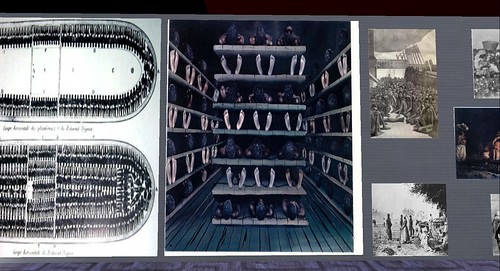
The 7th grade curriculum at my junior high covered what is, in my mind, one of the darkest periods of American History--the Civil War era. Mr. S taught us that the origins of the conflict really came much earlier, with the beginnings of slavery. He taught us about the slave trade in a brutally honest way, asking us to put ourselves in the place of an African, stolen from her family, shackled and stacked against strangers on a ship bound for the U.S., land of "opportunity." His lectures were graphic and disturbing. He wanted us to learn the truth: that human beings are capable of doing terrible things to each other. He wanted us to learn about slavery so that if we ever witnessed someone attempting to steal a human being away from their home and family, we would not stand aside and allow it to happen. He wanted us to understand our present world in the context of what occurred in the past. He believed that by learning history we could prevent humanity from making the same mistakes twice.

Image Credit: Flickr/Olivia Hotshot 
We read slave narratives and looked at primary source documents that left no doubt about man's ability to be inhuman. I will never forget the final assignment for our unit on slavery: a writing project that asked us to  synthesize all we'd learned. "Put yourself in the place of an African who has been stolen from her family, and write a series of journal entries from her perspective." That assignment led to my first experience with the power of empathy.  I put myself in the place of an enslaved African and wrote a heart-wrenching series of journal entries that changed the way I looked at people. In fact, I would argue that it changed me forever.

Flash forward 30 years. I've spent some hours here on this blog thinking about and discussing the issue of cultural appropriation, and how it compares to the inspiration many artists/writers/musicians say they get from learning about another culture. My 7th grade teacher asked me to put myself into the experience of someone else and write about it. That writing was powerful. I learned from the act of writing (but I didn't publish my work, claim to be any kind of expert, or profit from what I wrote. That writing was only for myself and my teacher.)

This week a middle school teacher has come under fire for making a similar assignment. "Pretend you are a slave in the southern United States. Write a journal/diary memoir about your life."  A student felt uncomfortable with this assignment and told his mother, who is biracial, that he didn't want to do it. She says, "For him to pretend to be something he's never been or never will be, that's going too far." She requested action from school administrators and says she has not yet received a satisfactory response.

I am puzzling this out, just like the inspiration vs. appropriation pieces, because I can see both sides of the issue. On the one hand, I know first hand how powerful such an assignment can be if given in the appropriate context. I know, both as a teacher and as a learner, that some of the most powerful learning comes from those moments where we are uncomfortable. Pushing ourselves to stretch our imagination, our math ability, or our understanding of foreign ideas---that is how we learn, and it is not always comfortable or neat. Learning is messy; it stirs things up. But I say all of that as a white woman, whose ancestors weren't slaves. Maybe an assignment asking me to pretend I am someone from my own family, who suffered such inhumanity, would be more than just uncomfortable. It might even be painful.

There were definitely black kids in my junior high school history class. I don't remember talking about anything as serious as our history assignments back then, so I don't know how it felt for my friend Traci to write about her ancestors' suffering. But this news story has given me pause. As my son picks his classes for junior high next year I wonder if he will learn about slavery, if his teacher will ask him to write from the point of view of a slave, and how we will respond to that. 


How would you respond?


Jan 15, 2012

Inspiration vs. Appropriation, Part 2


A couple of months ago I wrote a post about the concept of inspiration vs. appropriation (read the conversations that followed here on this blog, or here where it appeared on MulticulturalFamilia.com.) I just recently received a comment from YA author, Terry Farish, that got me thinking about the topic again. Terry writes,
"I am a member of the dominant American culture. Here's one thought I have about people from the dominant culture writing about people in non-dominant cultures.  Could it be seen as not appropriation, but as a hunger to understand.  And for writers, it is through writing that we can begin to understand
our communities, our humanity, and, in this case, our multicultural country.  Is this only an apology?  I don't think so.  I think it would far worse if white people only sought to understand other white people, only wrote about other white people.   What if we lived in a world in which each ethnicity only wrote or created art about its own and no bridges were built between cultures by people trying to understand.  I do think it's my responsibility to honor Sudanese writers and work to support the development of their skills of young writers. 
I'd love to hear your ideas about this."
Terry, I had so many thoughts and questions for myself after reading your comment that I thought it best to just write another post. I hope you don't mind me sharing your comment with other readers. I am still trying to flesh out my thinking on appropriation vs. inspiration/appreciation/and now a hunger to understand. These thoughts are still confusing to me and are not cohesive at all (they never were, which is why I wrote that first post!) But what follows is the way I have been thinking and feeling about the subject after many discussions with other bloggers.

Seeking to understand another culture is admirable. Writing about something to understand it better is something that I do, too. But then there's this conundrum that I run into...When sitting down to write, I personally always think of Mark Twain's advice, "Write about what you know." I juxtapose that with something my husband said to me when we first started dating. My whole life, I've listened to black music, loved black culture, and felt like I really identified with black people. He said to me, "You can do all that, but you will never know what it feels like to be black. I can't take this skin off."

Powerful lesson there. He said that to me 20 years ago and I still think about it every day. I can never know what it is like to be in brown skin, in his skin, in the skin of my children; but I can see firsthand how it feels to watch the world treat them based on their skin. I can't tell their stories because I don't really know their stories. I only know my story: the story of a white woman married to a black man who is the mother of three brown children. So that is the story I choose to tell. I write about what I know, not what I presume to know by observing their lives.

While I agree that it might be boring if white people only told white people stories, I can also say with 100% certainty that if a white woman who'd never been in an interracial marriage or raised biracial children wrote a book about the mixed family experience---even though they'd never been in a mixed family themselves---I would be suspicious, maybe even offended. They would have to do a really excellent job of researching and writing, and even then I would be doubtful of their motives, of their honesty. It would really bother me. To have someone write a story about my life situation, without ever having experienced that situation for themselves, would seem very inauthentic. It would bother me even more if they profited from telling that story.

Yet, that's what writers do. They create fictional stories, they pretend to be someone else.  I think life would be really boring if they didn't create those stories. I love to read and learn, but thinking about appropriation has made me reconsider the kinds of stories I want to read. I've decided to make a conscious effort to read authentic voices. That doesn't mean that I won't read books by white authors who write about other cultures, though.

Here's an example of a white author I admire, who tells stories from a different cultural perspective--Barbara Kingsolver.  The Poisonwood Bible was an amazing book to me because while it was a book that took place in the Congo, what it really described was a specific part of European-American culture (missionaries) and their intersection with Congolese culture. Kingsolver managed to teach me a lot about the Belgian Congo in the 1950s, but did so by telling the story of a white character's experiences in that culture. She didn't narrate someone else's story.  In another book, The Lacuna, she again taught me about another culture by writing about life in Mexico from the point of view of a half white and half Mexican character. She focused a lot on the whiteness/American-ness of that character, and how he didn't exactly fit in even though he lived in Mexico and was half Mexican. Is her character problematic for real life mixed Mexican-Americans? I don't know. But I was impressed that she so carefully crafted a story about another culture that still managed to be told authentically from her own white perspective.

Reading from the perspective of that mixed character in The Lacuna made me think of something else: I can think of many, many white authors who have written from the perspective of a person of color. There are too many to list or name, and they are in every genre of literature. But how many writers of color are there who write stories from another cultural perspective? Can you think of any? I can't. The only book I can think of is The Remains of the Day by Kazuo Ishiguro. I remember reading that book for a class in college and having my fellow students comment how strange it was to read a book about an English butler written by a Japanese man...

It seems to me that white people feel they can write from any perspective they want to, but the same is not true for people of color. White people can say that we are trying to understand, and that our quest for learning justifies writing from another cultural point of view in order to bridge gaps....and I really think that is a noble purpose. I really do.  But at the same time we have to realize that writers of color do not have that same privilege. Their stories are not being told, shared, or published as often as the white versions of their stories. And just as I would be offended if someone else wrote my story, so are many people of color offended when white authors keep telling their stories.

I haven't read your books, Terry. I just looked at your website after you commented on this blog. I don't know how you approach your cultural subjects or who the characters are in your books. I do know a lot of social-justice minded white writers who want to bridge cultures and share new perspectives with white readers, and I think that it is important work. But I am personally always reminded of what my husband said to me 20 years ago, "You will never know how it feels to be black." My 20 years of being the only white person in my household gives me a huge research base to draw from. I could use that experience to write a story from a black perspective, trying to give white readers a better understanding of black culture; but there is no way I could really get it right. I am not black and I never will be. My story wouldn't be authentic. Personally, I'd much rather foster and support a writer of color who can share their own story. If I write my own story, it would be the authentic story of how a white woman can interact with and learn to love black culture. That is my story to tell, and I believe it can bridge gaps just as well as (maybe even better than) a story I could write from a cultural perspective that is not mine.


Jan 8, 2012

Schools, Finland, Equity, #Occupy


Image via Wikipedia
When I was in college I read the book Savage Inequalities by Jonathan Kozol.  The book, released in 1991, was a startling look at the inequities among public schools. Sometimes the inequities Kozol describes are really hard to read about. Dilapidated school buildings exist on one side of a river while shiny, well-kept buildings exist on the other side of that same river. Why does this inequity exist? Because in the U.S., our public schools are funded mostly by local property taxes. A nice neighborhood with a large tax base will have the funding to make a really nice school building, keep it well-maintained, offer a wide variety of programs, and be up-to-date in its technology. An example of such a school is New Trier High School in Winnetka, IL. According to School Digger (a site that reviews and ranks schools nationwide), New Trier is ranked the 5th best school in the state of Illinois.
New Trier High School. Image Credit: Flickr/eszter

Just 30 miles south of New Trier High School in Chicago is the Chicago Vocational High School. According to School Digger, Chicago Vocational ranks 661st in the state of Illinois.
Chicago Vocational School. Image Credit: Flickr/ reallyboring 
What's the difference between these schools besides 30 miles? Poverty. Winnetka is a suburban middle/upper middle class town. Meanwhile, almost 100%  of Chicago Vocational's students live in poverty.

You may think that since Savage Inequalities came out in 1991 and it is now 2012, things have changed. Think again.  Kozols' later book, The Shame of the Nation, published in 2005, says that things have gotten worse. Now it's not just poverty that leads to inequity, schools are also becoming more and more segregated.

Our government has attempted to right these wrongs through a series of legislation--from No Child Left Behind to Race to the Top. Throughout the course of this legislation, I have read articles about other countries that outperform the U.S. in achievement. One of the countries that has garnered a lot of attention in recent years is Finland. An article from the Atlantic, "What Americans Keep Ignoring about Finland's School Success" is circulating widely on Twitter and in the blogosphere. I read this article and  was struck by a few quotes:
"There are no lists of best schools or teachers in Finland. The main driver of education policy is not competition between teachers and between schools, but cooperation."
"Decades ago, when the Finnish school system was badly in need of reform, the goal of the program that Finland instituted, resulting in so much success today, was never excellence. It was equity."
"That this point is almost always ignored or brushed aside in the U.S. seems especially poignant at the moment, after the financial crisis and Occupy Wall Street movement have brought the problems of inequality in America into such sharp focus. The chasm between those who can afford $35,000 in tuition per child per year -- or even just the price of a house in a good public school district -- and the other "99 percent" is painfully plain to see."
As the 1% focus on keeping their wealth, the gap grows bigger between the haves and have-nots. According to Jonathan Kozol's work, increasingly that gap is also marked by color.

An acquaintance on Google + commented that what works in Finland probably won't work in the U.S. because of size differences. It's such a small country, comparatively. My response? New Trier is only 30 miles from Chicago Vocational High School. The population of Winnetka and Chicago combined is roughly 3 million. The population of Finland is over 5 million. I think that if we start small....perhaps by creating equity between schools that are in the same district, maybe expanding to schools that are within 30 miles of each other, we might see some huge differences. I think we owe it to the kids of our nation to try to level the playing field. Don't you?

Jan 1, 2012

Boost Nation: Send a Message to Struggling Teens

Probably more than ever before, high school students need extra help to graduate from high school. So many teens have extra responsibilities: caring for younger siblings, working jobs to help support their families, or caring for their own children. The dropout rate is really high in every state across the nation. (You can see how high it is in your state by visiting this site.) Even though the dropout rate is high, YOU can make a difference in a kids life by visiting BoostUp.org

What I love about this site is that you can TAKE ACTION! Leave a tweet-sized message for a teen who is at risk of dropping out. Make a video for kids in your state, encouraging them to finish high school. Find a local mentoring organization and donate your time. Make a difference with Boost Nation. Here is a sample video from their site:


Boost Nation | Encouraging our nation's students: Every 26 seconds, of every school day, a student drops out. Boost Nation, a project of BoostUp.org, lets you share your own message with students, helping keep them on track to graduation.


Dec 30, 2011

Education Week: More Districts Sending Teachers Into Students' Homes

Image Credit: Flickr/The Voice of Eye


Would you welcome your child's teacher into your home? 


To be honest, I have extremely mixed feelings about the whole home visit thing. A recent article made me think even more critically about my misgivings. Here is a quote from the article that caught my attention:
"There is a gold mine of information in that home—whether it's fully furnished or whether they don't have electricity," said Karen Kalish, a philanthropist based in St. Louis who has led the creation of teacher home-visit programs in several Missouri districts.
For example, just one visit home can help a teacher understand that a particular student doesn't have a desk or a place to do homework. "The teacher can now do something different with the child, instead of sending homework home and getting mad when it's not done," Ms. Kalish said.  --from Education Week: More Districts Sending Teachers Into Students' Homes

Is it just me? or is this an extremely insensitive comment? I work primarily with kids who are on the lower end of the income spectrum. Some of their families may invite me to their homes for social events; but I don't know any of them who would want me to visit as part of a school program. Most of my students' families wouldn't enjoy having someone witness their struggles. Their pride would be hurt if I saw that they had no electricity or no table to sit at to do their work. Many of my students come to school to escape their home situations. They like to have a part of every day where they don't have to worry about the struggles of home life, and they want the freedom to choose whether or not to share those struggles with me. I talk with them and listen to them whenever they want to share, but it is their choice to share. If they choose to share details with me at school, they still might not want me to visit them in their homes (just like I wouldn't necessarily want my students to visit me in my home.) There is a separation between our personal and professional relationships. I have close relationships with my students, but there are boundaries. Home visits cross those boundaries, but only in one direction: teachers visit student's homes but not vice versa.

The whole situation seems like it sets teachers up to be scientists observing lab rats. 

What bothers me even more is the fact that there is also the complex issue of diversity to consider. The U.S. Department of Education's report entitled Increasing Teacher Diversity states that, "Nationally, minority students make up 40.7 percent of the public school population. Although many schools (both urban and rural) are increasingly made up of a majority of black and Latino students, black and Latino teachers represent only about 14.6 percent of the teaching workforce."

Did you get that? Over 40% of the nation's students are not white, while more than 75% of the teachers are white. Following Ms. Kalisha's comments in Education week, it would appear that many schools are sending their white teachers into the homes of non-white students in order to witness their poverty. This is supposed to make them less angry at students when they don't have their homework completed.

Again...this sounds a lot like scientists observing lab rats. This does not describe not socially equal human beings interacting with one another.

There has got to be a better way to get teachers to become more aware of their students' backgrounds. There has got to be a better way of getting parents involved--one that doesn't potentially cause families shame or make them feel objectified.

There are several research studies out demonstrating the connection between parental involvement and student success (see the Harvard Family Research Project or the National Coalition for Parent Involvement in Education websites for research summaries.) But there isn't really any research saying that home visits are the best way to make that increase happen. I personally think school district dollars would be better spent trying to get parents into schools, rather than getting teachers into student's homes.

What do you think? How would you feel if school staff visited your home?

Dec 11, 2011

Being African-American in Iowa: Politics


Iowa Pubic Radio (IPR) correspondent Rob Dillard (@IPRDillard) has been working on a year-long assignment on diversity. In March-April 2011, IPR ran series of stories on Being Latino in Iowa that highlighted the Latino experience in my home state. Dillard covered stories on the effect of Latino populations on small towns and the importance of Latino food and culture. The series returned to focus on a different population in our state--African-Americans.  According to IPR, U.S. Census data show there are now 90,000 African-American adults living in Iowa. According to state department of education enrollment figures, there are almost as many African-American children enrolled in our public schools. My husband and his family have lived in the state since the 1960's and I found it interesting to hear what Rob Dillard learned about Being African-American in Iowa in 2011. His series was divided into five parts: education, economy, politics, health, and spirituality. I have written about my family's experiences with education and economy.

Last night I was watching the Republicans verbally duke it out at the Iowa Debate (thanks Ezzy, for reminding me to watch) and decided to watch the Twitter response. Besides all of the commentary about what $10,000 can buy and Newt's statement that Palestine is "an invented state", several tweeps noted that the audience was overwhelmingly white. They questioned why this debate was held in Iowa, a state that is 95% white and mostly rural.

The reason the debate is held in Iowa is simple: we are the first in the nation to caucus (i.e. elect) a candidate in any political party. According to the Iowa Caucus Project, a move by our state legislature in the 1970s to improve the delegation process led us to be first in the nation. Our government wanted more people to be able to take part in the political process, so they pushed for election reform and required a minimum of 30 business days between precinct caucuses and the county, district and state conventions.  During those 30 days, the caucuses are advertised so that more people know about them and can participate. In 1972 the State Convention was slated for May 20. Allowing for 60 business days to occur before the State Convention made the Iowa Caucus date January 24--first in the nation. It has been that way since 1972. (See Slate magazine's great article about the Caucus here.)

What tweeps watching the Iowa Debate may not know is that we do have some diversity in Iowa: I am sitting in a house where I am the only white person, and my children attend a school that is over half non-white. There are pockets of extreme diversity in our state. Those pockets of diversity have greatly influenced our politics, and as I've written in the past, Iowa has a history of doing what is right instead of what is popular when it comes to some political issues--especially Civil Rights.

The Iowa Public Radio podcast, Being African-American in Iowa: Politics, was aired in July of 2011. It taught me a lot of about the history of African-American involvement in Iowa politics at the state-level. It is an impressive history to me because for African-Americans to be elected, they need to cross the so-called "color line" and gain the votes of whites in their districts. The African-Americans interviewed in the IPR podcast did that--they went door to door, they hosted events, they communicated their concerns and interests. A repeated theme in those interviews is this: "We need to focus on what we have in common vs. what we don't have in common." Those who were elected got there by focusing on the issues, but not necessarily by talking about race. The podcast talks about Helen Miller, an African-American woman who currently serves in the Iowa House. Miller is the ranking member on the House Agriculture Committee, which is not a committee dealing with a traditionally African-American issue. She states that she got there by really communicating and focusing on the issues. There seems to be a significant amount of "colorblindness" in campaigning that leads to African-American success in politics.

In my mind, the notion of focusing on the issues to get elected is one that is very idealistic. It can happen in a state like Iowa because there isn't much diversity in the state as a whole. But there are definitely issues that need to be addressed without a "colorblind" lens. These issues are human rights issues, and it is my hope that eventually a candidate--of any color--will begin to discuss them.

These statistics are from the Iowa Commission on the Status of African-Americans:
  • The poverty rate in 2008 for African Americans was 35.6%. The corresponding rate for Iowa is 11.5%
  • 70.9% of African-Americans rent, as opposed to owning, their own home. The corresponding rate for the state as a whole is 27.1 %.
  • The unemployment rate for African-Americans in 2008 was 8.9%. For Iowa as a whole, it was 3.9%
  • Median earnings for African-Americans was $19,174. For Iowa, it was $26,959. 
Then there is also a considerable achievement gap for all people of color in Iowa. According to the Iowa Department of Education's "Gap Paper,"
Gaps exist in the achievement of Iowa students. In 2010, the percent of all students in grade four enrolled for full academic year (FAY) scoring proficient, as measured by the Iowa Tests, was 78.5 percent. The percent of Black (54.5 percent), Hispanic (61.2 percent), free or reduced lunch eligible (66.6 percent), or English Language Learner (ELL) (51.3 percent) students was considerably less.
Interestingly enough, these Iowa issues are also issues we face as a nation. Yet none of them were mentioned in last night's Republican debate. In my mind, these are human rights and social justice issues that concern us all. Politicians, no matter what their color, can no longer afford to be colorblind.

I am interested to see when, if ever, the 2012 candidates will really and truly discuss issues of poverty, unemployment and achievement.

What issues do you think politicians should be discussing? What was your reaction to the Iowa Debate?


Nov 27, 2011

Inspiration vs. Appropriation

Earlier this week my family was packing up to head out of town for Thanksgiving. My kids were being goofy (a regular occurrence) and somehow the word pelvis came up. My youngest giggled wildly about the word pelvis and asked if there was anything that rhymed with it. "Elvis used to be called 'Elvis the Pelvis' " I told her.

"Why?" she asked. And so I found her a YouTube video of Elvis performing on the Milton Berle show in 1956. While she watched and imitated Elvis' famous pelvic moves, I scrolled down the list of videos to see if there were any other good examples of Elvis the Pelvis. In with the Elvis footage was a video of Big Mama Thornton singing "Hound Dog." I played it for my kids who asked, "Which one came first: Elvis' version or Big Mama Thornton's?" My husband and I gave an impromptu little lesson about the history of black music, explaining that a lot of popular music has roots in black culture but didn't become popular until a white, mainstream artist performed it.


Then at my parents house over the holiday, a similar conversation occurred. My mom and dad recently watched a documentary about famed songwriters Leiber & Stoller, who incidentally wrote the song "Hound Dog." Leiber grew up surrounded by black folks in Baltimore. He was not just influenced by black culture, he was in it. He went to schools that were predominantly black, and helped his mom run a store that was in a black neighborhood. He said it was his experiences in black culture that allowed him to write music for black artists. Leiber and Stoller's first big hit was "Hound Dog," which they originally wrote  for Big Mama Thornton; but it didn't become popular until Elvis sang it.


Were Leiber and Stoller inspired by black culture? Or did they appropriate a style of music from black culture that didn't belong to them? Were they paying homage to a culture by popularizing black music? or were they profiting from a culture that wasn't theirs to profit from?

I've been thinking about the notion of inspiration vs. appropriation for several months. Conversations about the movie The Help over the summer, an interesting read on Racialicious, a spirited chat on the podcast Is That Your Child? about Halloween costumes, and an interview on the Mixed Chicks Chat podcast all left me thinking about the difference between honoring a culture and stealing/profiting from it. How do we decide the difference between inspiration and appropriation?

Image Credit: Flickr/brittany0177
The book and movie The Help stirred up a lot of controversy because of the fact that it is a story about the black experience written by a white woman. Many negative responses to both the book and the movie centered on the question, "When do people of color get to tell their own story?" The author, Kathryn Stockett, states that her story is based on memories from her own life. Is she inspired by the black women from her past? Or is she appropriating the story of black women, telling a story that isn't necessarily hers to tell?

Mixed Chicks Chat (a live weekly podcast about the mixed experience)  episode 225 featured a man by the name of Phil Wilkes Fixico (read a story about him here.) His mixed experience involved an amazing story: at age 52, Fixico discovered through research that he is a descendant of the Seminole Maroons-- slaves who escaped in the 18th and 19th century to live in Spanish Florida near the Seminole Indians. Their cultures intermixed, creating an African-Seminole cultural experience. Fixico discussed the fact that Seminole Maroon experience is a story that needs to be told, that more people should learn about this intersection of African and Native American history. His mission is to share this history, and he suggested that the best way to spread the word is to get someone from the dominant culture (i.e. someone white, European-American) to write about it. He argued that more people will listen if the story is told by a member of the dominant culture.

Image Credit: Flickr/ronocdh
Since that episode aired, I have been thinking about his statement.


Will the dominant culture only pay attention to a story if it is told  by one of their own?  


Both Leiber & Stoller and Elvis brought a lot of attention to black music. Without their inspiration/appropriation of black culture, what would music sound like today? The Help started a lot of conversations about race that weren't happening prior to its release. Many white women in particular who read the book/saw the movie are seeing issues of race from a perspective they had never before considered. Without that inspiration/appropriation, would those conversations have occurred? Will more people learn about the story Phil Wilkes Fixico wants to share, the story of Black Seminole Maroons, if it is told by a white/European-American?

I don't have answers here, just questions. In fact, the more I think about it the more questions I have. When I talked to my husband about the concept of cultural appropriation he told me a story about walking to work and seeing a group of Japanese college students dressed in hip hop attire. He asked: are they appropriating black culture? Or is their expression of hip hop culture not considered cultural appropriation because they aren't members of the dominant European-American culture?

What do you think? What constitutes cultural appropriation? What is the difference between inspiration and appropriation? 


Will the dominant culture listen to a story that comes straight from the source? or does it need that inspiration/appropriation to happen before it can learn to appreciate other cultures?

Nov 15, 2011

In Your Dreams: Whoopi Goldberg Stand-Up Routine Remixed


Long before she was on The View, Whoopi Goldberg was an amazing stand-up comedian whose work always made me laugh and THINK. She somehow always had a way of using humor to stop me in my tracks and see things from another perspective. I admire the way she uses humor to make people stop and think, to question the status quo.

In her original Broadway show Whoopi Goldberg: Live on Broadway, she did a piece that really challenges people's perceptions about external appearances. Here is a young man's version of that piece that I found to be very powerful (thanks to my mom for sending it to me!)


If you never had the chance to see Whoopi's stand-up, you can check out one routine here from the revival of her 1985 Broadway show, Back to Broadway (warning: some swear words are used in this routine.)


Nov 13, 2011

Un Meme: Sólo por Diversión | A Meme: Just for Fun


Why I love octubre/October!
¡Que divertido! Mi amiga, Ezzy de EzzyLanguzzi, compartio este meme con migo a semana. Gracias! Me que me ayudó a practicar un poco más español. 

Aquí les dejo mis respuestas:

What fun! My friend, Ezzy from EzzyLanguzzi, shared this meme with me last week. Thank you! You helped me practice a little more Spanish.

Here are my responses:

¿Qué fue lo primero que le viste a tu pareja cuando se conocieron?
What was the first thing I noticed of my husband's when I met him?
Sus ojos
His eyes

¿A dónde te gustaría ir de luna de miel?
Where would I like to go on a honeymoon?
Venecia
Venice (before it sinks!)

¿Te consideras una persona aventurera?
Do I consider myself an adventurous person?
No es tan aventurero como yo de tener hijos.
Not as adventurous since I had kids.

¿Tienes algún secreto tuyo que nuca le hayas contado a nadie?
Do you have a secret you've never shared with anybody?
No. Al menos una persona lo sabe todo.
No. At least one person knows everything.

¿Playa o piscina?
Beach or pool?
Playa
Beach

¿Verano o invierno?
Summer or winter?
Verano
Summer

¿Besos of abrazos?
Kisses or hugs?
Abrazos
Hugs

¿Dulce o saldado?
Sweet or salty?
Dulce y salado! ... cubiertas de chocolate pretzels
Sweet and salty! ... chocolate-covered pretzels

¿Fresa o chocolate?
Strawberry or chocolate?
¿Qué hay de fresas cubiertas de chocolate?
How about chocolate-covered strawberries?

¿Blanco o negro?
Black or white?
Negro
Black

¿Color favorito?
Favorite color?
púrpura

¿Cuál es tu película favorita?
Your favorite movie?

¿Juego de mesa favorito?
Your favorite table game?
Euchre (un juego de cartas)
Euchre (a card game)

¿Cuál es tu bebida favorita?
What's your favorite drink?
Agua 
Water

¿Cual es tu trago favorito?
What is your favorite [alcoholic] beverage?
Margarita

¿Cuál es tu mes favorito?
Your favorite month?
octubre
October

¿Qué es lo primero que piensas al despertar?
What's the first thing you think about when you wake up?
lavar la ropa y las tareas del mañana
doing laundry and morning chores

¿Perdonarías una infidelidad de tu pareja?
Would you forgive infidelity on the part of your spouse?
Nunca
Never

¿Cuántos timbrazos antes de contestar el telefono?
How many rings before you answer the phone?
Dos 
Two

¿Sabes guardar secretos?
Do you know how to keep secrets?
I could tell you, but then I'd have to kill you ;-) (Spy humor that I have no idea how to say in español!)

¿Dices tu edad verdadera?
Do you tell your honest age?
Siempre
Always

¿Te consideras timida o extrovertida?
Do you consider yourself an introvert or an extrovert?
Timida
An introvert

¿Que hay debajo de tu cama?
What's under your bed?
Fuera de temporada la ropa
Off-season clothing (and maybe a lot of other stuff I don't want to look at what kids have hidden under there!)

¿Has faltado a clases/al trabajo sólo por el clima?
Have you missed school or work due to the weather?
Si
Yes

¿Cuánto tiempo tienes con este blog?
How long have you had this blog?
Casi un año
Almost one year

I apologize for any errors in español here...ha sido durante muchos años since I studied, and I never really got that far in my studies! Gracias a Dios por my Spanish-English dictionary and traductor Google :D

Le paso este juegito a unas amigas queridas, gracias por todo su apoyo ... I'm passing this little game to a few of my dear friends, some of them are the same friends Ezzy listed (I hope that's not cheating!)  The Lifestory of a Bookworm (Jessica), Bicultural Mom(Chantilly), Motherhood in Mexico (Leslie), Me and the Mexican (Tara), and  Growing Up Blackxican (Ruby)

ShareThis

Related Posts Plugin for WordPress, Blogger...