Showing posts with label poverty. Show all posts

Feb 9, 2014

Fighting Extinction


Capitalist society, systemic racism, cycle of poverty. These are the enemy

The other kids tell me that his house is disgusting. Cockroaches are co-inhabitants, with the same rights as family members. One girl said, "I went through the front door and no one even bothered to try to kill the big roach that was crawling there, right on the floor! It was nasty!"  Yet, she was still there. It is one of those houses, where anything can be gotten for a price.  She's not the only one who goes there-- teenagers and adults alike go there to get what can be gotten. Maybe it's a hit of something, maybe it's a wager on a fight, maybe it's an escape from their own roach-infested place of residence. There are always a lot of people there. Looks like a constant party.

I gave a student a ride home the other day and he pointed the house out to me: "That's the pot house."

Yeah, I know. I know the kid who lives there; he's in my class.  He dresses in designer clothes, even though no one in his house has a legit job. He's got a new phone that always has minutes, and says that there's also a new laptop at home.  The only two meals a day he eats are at school, but somehow he always has all this...stuff. I'm supposed to teach him how to get a job. How?  He doesn't think he needs a job. He has nice clothes, a nice phone. What more does he need? He is only lacking when it comes to finding food, and he figures that when he gets older he'll be able to collect food stamps just like his mom does. If that's not enough, he'll have some kids and make sure they don't get too smart. That way they can be labeled as having learning disabilities and he can collect more money. After all, that's exactly how his family has survived. It's a system that works. Instant gratification (as long as there's no security guard around) and government assistance. How can a 40-hour a week job compete with that? 

It can't.

So I try to appeal to something else. Some other part of him that is hidden deep down inside. I've seen it over the past year and a half. It's in him, buried like an ancient treasure behind a maze of mines and booby traps that snarl or snap when anyone gets too close. It's the part of him that still believes that something can be different. Sometimes that part comes out ready to fight (like when somebody lifts something that belongs to him, even if it is ill-gotten gain.) Sometimes it comes out scared and alone (like when he "hypothetically" asked what I would do if my mama prostituted herself for drug money.) Sometimes it comes out when he asks for help with an Algebra problem, or works at understanding a chapter on genetic mutations. When I see that part of him rise to the surface, I believe in there is something special in him.  I believe he can break the cycle. But I don't know how to make him believe in himself.

We start this year talking about the crisis. I tell the young men in my class, "Pretty soon, you will be extinct unless something changes." We read, "The Fight for Black Men," and discuss the alarming statistic from Michelle Alexander's book The New Jim Crow: Mass Incarceration in the Age of Colorblindness: more black men are incarcerated, on probation, or on parole today than there were enslaved in 1850. We brainstorm ideas about how they--young men who represent the very subject of these articles--could change the world.  

It hits home. All of it. Reading about the cycle of poverty, the learned helplessness, the way society has made it so easy to brush aside people of color, the way we funnel young boys through the school-to-prison pipeline---the reading profoundly affects him. At first it makes him angry. He doesn't want to participate in class and is stoically silent. Then he wants to argue and argue and argue that there is nothing wrong with the status quo. He isn't responsible for anything and doesn't need to change anything! He can be quite happy living off the government and taking whatever he needs! "I'll just hustle. I'll be a big-time hustler." But then he slowly starts to change his thinking. The anger fades and is replaced by fear.  "I want to try, but what if ...? I tried to get a job once, but they wouldn't hire me. Said they saw my name online. I tried to jump into a gang in junior high--wasn't even no real gang, but everybody knew. No one will hire me now." So we talk about how to network, and I ask friends to take a risk by hiring him. I petition the blogs with the crime reports, asking them to take the kid's name down and give him a chance.  He starts to think about things differently.

And then he is bombarded with advertising for Black Friday sales. Everyone around him is talking about shopping, deals, huge family meals. They're all getting stuff. Stuff that he wants (don't we all?) The lure of it all is overwhelming. He wants. He wants to fit in, wants to feel like other kids in school, wants to look and act like his peers--who aren't lacking for anything. And in one quick moment, he doesn't think at all. He acts. Instant gratification. Want becomes need. Gotta have it. Now.

This time there are eyes watching as he tries to take, and they call the police. He is taken away.  He is a juvenile, but they talk about charging him as an adult, giving him a hefty fine, and locking him up for 3 years.  He is scared. Within days he writes me a letter begging for help. I write him back, but I feel helpless. 

How can I compete? Capitalist society, systemic racism, cycle of poverty. Some of us fight the battles every day, but it doesn't feel like we're winning the war. 
____

It is now months later. He has been released and awaits trial. The first few days back in school he said he was changing his ways. New friends, new way of thinking. But the same people are still around with their designer clothes, their new phones.  He doesn't have that stuff anymore. In fact, he doesn't even have the roach-infested house anymore. His crimes cost his family their housing voucher for that home, and they had to move.  Going home means feeling guilt and anger about what has been taken away from his family, so he stays away. He hangs out with friends doing I don't know what. But whatever it is, I have to figure out a way to convince him that finishing school and getting a job are more fun. How on earth can I do that? That is not a hypothetical question. I need help. What would you do to help?


Mar 31, 2013

The Myth of Failing Schools and the Impact of Socio-Economic Privilege

"Schools are killing creativity!"     


 "The only thing schools teach is how to be obedient employees."   


 "We should teach kids to trust their intuition instead of teaching them to obey." 


These are all things I've seen tweeted or posted on blogs in the past week. And each time I read a comment like that I get upset. You may wonder, "WHY? It's true! We are training kids to respond to bells, to sit and be respectful. Our factory model of education hasn't changed even though our society has!" 

We are bombarded with messages about failing schools and how to fix them, falling rankings in test scores, and the loss of U.S. ability to compete in the global marketplace. But all of those negative messages don't tell the whole story of what goes on in schools. 

There are two big reasons why I get upset by comments like those I've seen on Twitter and in blog comments recently: first, they are blanket statements meant to characterize all schools; and second, they are extremely privileged statements.


Read on to see what I mean...


Like any stereotype--aiming a blanket statement at an entire group of people who share the same religion, ethnicity, race, sexual preference, or gender--stereotypes about public schools HURT. There are so many good schools out there! Check out this "failing" school's amazing success at getting kids motivated to learn, engaging them in their community, and helping them DREAM BIG:


UNDERDOGS- The Story of a Successful Public School from Think Ten Media Group on Vimeo.

Yes, the school in the video is focusing on test scores; but is that killing their creativity? When kids sit and dream about the president visiting their school--is that just blind obedience? The fact is that the assessments the kids take are used as tools to help teachers figure out how to teach them better. Many of the kids in the video started out reading far below grade level, and it was the tests that let teachers know that they needed to do more intensive teaching to help them. It is the assessments that let teachers know when they've been making progress. And that progress can't be made without assessing students regularly to see what they are learning.

If you think that all schools are killing creativity, that all schools teach only how to be blindly obedient workers, then you are making a hurtful, stereotypical statement. You hurt not only the creative students who are successful every day in public schools, but you also hurt those of us who work in public education. Many students and teachers work as partners in the educational process, creatively working together each day toward the goal of learning together. You do an extreme disservice to the thousands of teachers and administrators who put students first each and every day, and to the hundreds of thousands of students who thrive in public schools.

Not only are statements assuming that, "all schools kill creativity," stereotypical, they are also extremely privilegedI often read and hear people complaining about school policies that reward behaviors such as being respectful, responsible, and showing good citizenship. I often hear people complaining that programs like PBIS discourage individuality, kill creativity, and only teach obedience. I believe that most of those complaints come from people who have socioeconomic privilege.

When you grow up with one or two parents who have regular, steady jobs, are able to provide food, shelter and clothing for you, and have a college education--you probably know some things about how mainstream society works. You know that it is considered respectful (to your friends, your boss, your teacher) if you show up on time to appointments. You know that yelling at people in a public place is probably not going to be considered acceptable behavior. You know that it is considered rude to talk about sex in public, that cursing is considered crass, that certain clothing is appropriate in certain situations. When you grow up in an economically stable household with educated parents, you probably have regular check-ups and know about personal hygiene. You are most likely exposed to books before entering kindergarten, and have someone who either reads to you or lets you watch some preschool educational programs on TV that help you learn letter and number identification. You probably know what it's like to have privacy in your  own home, and can find a space to be alone. You most likely feel  hungry, but don't have to wait a full day or more for a meal. You probably learn at a young age that stealing is wrong, that drugs and alcohol are harmful, and that eating too much junk food isn't healthy.

I grew up in a middle class household with two working, college-educated parents. I learned all of that and more. But there are many, many kids who don't grow up with any of that.

I have spent my 15-year teaching career working with kids who don't have the privileges I had growing up. Do I want my students to think creatively? YES! But to many kids in poverty, the things they think creatively about are how to get their next meal, where to get clothes that fit, and how to make money to support their families----fast.  Their intuition tells them that stealing gets them food now. Their instincts tell them that a big chain store has plenty of money already and won't miss a couple of pairs of blue jeans. They creatively look for ways to sneak out of stores with items that will help their families without getting caught.

One of my current students is 16 years old and lives in a 2-parent household. Less than two years ago, the family lived in Chicago. They lived in a part of the city that was no place to raise a family--lots of gun violence and gang activity. They didn't want to stay there, so they moved to Iowa. His parents have had difficulty getting and maintaining jobs, so they have moved around--from apartment, to house, to pay-by-the-day motel--just to keep the family sheltered. At times, my student has lived with as many as 8 other people in a one-bedroom space. He describes an environment where neighbors are not violent (like in Chicago) but are drug users, alcoholics, and sexually active in public. His "normal" does not include any of what was normal for me growing up: a knowledge of language that is appropriate, what it means to be respectful, what it looks like to be polite.

When he first moved here, he learned quickly about some things that are unacceptable in our area. He and his brother saw so many houses with stuff that they'd never had before; they were shocked. They had almost nothing--very little food, very little clothing, and a very small apartment for their large family. They thought about how people with big houses had so much, and could probably make it just fine with fewer things. They wanted to help their family. Intuition told them that it is their responsibility to help feed their family. Following their instincts, they robbed a house. Then they got caught, and were sentenced to several months in juvenile detention. As a result of that whole experience, my student now knows that thinking creatively about how to get new clothes and food for his family is not the best way to think if he wants to stay free. His choice had a consequence. And I am proud to say that at school we are doing our best to kill the kind of creative thinking he was doing when he first moved to Iowa...

See, our society requires some obedience. It requires us to follow certain laws that keep us safe. It requires us to pay our own way, to buy our own food, clothing, and shelter. The only way to pay our own way is to get a job. The only way to get and keep a job is to know what it looks like to be responsible, and respectful. A lot of kids don't learn that at home anymore. And we can lament that fact, we can complain about parents who don't do a good job of teaching their kids, we can blame the economy or the president or any number of other people. But blaming doesn't change the fact that we have lots of kids in schools who aren't growing up with the privilege of knowing how mainstream society works. Many schools have decided that complaining doesn't do any good--we need to teach. 

So we teach--about the importance of being on time, about not cursing, about pulling up your pants, about not being on your cell phone when someone is trying to have a conversation with you, about not calling people offensive names. We look for ways to reward students who know how to communicate effectively, to accept feedback, to show up on time. We work on skills that we know are necessary for students to have in the workplace--whether they are fast-food workers or corporate CEOs.

When we don't work on these skills with students who live in poverty, we are continuing the cycle of poverty. When we neglect to share what we have learned through our privilege, we are acting as oppressors. Refusing to share our knowledge of what it takes to be successful in the U.S.  is an attempt to maintain our privilege.

Parents or community members who are offended that schools spend time sharing knowledge that comes from privilege may not realize that they are helping to continue the cycle of poverty--but they are. This document from the U.S. Census Bureau discusses child poverty in depth. I encourage you to read through it and see the startling numbers, to think about what they mean. Children in poverty are less likely to be successful in school, less likely to hold regular jobs, more likely to be incarcerated. We need to help kids learn what it will take to be successful. While creative thinking, following intuition, and challenging authority are all important skills that have revolutionized our country, we need to make sure that all children understand that there are also some basic behaviors that we must learn to keep society running smoothly. We can't drive whatever speed we want to, show up to work whenever we feel like it, curse at patrons, or take things that don't belong to us. And we cannot assume that all kids come to school knowing what those of us who grew up with privilege know.

Most schools that focus on behavioral supports are not trying to create automatons who blindly follow directions. They are trying to level the playing field. They are trying to give many students who live in poverty access to the kinds of knowledge that privileged students have access to. Increasingly, our schools are filled with kids who need help learning all sorts of basic skills--not just reading, writing, and math, but also appropriate behavior. Is there really something wrong with teaching all of that?

Sep 30, 2012

Triumphs of the Week

An invitation I made for our PTO sponsored Read-a-Thon

Okay, so this week really there were more trials and tribulations than triumphs in my life, but seems like all I really write about are the challenges lately. I need to share a couple of small triumphs!

I don't know if I've ever written about this, but for the past three years I have been active on the PTO (Parent Teacher Organization) board at my children's elementary school. Their school is very diverse--both culturally and economically--and it is often a challenge to figure out how to make all families feel welcome in our PTO. The primary purpose of PTO is to raise funds for school events, materials, and activities that aren't covered by the school budget. But when half or more of our school's families live in poverty, it is a difficult situation. I do not feel comfortable asking children to sell products--PERIOD. But I feel even more uncomfortable asking children who's families are struggling to meet basic needs to give money or sell products. In previous years, our PTO meetings have been contentious at times, with me arguing against product sales and looking for alternatives, and other parents arguing for product sales that include incentives for children. It has literally caused me to lose sleep. I have often felt like leaving the PTO board, but then realized that there would be no dissenting opinion if I did. Half of our families would have no real representation. I kept on going to meetings.

Last spring, I was elected President of the PTO. Our first meeting of the year occurred this week. We just wrapped up the major sales fundraising event of our PTO, and discussed our fundraising options for next year. For the first time ever, a majority of parents present spoke out against our current fundraising practice. Some argued against selling products entirely and suggested we go to a direct donation drive; others argued against selling products from the company that we've been partnering with for the past several years--a company whose staff is very pleasant to deal with but whose products are low-quality and overpriced. Overall, a majority of parents voiced a call for change. It was the first time ever that I was part of the majority. The first time ever where I didn't have to fight tooth and nail to get a differing opinion heard, defending myself from what seemed like a very personal rebuttal to my arguments. It felt good to know that I am not alone in my opinions about asking children to sell products.

Another PTO triumph happened this week when we hosted our first ever Read-a-Thon. This event came about due to a phone call I received over the summer. A local church wanted to give money to a school in need, and hoped that their funds would be used to purchase books. They wanted the books to go directly to children, and hoped that we could find a way to match their donation through pledges. As I mentioned above, our elementary school has a large population of families who struggle to meet basic needs. Asking them to pledge money is extremely difficult for me, so I began to look for other ways to obtain matching funds. The Walmart Foundation has an online grant proposal system that awards up to $1000 per grant request to community organizations that meet certain criteria. I applied for a grant and received $500!  In addition, I organized a Read-a-Thon so that families who wanted to donate more could do so.

The funds gained from the local Lutheran Church and their partner, Thrivent Insurance, Walmart, and the families who donated, will go towards purchasing a book for every child in school. Each child will read the book in class, complete school-wide activities related to the book, and invite their families to celebrate reading at a Family Night. At the celebration, there will be family friendly games and activities related to the book, and children will be able to take home their very own copy. It is an excellent event that promotes both literacy and community.  I am soooo excited that it will be funded this year by PTO--with absolutely no product sales involved. YES! That is a triumph! :)

Do you participate in your children's Parent-Teacher organization? How do you raise funds? 

After our PTO discussion this week, I am looking for more ideas. Anything we can do that does not involve low-quality/high-priced products and asking children to sell things is a good idea in my mind! Please share your ideas in the comments.

Jul 22, 2012

Bad Kids


I heard another story about that kid last week. All school year he's been nothing but trouble. He was caught red-handed in the pantry, breaking into cabinets filled with supplies for the after school program. Soon after, he was caught with fifty dollars that he'd stolen from a teacher's desk. 

Last winter I watched him play basketball, calling the boys on the opponent's team, "bitch" (and that is the least foul of his words.) I've seen him get angry and throw things: his desk, a chair, wild punches,  tantrums. He is nothing but trouble. The families in our neighborhood have tried to welcome him into our homes to help him, but we've all been burned too many times. He's stolen multiple video games and gaming systems from us, been rude, eaten our food, never given thanks. He curses and cusses in front of the really little kids. He is just bad news. 

Kids like him are in our neighborhoods and classrooms across the country. They sit with our kids and expose them to all kinds of filth and foulness. They should just get kicked out of school. Suspended. Expelled. They need to be kept away from our kids. Our kids need to be protected. They don't need to be exposed to such anger and violence. Those kids are headed straight for prison, anyway. There's nothing we can do. They're just bad kids. 

When you see him, you can just tell. He's angry. He doesn't have a future because he can't control that anger. He doesn't know the difference between right and wrong. In a lot of ways, that kid is scary. Such anger is hard to control. A loose cannon. You never know what he's going to do and that unpredictability is frightening. He could be a psycho gang-banging drug-dealing killer some day. What a bad kid.

Except...all of that is what we see on the outside.  All of that is the external circumstantial evidence. What's going on in there? Really? Who is that kid?

When you talk to him, if you are patient, and you try to crack through the hard shell to get to the soft innards, then you find out that he is hungry. Dad left. Mom doesn't have a job. He's hungry. His only meal is the free lunch offered at school every day and since he is a growing boy of 11 years, it is just not enough. The pantry he got caught breaking into is filled to the brim with food for breakfast and snack at the after school program. He just wants to eat.

The $50 he took from the teacher's desk? He was caught with it at the grocery store, trying to buy food for his little sister. She is home all day without food, too young to go to school and get the free lunch.

The video games and gaming systems he took--he's not playing with them. His one-bedroom apartment doesn't even have a TV. He's been taking them to the gaming store in the strip mall by the grocery store. He sells them there and takes the cash next door to buy food.

He is 11 years old and he is too young to get a job, but he is the sole provider of sustenance for his family. He walks around the neighborhood and sees his classmates riding their bikes, playing in their yards, hanging out and playing football. They don't have to worry about eating. They don't have a daddy who left them. They don't have a mom who is so depressed about losing her job and her husband that she can't get up off the floor of their apartment. They don't have to worry about the eviction notice that just got stuck to their front door. They don't have to worry... and it makes him angry. He is so angry he can feel the rage just rising up from his toes...to his fists...to his head. Just one person says something wrong and he will show them how it feels to hurt like he hurts. Just one thing. Go ahead, say it you mofo. Say it. 

Sometimes they say it at school. Sometimes in the middle of a football game on the corner. Sometimes they don't even say anything anyone could really consider an insult, when it comes right down to it. They just say something that reminds him about what they have that he does not. They remind him that he has to find something, some way to feed his little sister again tomorrow. They remind him that he likes his teacher and he wishes he could learn, but eating is more important right now. They remind him that if he steals at school again he might get sent away to some place for bad kids where you get to spend the night. In a way, it might be okay--probably more food than at home, and no eviction notice on the door. But who will feed his sister then?

Angry. So angry. No eleven year old should have to live like that. I'd be angry too.

There really is a kid like that in my neighborhood. Kids just like him really have been in my classroom. Parents of other kids really have said, "he needs to be kicked out," sent away, banished--to protect our kids. Somehow, though, I wish they could see the big picture, the whole picture...who that kid is both inside and out. Because when you really know him, it's hard to believe that anyone can say he's a bad kid. He's in a bad situation and making some bad choices...but he is not a bad kid. He's doing what he can to survive.

And if he's not bad, then you have to wonder about every single human being who does something bad. Are they really a bad person? or are they in bad situations making bad choices, stemming from a life filled with pain and hurt and anger? Are there any bad kids, really?

In the wake of the Aurora, Colorado shootings...this is something I have really been thinking about a lot lately. 

Is anyone really, truly bad? 

May 6, 2012

End of the School Year & Behavior Issues


For schools that don't have a year-round schedule, this time of year gets a little rough. The weather is so nice that lots of kids think about their after school ball games more than they think about what's going on in their classrooms. Schools know this, and schedule field trips, picnics, field days, talent shows and all kinds of fun events for the last few weeks of the year. Older high school students think about prom, graduation and...the future (whatever it may bring.) That stuff is definitely fun for most kids, but for some it causes almost debilitating anxiety. The loss of routine, the fear of change---all of that can be really hard for some kids. And honestly, there are not very many kids in any grade who are mature enough to be able to walk up to an adult and say something like, "I'm having difficulty with this transition to the end of the year. I'm really overstimulated by the changes to our schedule and I don't know what to do."  Instead, kids start exhibiting a lot of behaviors. Personally, I think that all kids get antsy at this time of year; but the kids who are most thrown off are kids who have special needs of some kind, and kids who live in poverty.

Why do I mention these two kinds of kids? I've seen it in my own classroom and with my own children--the angst that the end of the year brings for some kids.  Here's what I mean:

Some kids only eat at school. Our economy is so tough right now that the numbers of kids receiving Free or Reduced lunch is growing monthly. In Iowa, check the district-by-district numbers of students receiving Free/Reduced lunch by clicking here. Only 3 districts in the state have less than 10% of students enrolled  receiving Free or Reduced lunch. 57 districts have more than half of their student population receiving Free/Reduced lunch. Where do these kids eat in the summertime?  For some students, the end of the year is a time of worry. They know that they may not get to eat regularly until school starts again. With that kind of worry weighing on you as a child, would you be able to behave well?

In my own classroom, I know that I have students whose only mealtimes happen at school. Some communities like mine have a summer lunch program, where sack lunches are handed out daily in a local park; but not all communities offer a summer lunch program. I worry about my students; and I forgive some of their behaviors at this time of year because I know that they are worried about where their next meals may come from.

Some kids have little or no adult supervision over the summer.  Most parents don't get summer vacation. Many families can't afford summer child care or camps. What happens to their kids? Many are left alone. Some parents are faced with deciding to go to work so that they can afford rent and food, or staying home from work to watch kids and receiving public assistance to pay for rent and food. Younger kids know that when summer comes, they are leaving a structured and supervised school environment to go to a very unstructured and unsupervised environment. For the first few days it might seem like fun to do whatever you want to, but after that kids may feel lost. They may feel abandoned. They could feel angry or sad and begin to get into trouble.

In my own neighborhood, there are kids who wander all summer. They bounce from house to house looking for something to do, usually knocking on a door just in time for lunch or dinner. Several boys who are in my son's grade frequent my house for access to snacks, air conditioning, and just some positive interaction. Summer is really hard on them. In May, they know it's coming. Whether they acknowledge it or not, in the backs of their minds they know what the summer holds. They may already be a little bit worried, and their behavior at school often is a reflection of that worry.

Some kids are scared of change. The end of the year means that kids are getting ready for big changes: a new grade next year, a new classroom, a new teacher. For some kids that is really, really scary. Some kids have more than just a new teacher looming because they have huge transitions happening: graduation. Whether it's graduation from elementary school, junior high/middle school, or high school, kids know that their lives are on the verge of changing dramatically. The unknown future looms in front of them. Not knowing what will happen next can be really scary for adults, too!  If we have a hard time handling those major life changes, how can we expect kids to handle them? Kids who are pre-graduation, at any age, can have a wide range of reactions: cockiness, sadness, anger and avoidance of school are all things I see in my own classroom and with my own son (who is about to graduate elementary school.)

Those kinds of changes can be even more difficult for kids who have some kind of special need. I think all kids thrive when they are in a stable environment with consistent routines and structure, but kids with special needs absolutely require that structure and routine for day-to-day survival. Variation from the routine can cause some kids to lose their ability to concentrate, focus, and function. All the field trips, field days and fun stuff are drastic changes to the routine. They can cause kids to become lost, worried, and anxious. They don't always have the ability to express those feelings, though, and their behaviors may be the way they express them .

Two of my own children have ADHD, and one also has issues with Anxiety. It has been a rough spring for us so far. Stomach aches from anxiety, anger outbursts towards other students and teachers, inattentiveness and forgetfulness--all of these are issues my own kids have had in the last week or so at school. My kids don't have to worry about being supervised or getting meals over the summer. Can you imagine how a kid who has special needs AND has to worry about food and supervision over the summer might be feeling? Can you imagine how a kid with those issues might act in class?

The point of all this is that sometimes teachers, parents, and community members get frustrated by kids' behavior at the end of the school year and during the summer months. A lot of times, the first reaction we all have is to punish kids with office referrals, detentions, suspensions or calling the police. But the reality is that punishment won't really help most kids.

Think about it: how old were you when you could verbally identify your feelings about something and share them in a reasonable, calm way with an adult? I would bet that many, many adults still can't do it. If we can't maturely talk about our feelings and fears, how can we expect kids to do it?  Kids exhibit behaviors because they are communicating something to us. Many times it is fear, worry, or anger at a situation that they are communicating. Instead of punishing them, why not teach them more effective means of communication?

I encourage teachers and parents who deal with kids having end-of-school year behavior issues to talk to your kiddos to see what might really be going on. There is a good chance that all of the changes happening at school are affecting them.  Teach them how to communicate those worries. Give them a picture card, survey, matrix or list of feelings and ask them to identify what they're feeling. Help them try to explain why they're feeling that way. Then see if there's something you can do to help them make it better.

I encourage you all to look for and spread the word about any summer lunch programs offered in your communities. I encourage you all to keep your eye out for kids who look lost this summer. Invite them into your yard or your home for a snack and some positive interaction if you can. Don't look away from kids who are alone. Say hello. Interact. Pay attention. That simple contact might be enough to help them feel better, or at least feel connected to someone while school is out for summer.

Jan 29, 2012

Other People's Children

Image Credit: Flickr/ 77krc
I recently read a piece by Sam Chaltain in the Huffington Post that had me shaking my head at the problem he exposes, and yelling "YES!" his suggested solution.

I find Sam Chaltain's piece to be a harsh reflection of reality, not just in the Ohio school district he writes about; but also in the school district where I live. People worry about educating their own children; but when it comes to educating ALL children...OUR nation's children...most people don't seem to care. Collectively, our society doesn't seem to worry about other people's children. Our education policy reflects that lack of feeling. That is why one school can be 30 miles from another geographically, but light years away when it comes to programming, achievement, and even structural integrity.

Image Credit: Flickr/reallyboring

Image Credit: Flickr/reallyboring 
Chaltain writes,
"Indeed, public education is our surest form of 'national security.' It provides the most likely path out of poverty, helps prepare young people to be successful workers and citizens, and reminds us all of who, on our best days, we aspire to be. And yet the reality is we continue to tolerate a system in which your zip code determines your access to the American Dream, and in which communities refuse to fund their schools because 'their' children no longer go there."
Equality in education is something we, as a nation, thought we achieved in 1954 with Brown v the Board of Education. Yet as Chaltain writes, a Texas case in 1974 challenged the constitutionality of funding schools by property taxes because that process leads to unequal schools. The Supreme Court ruling decided that education wasn't a Constitutional right.

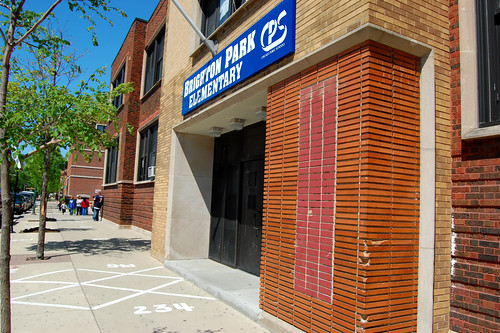
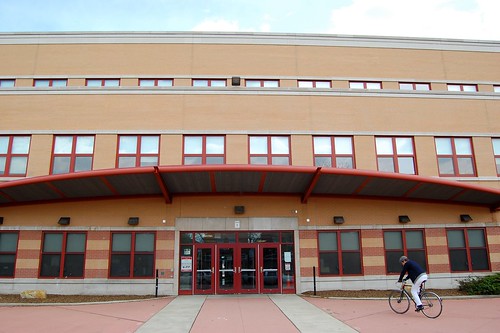
Maybe if we change that thinking, make an equal education a Constitutional right, then we can finally talk about "fixing" public education--by leveling the funding playing field. The pictures above are of 2 elementary schools in the same public school district--the Chicago Public Schools. The disparity in building quality is obvious from the pictures.

Think about where you live. Within your school district, are the schools in one neighborhood nicer than those in another?  Shouldn't we be offering all of our kids the same opportunities and the same access to education?

Read the Sam Chaltain piece here: Sam Chaltain: Other People's Children

Jan 8, 2012

Schools, Finland, Equity, #Occupy


Image via Wikipedia
When I was in college I read the book Savage Inequalities by Jonathan Kozol.  The book, released in 1991, was a startling look at the inequities among public schools. Sometimes the inequities Kozol describes are really hard to read about. Dilapidated school buildings exist on one side of a river while shiny, well-kept buildings exist on the other side of that same river. Why does this inequity exist? Because in the U.S., our public schools are funded mostly by local property taxes. A nice neighborhood with a large tax base will have the funding to make a really nice school building, keep it well-maintained, offer a wide variety of programs, and be up-to-date in its technology. An example of such a school is New Trier High School in Winnetka, IL. According to School Digger (a site that reviews and ranks schools nationwide), New Trier is ranked the 5th best school in the state of Illinois.
New Trier High School. Image Credit: Flickr/eszter

Just 30 miles south of New Trier High School in Chicago is the Chicago Vocational High School. According to School Digger, Chicago Vocational ranks 661st in the state of Illinois.
Chicago Vocational School. Image Credit: Flickr/ reallyboring 
What's the difference between these schools besides 30 miles? Poverty. Winnetka is a suburban middle/upper middle class town. Meanwhile, almost 100%  of Chicago Vocational's students live in poverty.

You may think that since Savage Inequalities came out in 1991 and it is now 2012, things have changed. Think again.  Kozols' later book, The Shame of the Nation, published in 2005, says that things have gotten worse. Now it's not just poverty that leads to inequity, schools are also becoming more and more segregated.

Our government has attempted to right these wrongs through a series of legislation--from No Child Left Behind to Race to the Top. Throughout the course of this legislation, I have read articles about other countries that outperform the U.S. in achievement. One of the countries that has garnered a lot of attention in recent years is Finland. An article from the Atlantic, "What Americans Keep Ignoring about Finland's School Success" is circulating widely on Twitter and in the blogosphere. I read this article and  was struck by a few quotes:
"There are no lists of best schools or teachers in Finland. The main driver of education policy is not competition between teachers and between schools, but cooperation."
"Decades ago, when the Finnish school system was badly in need of reform, the goal of the program that Finland instituted, resulting in so much success today, was never excellence. It was equity."
"That this point is almost always ignored or brushed aside in the U.S. seems especially poignant at the moment, after the financial crisis and Occupy Wall Street movement have brought the problems of inequality in America into such sharp focus. The chasm between those who can afford $35,000 in tuition per child per year -- or even just the price of a house in a good public school district -- and the other "99 percent" is painfully plain to see."
As the 1% focus on keeping their wealth, the gap grows bigger between the haves and have-nots. According to Jonathan Kozol's work, increasingly that gap is also marked by color.

An acquaintance on Google + commented that what works in Finland probably won't work in the U.S. because of size differences. It's such a small country, comparatively. My response? New Trier is only 30 miles from Chicago Vocational High School. The population of Winnetka and Chicago combined is roughly 3 million. The population of Finland is over 5 million. I think that if we start small....perhaps by creating equity between schools that are in the same district, maybe expanding to schools that are within 30 miles of each other, we might see some huge differences. I think we owe it to the kids of our nation to try to level the playing field. Don't you?

Dec 30, 2011

Education Week: More Districts Sending Teachers Into Students' Homes

Image Credit: Flickr/The Voice of Eye


Would you welcome your child's teacher into your home? 


To be honest, I have extremely mixed feelings about the whole home visit thing. A recent article made me think even more critically about my misgivings. Here is a quote from the article that caught my attention:
"There is a gold mine of information in that home—whether it's fully furnished or whether they don't have electricity," said Karen Kalish, a philanthropist based in St. Louis who has led the creation of teacher home-visit programs in several Missouri districts.
For example, just one visit home can help a teacher understand that a particular student doesn't have a desk or a place to do homework. "The teacher can now do something different with the child, instead of sending homework home and getting mad when it's not done," Ms. Kalish said.  --from Education Week: More Districts Sending Teachers Into Students' Homes

Is it just me? or is this an extremely insensitive comment? I work primarily with kids who are on the lower end of the income spectrum. Some of their families may invite me to their homes for social events; but I don't know any of them who would want me to visit as part of a school program. Most of my students' families wouldn't enjoy having someone witness their struggles. Their pride would be hurt if I saw that they had no electricity or no table to sit at to do their work. Many of my students come to school to escape their home situations. They like to have a part of every day where they don't have to worry about the struggles of home life, and they want the freedom to choose whether or not to share those struggles with me. I talk with them and listen to them whenever they want to share, but it is their choice to share. If they choose to share details with me at school, they still might not want me to visit them in their homes (just like I wouldn't necessarily want my students to visit me in my home.) There is a separation between our personal and professional relationships. I have close relationships with my students, but there are boundaries. Home visits cross those boundaries, but only in one direction: teachers visit student's homes but not vice versa.

The whole situation seems like it sets teachers up to be scientists observing lab rats. 

What bothers me even more is the fact that there is also the complex issue of diversity to consider. The U.S. Department of Education's report entitled Increasing Teacher Diversity states that, "Nationally, minority students make up 40.7 percent of the public school population. Although many schools (both urban and rural) are increasingly made up of a majority of black and Latino students, black and Latino teachers represent only about 14.6 percent of the teaching workforce."

Did you get that? Over 40% of the nation's students are not white, while more than 75% of the teachers are white. Following Ms. Kalisha's comments in Education week, it would appear that many schools are sending their white teachers into the homes of non-white students in order to witness their poverty. This is supposed to make them less angry at students when they don't have their homework completed.

Again...this sounds a lot like scientists observing lab rats. This does not describe not socially equal human beings interacting with one another.

There has got to be a better way to get teachers to become more aware of their students' backgrounds. There has got to be a better way of getting parents involved--one that doesn't potentially cause families shame or make them feel objectified.

There are several research studies out demonstrating the connection between parental involvement and student success (see the Harvard Family Research Project or the National Coalition for Parent Involvement in Education websites for research summaries.) But there isn't really any research saying that home visits are the best way to make that increase happen. I personally think school district dollars would be better spent trying to get parents into schools, rather than getting teachers into student's homes.

What do you think? How would you feel if school staff visited your home?

Oct 16, 2011

Being African-American in Iowa: Economy

Iowa Pubic Radio (IPR) correspondent Rob Dillard (@IPRDillard) has been working on a year-long assignment on diversity. In March-April 2011, IPR ran series of stories on Being Latino in Iowa that highlighted the Latino experience in my home state. Dillard covered stories on the effect of Latino populations on small towns and the importance of Latino food and culture. The series returned in September 2011 to focus on a different population in our state--African-Americans.  According to IPR, U.S. Census data show there are now 90,000 African-American adults living in Iowa. According to state department of education enrollment figures, there are almost as many African-American children enrolled in our public schools. My husband and his family have lived in the state since the 1960's and I found it interesting to hear what Rob Dillard learned about Being African-American in Iowa in 2011. His series was divided into five parts: education, economy, politics, health, and spirituality.  I plan to blog about my thoughts on each of these issues and how they relate to my family's experiences in Iowa.


Image via Davenport NAACP
According to the Iowa Public Radio podcast Being African-American in Iowa: Economy, 2,200 African-Americans in Iowa own their own businesses. Most African Americans in Iowa do not own their own businesses, though; instead they try to work for other people. Overall unemployment rate in Iowa is 6%. However, the unemployment rate for blacks in our state is more than twice that, at 13%.

The average income for a white family in Iowa is $61,000. The average income for a black family in Iowa is $27,000 (source: Status of African Americans in Iowa report). The poverty rate in 2008 for the African American population was 35.6%. The corresponding rate for Iowa as a whole is 11.5%.  These numbers echo a national trend. Using the demographics tool at the National Center for Children in Poverty's website you can select from a list of factors and compare poverty rates among the 50 states. In EVERY state, half or more of the African-American population lives in poverty.  Considerably less than half of white people in every state live in poverty.

Many families are trying to make ends meet, trying to go to college and live the American Dream...but they are finding it hard to make that dream become a reality. A mother on the podcast tells the story of her lost faith in the American Dream, and her story echoes the story of many people--especially young mothers--in my own neighborhood.  Many of the parents in my neighborhood came to Iowa from Chicago trying to make a better life for their children. Neighborhoods here are safer, housing is more affordable, and (for a while) decent jobs were available. Our community is home to an excellent community college and a state university, so there are opportunities for residents who aspire to better themselves through higher education.  A lot of young mothers who move to Iowa from Chicago enroll in school, work part-time jobs, and strive to achieve the American Dream. And like the mother interviewed for the podcast, they struggle.  Fast food restaurants and motels seem to be the top employers for those new to our community, and the average pay at such places is not enough to support a family.

Why are the numbers representing economic status of African-Americans so disproportionate when compared to the numbers representing the economic status of European-Americans? How do we improve the quality of life for African American families, both in Iowa and in the nation? How can we revive the American Dream? Like the founders of our nation, most people today are trying to make a better life for their families. Why is it so much harder to achieve that dream for African American families than others? The Iowa Commission on the Status of African Americans is trying to answer those questions, and to provide resources for African Americans in Iowa, such as listings of grant opportunities and employment opportunities.

What can others do to help? First and foremost, consider your own perceptions of African Americans in your community. Do you make assumptions about the abilities of African Americans? about their education? about their interests? Do you look black people in the eye when you walk by? Do you speak to them with the same respect you speak to other people? In every day situations, do you approach African Americans without fear?

Consider your perceptions, and if you see a difference in the way you treat African Americans from the way you treat the people from other cultures, please investigate why that is. True change begins within. Offer yourself the opportunity to experience a shift in perception. I believe that seeing all people as worthy human beings is the starting point for helping all people to achieve economic equality.

If you see people as equal to yourself,  you will begin to treat people as equal to yourself. 


Oct 1, 2011

Being African-American in Iowa: Education


Iowa Pubic Radio (IPR) correspondent Rob Dillard (@IPRDillard) has been working on a year-long assignment on diversity. In March-April 2011, IPR ran series of stories on Being Latino in Iowa that highlighted the Latino experience in my home state. Dillard covered stories on the effect of Latino populations on small towns and the importance of Latino food and culture. This week the series returned to focus on a different population in our state--African-Americans.  According to IPR, U.S. Census data show there are now 90,000 African-American adults living in Iowa. According to state department of education enrollment figures, there are almost as many African-American children enrolled in our public schools. My husband and his family have lived in the state since the 1960's and I found it interesting to hear what Rob Dillard learned about Being African-American in Iowa in 2011. His series was divided into five parts: education, economy, politics, health, and spirituality.  I plan to blog about my thoughts on each of these issues and how they relate to my family's experiences in Iowa.

Both as a teacher and a parent of school-aged mixed race children, I found it very interesting to listen to Rob Dillard's piece on education (You can listen to it here:  Being African-American in Iowa: Education.) The piece centers on the Waterloo School District and spends time in a pre-k through 5th grade elementary school called the Dr. Walter Cunningham School for Excellence.  Named after Iowa's first black principal, Walter Cunningham is a public school where 92% of 400 students are black. School officials in the state department of education and the Waterloo School District say that No Child Left Behind data point to a huge gap in achievement between black students and white students.  For every 10 white students in the district, 8 are proficient in reading and math. For every 10 black students, 5 are proficient. District officials, like many other educators in the country are focused on the question,  "How do we close the achievement gap?"

A PBIS assembly at my children's school. Image credit: Bobby Duncan
In the school district where I live, we are seeing a similar gap in achievement that correlates closely with race/ethnicity. Like many other schools both in Iowa and across the country, educators in my home district are talking about how to close the gap. Some things they are trying at the Walter Cunningham School for Excellence and at other schools include: an extended school year (to prevent the loss of proficiency that occurs in all children over the summer),  Positive Behavior Interventions & Supports (a program of setting clear behavioral expectations and rewarding students for meeting them), and an instructional strategy called Differentiated Instruction (individualizing instruction to meet the abilities and needs of each student.)

There are several things that the Iowa Public Radio piece did not discuss. First and foremost is the fact that in Iowa (as well as throughout the rest of the nation) our schools are largely segregated. In the IPR-featured Waterloo school district, Walter Cunningham School is 92% minority. Across town in the same district is Poyner Elementary, which is only 12% minority. In the district my children attend, one school has 13% minority enrollment while another has 70% minority enrollment. It is important to note that in my children's school district (and across the country) poverty and ethnicity correlate: schools with high minority enrollment also have high levels of poverty. Like other school districts in the country, poverty and ethnicity also correlate with lower achievement.  Schools want to close that achievement gap, but are meeting a lot of resistance from parents --largely from white, European-American, educated and middle class parents.

Map via http://www.remappingdebate.org/map-data-tool/new-maps-show-segregation-alive-and-well

Many white, European-American parents are worried that their children are being exposed to a dumbed down curriculum, are being treated like lab rats in a behavioral scientist's research study, and are not receiving the kind of instruction that will permit them to be competitive in the global marketplace.  There is no evidence that the use of research-based practices to close the achievement gap will harm middle class European-American white kids. In fact, the opposite is true--for example, PBIS and Differentiated Instruction research data show that those programs and teaching methods help ALL children--regardless of ability, ethnicity, or socioeconomic status. So why are European-American white parents so resistant to changes that will close the achievement gap?

Here is what I know about my own children's education:
They attend a school that has more than 50% minority enrollment, and more than 50% of the students enrolled live in poverty. Their school is in its fifth year of using PBIS and the staff believes the program is making significant positive changes for both them and for students. They are working really hard to close the achievement gap by using PBIS to teach behavioral expectations to all students, and Differentiated Instruction to meet the academic needs of all students. Every student in the school shows tremendous growth each year. Those that start out below proficiency show significant improvement in math and reading by the end of the school year. My own children are usually already at or above-proficiency level when they start the school year, but that doesn't mean that their teachers stop teaching them--they are still learning and growing. There is no shortage of opportunities for them to be creative, to learn, or to move forward to more challenging material. There is no doubt in my mind that my children will go on to be extremely successful at whatever they decide to do with their lives because they are receiving a quality education. The methods used by my neighborhood school not only help to close the achievement gap, but they also work to help students like my kids--those who are already proficient in their grade-level materials.

When there is that kind of research and that kind of testament to the success of programs that help close the achievement gap, and white parents don't want their children exposed to them, I am left wondering...Why?  Why are you so against schools using research-based practices that will improve the future for children of color (who will represent a majority of adults by the year 2042)? How can you be so against it when those same practices will also help your white, European-American children? At the very least, those parents exhibit a selfish interest in "my kid" rather than showing a vested an interest in "our nation's kids."  At the very worst, their resistance may be an attempt to protect their white privilege and/or further our nation's history of institutionalized racism.

We all care deeply about our children. But we need to think about their lives in the future. The U.S. Census predicts that by 2042 our current minorities will be the majority. Kindergarteners today will be adult leaders in 2042--old enough to run for the office of President of the U.S.A. Do you want the majority of our country's adults in 2042 to be the product of schools that settled for less? Should we just leave those kids behind and allow the achievement gap to continue? Shall we just cast aside what research says will close the achievement gap so that the white folks can remain on top and in power? It is time to worry about more than just your own kid. We need to worry about all of Iowa's kids, about all of our nation's kids. Let's close the gap.

Flickr image credit: zimpenfish 


Mar 13, 2011

Don't Blame it on DIBELS

Earlier today, @DianeRavitch tweeted "Children arrive in kindergarten with gaps between them, based on family income, engagement. Teachers didn't cause that gap."

A short time later, Aaron Thiell (@althiell) tweeted "@DianeRavitch Kindergarten should be a year of bedtime stories savored among new friends, not DIBELS nonsense word fluency & stop watches."

Diane Ravitch's main point may be that teachers are not to blame for poverty and other outside factors that cause children to lag behind in school, and thus they should not be blamed for student's failure to perform on high-stakes tests. But DIBELS are not high-stakes tests. In fact, DIBELS and other curriculum based measurements are some of the only academic tools teachers have to close the the achievement gap.

Like Diane Ravitch tweeted, teachers can't be blamed if students come to their classrooms without the prerequisite skills needed for success in school. We can't be blamed if students come to school hungry, sleep-deprived, or emotionally scarred any more than we can take credit if they enter our classrooms already able to perform at or above proficiency. All kids are different when they enter our classrooms, and that difference is probably the single-most challenging part of classroom teaching. It is impossible for teachers to ensure that all students enter our classrooms with the equal access to basic needs. It is impossible for us "to fix" the many environmental and genetic factors that predict success in school. The only thing we can control is how we teach.

How do we know how to teach when every student comes to us with a different set of abilities? There are two main ways:
  1. We can try to get to know each student by talking to them and closely examining their work. We can build individual relationships with each child that are so strong that we recognize when they are at frustration level, when they are confused, or when they are understanding concepts so well that they are ready to move on.
  2. We can use curriculum-based measurements (like DIBELS) to get quick and easy measurements of a students reading, writing, or math levels and take the guesswork out of figuring out what skills the student has when they enter our classrooms. 
Option number one is really only plausible in a classroom with few students and a lot of time available for one-on-one instruction. Option number two is plausible anywhere. When curriculum-based measurements are used correctly, they eliminate the negative effects of outside factors over which teachers have no control.

Here's a hypothetical example:
J.D. is a third grade student who comes to school hungry and tired. His mom is a single parent who works 2 part-time jobs but still doesn't make enough money to support her four children. They live in a low-income housing complex that is riddled with crime. J.D.'s two oldest siblings have dropped out of school, and unless something changes J.D. and his younger sister will end up doing the same. His classroom teacher has been trying to help J.D. be successful, but she can't seem to get through to him. He is easily frustrated in class and as a result he has a lot of behavior issues. She thinks about what would make J.D. successful: a two-parent household, higher wages for his mother, a nicer place to live, positive role-models in his neighborhood. She feels helpless because she can't do anything about those things. It's not her fault J.D. is failing and there is no way for her to help him. She worries because there is no way to get J.D. to perform at grade-level on high-stakes tests when he comes from such an impoverished background. As a result of circumstances that are beyond her control, she may lose her teaching job.

In this hypothetical situation, the teacher is right: there is no way to help J.D. if we blame all of his problems on things that are happening outside of school and beyond our control. We can refer him to social services and send him to a breakfast program before school, but there is still a chance that his family won't follow through on obtaining any of those services. Does that mean that J.D. is unteachable? That we should give up? That his situation is so bad that he will never be able to learn? ABSOLUTELY NOT. Scores of people have overcome situations of poverty to become successful. Teachers need to stop feeling helpless and use the tools that available to us to teach our students, no matter what skills or deficiencies they enter the classroom with. How can we do that? Using curriculum-based measurement (CBM) is a really good option.

Unlike high-stakes testing, CBM is what it stands for: measurement that is based on the curriculum. Students are assessed on skills they've actually been learning in the classroom, not on skills that a corporate test-maker decided all third graders should know. CBM allows a teacher to quickly find out what skills a student has when they enter her classroom by giving one or two-minute assessments in content areas such as reading or math. When a student's current level is assessed, the teacher can gear instruction for that level. Repeat measurements can be done weekly, monthly, or quarterly to monitor progress and then adjust the level of instruction if necessary. There is no guessing about what level a student is performing at or worrying about why they are at that level--teachers simply use current information to make decisions about instruction. When using CBM properly, teachers only have to worry about things over which they actually have control--how they teach and what level of curriculum they use with each student to do that teaching. I can't adjust a student's home life; I can adjust my instructional decisions.

Here's another possibility in the hypothetical situation of J.D. and his teacher:
J.D. still comes from the same situation of poverty. His teacher still wishes that there was something she could do to make his life easier. She brings snacks for her class each day so that they at least have a full belly when school starts.  Within the first month of school she administers a reading probe (like DIBELS) to each of her students to see what their current reading level is. She spends a little over ten-minutes with J.D. to find out his instructional level in Oral Reading Fluency (ORF.) She discovers that despite the fact that J.D. is in third grade, he is barely reading at a first grade level. She adjusts her instruction so that J.D.'s reading group materials fit his level and he receives one-on-one instruction using first grade reading passages. The passages are challenging for J.D., but he's not so frustrated that he has behavioral outbursts. His teacher graphs J.D.'s progress and shares the graph with him. Their goal is to help him be able to read a third grade passage without getting frustrated. She spends 2-5 minutes each week checking on his progress and sharing the results with him. He feels good because he can see that he is becoming a better reader and she feels good because she is making a difference. She still worries because J.D. is not proficient in third-grade reading and won't pass the high-stakes test. But if the district penalizes her for his scores on the high-stakes test, she has proof that she made a difference--the CBM scores show that J.D. has made growth and jumped up almost 2 grade levels in reading for the year.

Not all standardized tests are bad. By the same token, not all CBMs are used properly. But when curriculum-based measures like DIBELS are used properly, they can be a valuable tool both for students and for teachers. CBM can level the playing field for students who come from situations of poverty by giving them a chance to receive individualized instruction that will help close the achievement gap.

Mar 6, 2011

The Problem with Schools Today

Image Credit: Flickr/alyssalaurel

The main problems for students in schools today don't involve teacher tenure systems or collective bargaining rights. The biggest issues don't have anything to do with standardized test scores, uneasy feelings about the adoption of a core curriculum or standards-based assessments. Those problems do exist, but they are not student problems. They are teacher problems and those teacher problems are all we hear about in the news anymore. Whatever happened to the importance of the kids?

Deep in the trenches of a high school classroom, I can tell you that these are the problems students  have:
  • poverty, and a growing number of unemployed or under-employed parents who can't provide them with basic needs or pay for driver's education classes
  • addiction (to alcohol, drugs, and/or video games)
  • personal conflicts with other students based on statements made in cyberspace (via text, Facebook or cellular conversations)
  • lack of opportunities for part-time jobs
  • lack of resources that allow them to even consider post-secondary education/training as a possibility
  • the desire to escape from pressure (familial, school, societal) by participating in illegal and/or unhealthy activities (parties, unprotected sex)
HEY...MEDIA...CAN WE GET SOME ATTENTION TO THESE PROBLEMS IN EDUCATION??? I truly wish that a group as large the group of public employees in Wisconsin would take a stand for our students. Let's picket for an end to poverty and addiction! I will happily give up the annual increase I receive from collective bargaining if someone can tell me how to help my students recover from addiction or find a way to help them feed themselves on a daily basis.

Feb 21, 2011

Poverty is colorblind, right? Or is it...


Using the demographics tool at the National Center for Children in Poverty's website you can select from a list of factors and compare poverty rates among the 50 states.

In EVERY state, half or more of the African-American population lives in poverty. In all but 2 states, half or more of the Hispanic population lives in poverty. Considerably less than half of white people in every state live in poverty. Poverty is not colorblind---maybe it's time that we stop kidding ourselves. Though we celebrate MLK Day each year and have a president of color, we still have a long way to go before Dr. King's Dream becomes a reality.

From United for a Fair Economy website (UFE)

Feb 14, 2011

A Message to my Fellow White Educators

I am relatively new to Twitter, but in a very short time I’ve become really interested in the discussions about education reform. There are two obvious camps that I can see involved in regular debate: the teacher/union/testing is bad camp vs. the Race to the Top/get rid of bad teachers/testing is the best tool available camp.  I’ve tried to become active in those conversations by sending messages, posting comments on blogs and retweeting, but the conversation never starts because no one writes back to me. I commented on an Edutopia blog and the blogger responded to every other commenter except me. That isn’t much of a conversation! Since then, I have had similar experiences when posting comments on other blogs. First, I had to wonder if my comments were written in invisible ink. Then I started to think there is some sort of technical difficulty. Do I have some sort of electronic plague? Then I began to think about what I have been talking about. Maybe something I say makes people uncomfortable? I thought and thought, and talked to my husband about it (a face-to-face conversation!) He pointed out to me that I regularly bring up issues relating to race and poverty. BINGO, I thought. The education reformers I’ve been trying to engage in conversation are white.

In real life and on Twitter, I find that most white folks don’t want to talk about race and ethnicity issues when they talk about education. I’ve heard white people say time and time again, “If I talk about race, people are going to think I’m a racist.”  But here’s the deal: if you don’t start talking about the fact that most of our “failing” schools are filled with African-American and Hispanic students, then you are not talking about education reform. If you do not acknowledge that race and ethnicity are directly related to poverty in our country, you are not talking about education reform. And if you don’t see the correlation between race/ethnicity and poverty--the single most important issue affecting student success in education--then you are not talking about education reform. If you are afraid to speak about the role race/ethnicity plays in our education system, then your inaction speaks louder than words.

We may have elected a person of color as president, but we still have racial problems in our society. When a black mom is jailed for enrolling kids in a higher achieving school, while at the same time thousands of white families across the country have done the same thing and have not been jailed--we have a problem. We need to open up the dialogue about the role race and ethnicity play in education.

To my white colleagues in education reform I say: Stop worrying about whether people will question your liberal sensibility. Stop worrying that someone will think you’re a racist (if that’s what’s stopping you) By not speaking out you are a bystander who is letting injustice happen and becoming exactly what you are trying not to be. We need to have open conversations about race and ethnicity and the impact they have on education. We need to prepare ourselves and our children for the future--because the time is coming where whites will be the minority. Change is coming, whether you want it or not. Prepare yourself by talking about it now.

ShareThis

Related Posts Plugin for WordPress, Blogger...