Martha at Momsoap is featuring posts about racism written by white people on her blog. It started as a Black History Month set of guest posts, but she recently decided to extend the series indefinitely. The stories she is featuring definitely spark some intense thoughts, can lead to interesting (sometimes divisive) conversations, and are extremely valuable for anyone trying to make sense of our society's views on "race".
Just as with the posts Martha writes about her life as a mom to a biracial child, this series on racism from a white perspective fascinates me. I was honored when she contacted me to write a guest post. Check out my post about teaching black students how to act in a world of white privilege here.
Showing posts with label education. Show all posts
Showing posts with label education. Show all posts
Mar 4, 2014

Feb 9, 2014
Fighting Extinction
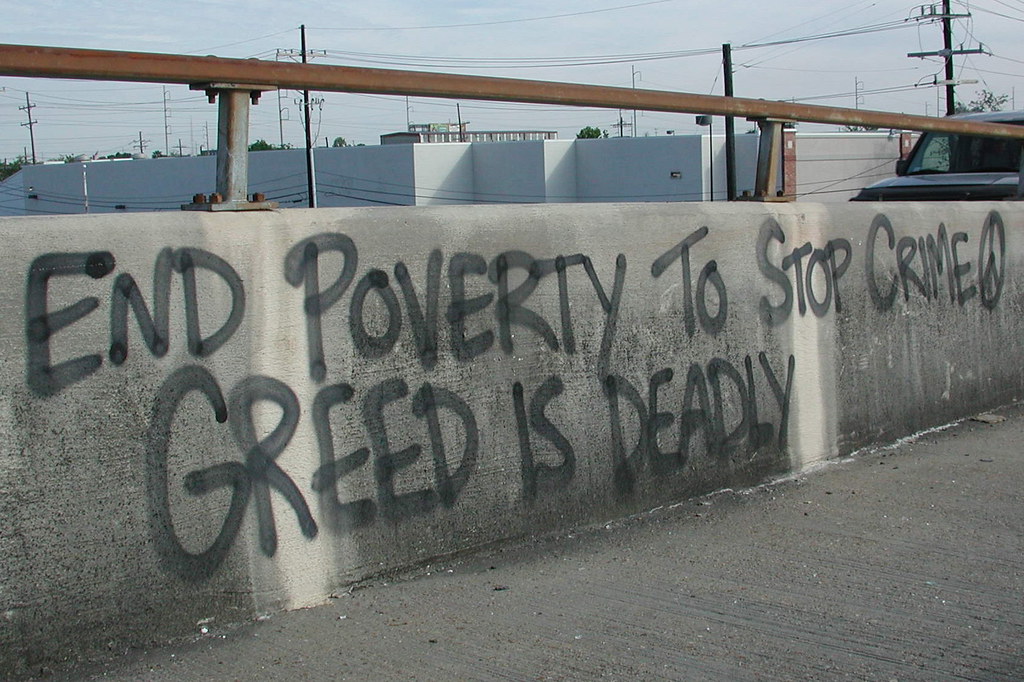
Capitalist society, systemic racism, cycle of poverty. These are the enemy.
The other kids tell me that his house is disgusting. Cockroaches are co-inhabitants, with the same rights as family members. One girl said, "I went through the front door and no one even bothered to try to kill the big roach that was crawling there, right on the floor! It was nasty!" Yet, she was still there. It is one of those houses, where anything can be gotten for a price. She's not the only one who goes there-- teenagers and adults alike go there to get what can be gotten. Maybe it's a hit of something, maybe it's a wager on a fight, maybe it's an escape from their own roach-infested place of residence. There are always a lot of people there. Looks like a constant party.
I gave a student a ride home the other day and he pointed the house out to me: "That's the pot house."
Yeah, I know. I know the kid who lives there; he's in my class. He dresses in designer clothes, even though no one in his house has a legit job. He's got a new phone that always has minutes, and says that there's also a new laptop at home. The only two meals a day he eats are at school, but somehow he always has all this...stuff. I'm supposed to teach him how to get a job. How? He doesn't think he needs a job. He has nice clothes, a nice phone. What more does he need? He is only lacking when it comes to finding food, and he figures that when he gets older he'll be able to collect food stamps just like his mom does. If that's not enough, he'll have some kids and make sure they don't get too smart. That way they can be labeled as having learning disabilities and he can collect more money. After all, that's exactly how his family has survived. It's a system that works. Instant gratification (as long as there's no security guard around) and government assistance. How can a 40-hour a week job compete with that?
It can't.
So I try to appeal to something else. Some other part of him that is hidden deep down inside. I've seen it over the past year and a half. It's in him, buried like an ancient treasure behind a maze of mines and booby traps that snarl or snap when anyone gets too close. It's the part of him that still believes that something can be different. Sometimes that part comes out ready to fight (like when somebody lifts something that belongs to him, even if it is ill-gotten gain.) Sometimes it comes out scared and alone (like when he "hypothetically" asked what I would do if my mama prostituted herself for drug money.) Sometimes it comes out when he asks for help with an Algebra problem, or works at understanding a chapter on genetic mutations. When I see that part of him rise to the surface, I believe in there is something special in him. I believe he can break the cycle. But I don't know how to make him believe in himself.
We start this year talking about the crisis. I tell the young men in my class, "Pretty soon, you will be extinct unless something changes." We read, "The Fight for Black Men," and discuss the alarming statistic from Michelle Alexander's book The New Jim Crow: Mass Incarceration in the Age of Colorblindness: more black men are incarcerated, on probation, or on parole today than there were enslaved in 1850. We brainstorm ideas about how they--young men who represent the very subject of these articles--could change the world.
It hits home. All of it. Reading about the cycle of poverty, the learned helplessness, the way society has made it so easy to brush aside people of color, the way we funnel young boys through the school-to-prison pipeline---the reading profoundly affects him. At first it makes him angry. He doesn't want to participate in class and is stoically silent. Then he wants to argue and argue and argue that there is nothing wrong with the status quo. He isn't responsible for anything and doesn't need to change anything! He can be quite happy living off the government and taking whatever he needs! "I'll just hustle. I'll be a big-time hustler." But then he slowly starts to change his thinking. The anger fades and is replaced by fear. "I want to try, but what if ...? I tried to get a job once, but they wouldn't hire me. Said they saw my name online. I tried to jump into a gang in junior high--wasn't even no real gang, but everybody knew. No one will hire me now." So we talk about how to network, and I ask friends to take a risk by hiring him. I petition the blogs with the crime reports, asking them to take the kid's name down and give him a chance. He starts to think about things differently.
And then he is bombarded with advertising for Black Friday sales. Everyone around him is talking about shopping, deals, huge family meals. They're all getting stuff. Stuff that he wants (don't we all?) The lure of it all is overwhelming. He wants. He wants to fit in, wants to feel like other kids in school, wants to look and act like his peers--who aren't lacking for anything. And in one quick moment, he doesn't think at all. He acts. Instant gratification. Want becomes need. Gotta have it. Now.
This time there are eyes watching as he tries to take, and they call the police. He is taken away. He is a juvenile, but they talk about charging him as an adult, giving him a hefty fine, and locking him up for 3 years. He is scared. Within days he writes me a letter begging for help. I write him back, but I feel helpless.
How can I compete? Capitalist society, systemic racism, cycle of poverty. Some of us fight the battles every day, but it doesn't feel like we're winning the war.
____
It is now months later. He has been released and awaits trial. The first few days back in school he said he was changing his ways. New friends, new way of thinking. But the same people are still around with their designer clothes, their new phones. He doesn't have that stuff anymore. In fact, he doesn't even have the roach-infested house anymore. His crimes cost his family their housing voucher for that home, and they had to move. Going home means feeling guilt and anger about what has been taken away from his family, so he stays away. He hangs out with friends doing I don't know what. But whatever it is, I have to figure out a way to convince him that finishing school and getting a job are more fun. How on earth can I do that? That is not a hypothetical question. I need help. What would you do to help?
Mar 31, 2013
The Myth of Failing Schools and the Impact of Socio-Economic Privilege
"Schools are killing creativity!"
"We should teach kids to trust their intuition instead of teaching them to obey."
These are all things I've seen tweeted or posted on blogs in the past week. And each time I read a comment like that I get upset. You may wonder, "WHY? It's true! We are training kids to respond to bells, to sit and be respectful. Our factory model of education hasn't changed even though our society has!"
We are bombarded with messages about failing schools and how to fix them, falling rankings in test scores, and the loss of U.S. ability to compete in the global marketplace. But all of those negative messages don't tell the whole story of what goes on in schools.
There are two big reasons why I get upset by comments like those I've seen on Twitter and in blog comments recently: first, they are blanket statements meant to characterize all schools; and second, they are extremely privileged statements.
Read on to see what I mean...
Like any stereotype--aiming a blanket statement at an entire group of people who share the same religion, ethnicity, race, sexual preference, or gender--stereotypes about public schools HURT. There are so many good schools out there! Check out this "failing" school's amazing success at getting kids motivated to learn, engaging them in their community, and helping them DREAM BIG:
UNDERDOGS- The Story of a Successful Public School from Think Ten Media Group on Vimeo.
Yes, the school in the video is focusing on test scores; but is that killing their creativity? When kids sit and dream about the president visiting their school--is that just blind obedience? The fact is that the assessments the kids take are used as tools to help teachers figure out how to teach them better. Many of the kids in the video started out reading far below grade level, and it was the tests that let teachers know that they needed to do more intensive teaching to help them. It is the assessments that let teachers know when they've been making progress. And that progress can't be made without assessing students regularly to see what they are learning.
If you think that all schools are killing creativity, that all schools teach only how to be blindly obedient workers, then you are making a hurtful, stereotypical statement. You hurt not only the creative students who are successful every day in public schools, but you also hurt those of us who work in public education. Many students and teachers work as partners in the educational process, creatively working together each day toward the goal of learning together. You do an extreme disservice to the thousands of teachers and administrators who put students first each and every day, and to the hundreds of thousands of students who thrive in public schools.
Not only are statements assuming that, "all schools kill creativity," stereotypical, they are also extremely privileged. I often read and hear people complaining about school policies that reward behaviors such as being respectful, responsible, and showing good citizenship. I often hear people complaining that programs like PBIS discourage individuality, kill creativity, and only teach obedience. I believe that most of those complaints come from people who have socioeconomic privilege.
When you grow up with one or two parents who have regular, steady jobs, are able to provide food, shelter and clothing for you, and have a college education--you probably know some things about how mainstream society works. You know that it is considered respectful (to your friends, your boss, your teacher) if you show up on time to appointments. You know that yelling at people in a public place is probably not going to be considered acceptable behavior. You know that it is considered rude to talk about sex in public, that cursing is considered crass, that certain clothing is appropriate in certain situations. When you grow up in an economically stable household with educated parents, you probably have regular check-ups and know about personal hygiene. You are most likely exposed to books before entering kindergarten, and have someone who either reads to you or lets you watch some preschool educational programs on TV that help you learn letter and number identification. You probably know what it's like to have privacy in your own home, and can find a space to be alone. You most likely feel hungry, but don't have to wait a full day or more for a meal. You probably learn at a young age that stealing is wrong, that drugs and alcohol are harmful, and that eating too much junk food isn't healthy.
I grew up in a middle class household with two working, college-educated parents. I learned all of that and more. But there are many, many kids who don't grow up with any of that.
I have spent my 15-year teaching career working with kids who don't have the privileges I had growing up. Do I want my students to think creatively? YES! But to many kids in poverty, the things they think creatively about are how to get their next meal, where to get clothes that fit, and how to make money to support their families----fast. Their intuition tells them that stealing gets them food now. Their instincts tell them that a big chain store has plenty of money already and won't miss a couple of pairs of blue jeans. They creatively look for ways to sneak out of stores with items that will help their families without getting caught.
One of my current students is 16 years old and lives in a 2-parent household. Less than two years ago, the family lived in Chicago. They lived in a part of the city that was no place to raise a family--lots of gun violence and gang activity. They didn't want to stay there, so they moved to Iowa. His parents have had difficulty getting and maintaining jobs, so they have moved around--from apartment, to house, to pay-by-the-day motel--just to keep the family sheltered. At times, my student has lived with as many as 8 other people in a one-bedroom space. He describes an environment where neighbors are not violent (like in Chicago) but are drug users, alcoholics, and sexually active in public. His "normal" does not include any of what was normal for me growing up: a knowledge of language that is appropriate, what it means to be respectful, what it looks like to be polite.
When he first moved here, he learned quickly about some things that are unacceptable in our area. He and his brother saw so many houses with stuff that they'd never had before; they were shocked. They had almost nothing--very little food, very little clothing, and a very small apartment for their large family. They thought about how people with big houses had so much, and could probably make it just fine with fewer things. They wanted to help their family. Intuition told them that it is their responsibility to help feed their family. Following their instincts, they robbed a house. Then they got caught, and were sentenced to several months in juvenile detention. As a result of that whole experience, my student now knows that thinking creatively about how to get new clothes and food for his family is not the best way to think if he wants to stay free. His choice had a consequence. And I am proud to say that at school we are doing our best to kill the kind of creative thinking he was doing when he first moved to Iowa...
See, our society requires some obedience. It requires us to follow certain laws that keep us safe. It requires us to pay our own way, to buy our own food, clothing, and shelter. The only way to pay our own way is to get a job. The only way to get and keep a job is to know what it looks like to be responsible, and respectful. A lot of kids don't learn that at home anymore. And we can lament that fact, we can complain about parents who don't do a good job of teaching their kids, we can blame the economy or the president or any number of other people. But blaming doesn't change the fact that we have lots of kids in schools who aren't growing up with the privilege of knowing how mainstream society works. Many schools have decided that complaining doesn't do any good--we need to teach.
So we teach--about the importance of being on time, about not cursing, about pulling up your pants, about not being on your cell phone when someone is trying to have a conversation with you, about not calling people offensive names. We look for ways to reward students who know how to communicate effectively, to accept feedback, to show up on time. We work on skills that we know are necessary for students to have in the workplace--whether they are fast-food workers or corporate CEOs.
When we don't work on these skills with students who live in poverty, we are continuing the cycle of poverty. When we neglect to share what we have learned through our privilege, we are acting as oppressors. Refusing to share our knowledge of what it takes to be successful in the U.S. is an attempt to maintain our privilege.
Parents or community members who are offended that schools spend time sharing knowledge that comes from privilege may not realize that they are helping to continue the cycle of poverty--but they are. This document from the U.S. Census Bureau discusses child poverty in depth. I encourage you to read through it and see the startling numbers, to think about what they mean. Children in poverty are less likely to be successful in school, less likely to hold regular jobs, more likely to be incarcerated. We need to help kids learn what it will take to be successful. While creative thinking, following intuition, and challenging authority are all important skills that have revolutionized our country, we need to make sure that all children understand that there are also some basic behaviors that we must learn to keep society running smoothly. We can't drive whatever speed we want to, show up to work whenever we feel like it, curse at patrons, or take things that don't belong to us. And we cannot assume that all kids come to school knowing what those of us who grew up with privilege know.
Most schools that focus on behavioral supports are not trying to create automatons who blindly follow directions. They are trying to level the playing field. They are trying to give many students who live in poverty access to the kinds of knowledge that privileged students have access to. Increasingly, our schools are filled with kids who need help learning all sorts of basic skills--not just reading, writing, and math, but also appropriate behavior. Is there really something wrong with teaching all of that?
Dec 9, 2012
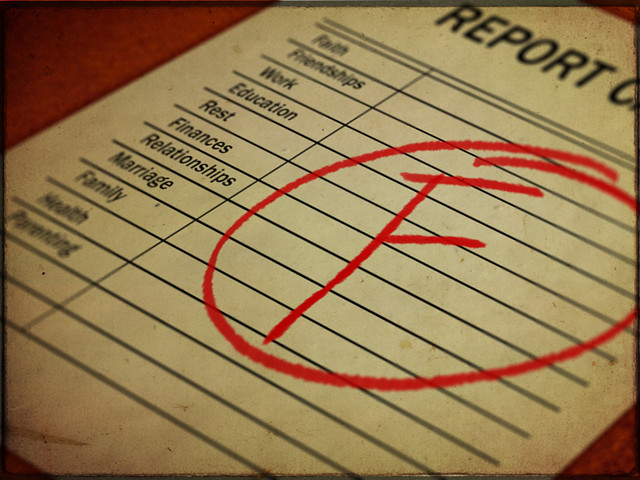
NCLB and Race-Based Grading
 |
| Image Credit: Flickr/ amboo who? |
To understand what I mean, you have to know something about No Child Left Behind, the Elementary and Secondary Education Act of 2001. This law required all students, regardless of ability level, race or gender, to be proficient on an approved standardized test by the year 2014. As a teacher of learning and behaviorally challenged students, the law continues to be extremely frustrating. Some students come to school from homes that provide the stability of three meals per day, new clothing when needed, and the loving support of one or two mentally stable parents. Other students come to school to get their only meal of the day from the cafeteria, sleep on the floor of a one-bedroom apartment with 8-10 other family members, and have absent or addicted parents. To expect students from both backgrounds to learn at the same rate is unreasonable. To expect students with significant learning challenges like dyslexia or dyscaclulia to learn at the same rate as their peers who do not have those challenges is unfair. Quite simply, it goes against the intent of another huge education law, the Individuals with Disabilities in Education Act, which attempts to level the playing field by protecting the rights of students with disabilities.
Where does race fit in with all of this? Well, one of the (I think) good things about NCLB is that it requires all schools to collect and share data about student achievement. Prior to 2001, we might have suspected that Hispanic, African-American, Native American and students with disabilities were not doing as well in school as their white peers, but we didn't have any concrete evidence. Now we do. Not only do we know that students of color are not becoming as proficient in reading/math as their white peers, we also know that they are being labeled as disabled much more often than their white peers (maybe because of their lack of proficiency?) When you really look at the big picture it's a bit startling. The data for NCLB is divided into subgroups:
- Economically disadvantaged;
- Special education;
- Limited English Proficient students (also known as ELL---English Language Learners); and
- Students from major racial/ethnic groups.
These nicely divided categories make you think that they are reserved for easily categorized kids. Looking at real kids, though, you see that there isn't much that's nice and neat at all. In most cases kids who are labeled as "not proficient" by NCLB standards fit into multiple, if not all categories. The kids I currently work with are primarily African-Americans who qualify for free/reduced lunch, and have learning disabilities/behavior challenges significant enough to qualify them for special education services. They represent 3 out of the 4 subgroups.
Fact: in our current system, many of the kids who live in poverty are the same as the kids who are in special education. Fact: A disproportionate number of the kids in special education are kids of color. Fact: many kids in poverty are kids of color.

The kids who aren't proficient aren't lots of different kids in separate little groups; they are one large group of kids who have a lot in common--skin color (not white) and socioeconomic status (living in poverty.)
No Child Left Behind demands that we have high expectations for the kids who fit into those subgroups. "High expectations" is one of those catch-phrases that goes along with "Rigor and Relevance," treating all students equally, eliminating cultural stereotypes by making sure we expect the same high quality learning from all of our students. It sounds really good on paper, but in reality setting expectations too high can cause serious problems--especially when we set the exact same high expectation for every student.
Here's what I mean:
Suppose you grew up in a house where it was expected that you learn to play piano. You practiced for 30 min. every day for 4 years between the ages of 5 and 9. Then when you were 9, the government decided that everyone must learn to play piano. You can't graduate from elementary school without being 90% proficient on a Liszt piano concerto. You totally lucked out, because you already have experience playing piano! Other kids, though, didn't even know that the piano existed. You are all the same age, and in the same grade; but you have a distinct advantage when it comes to being proficient because you already know how to play some piano. On a scale of Liszt concerto proficiency that goes from 0 to 10, you're starting at a 4 or 5, while your peers are at a 0. But you all have the exact same amount of time to get to a 10 on that proficiency scale in order to graduate. It hardly seems fair, right?
Apparently, that analogy describes what NPR called, "Grading Kids Based on Race." Instead of asking students who are in poverty/of color/in special education/English Language Learners/and not proficient to make the exact same progress as white, middle class, non-disabled, English speaking peers some schools are differentiating. From the NPR piece:
For example, in the District of Columbia, by the end of the 2016/17 academic year, the goal for reading is that there be 70 percent proficiency for black students and that for white students it be 94 percent proficiency. So that's obviously a 24 percentage point difference. But black students are so far behind their white peers right now in D.C. that they're being asked to make a much greater rate of growth.
There are still high expectations, but now the expectations take into account the students' present level of performance. In the piano analogy, you, who had 4 years of piano lessons, are expected to grow from a 4 to a 9 on the proficiency scale. Your peers, who started out not knowing what a piano was, are expected to go from a 0 to a 5. Everyone grows 5 points on the scale. Everyone had the same amount of instruction. Everyone was expected to make significant progress. The school just didn't expect everyone to come from the same background, have the same set of experiences, and end up at exactly the same place. It's a whole different situation.
So grading based on race--it sounds really, really flawed. But maybe, really, it isn't. Maybe it's a way to level the playing field a little. Maybe it's a starting point that will allow students of color to begin catching up to their white peers. Maybe high--but reachable--expectations will give way to higher expectations in the future.
What do you think about the idea of grading based on race presented in the NPR article? The comment section is open for your thoughts.
Nov 18, 2012
What Would You Do?

Here's an example:
In my old job, a student transferred in from another district. Within days of her entry into my classroom, we started having a lot of conflict. Girls were arguing with each other or not speaking to each other at all; school work was interrupted; every day there was a new battle erupting. When I took the girls aside, I discovered that all of the conflict was occurring due to comments made on Facebook or in text messages sent outside of school. A lot of gossip and hearsay was being spread through social media. The first opportunity for the girls to see each other face to face happened at school, when the fireworks would start...and those fireworks distracted EVERYONE from schoolwork. Keep in mind, none of these issues were occurring before our new student enrolled.
I contacted parents and tried to arrange a sort of mediation between the girls. When I spoke to the mother of our newest student, she told me, "This isn't the first time this has happened. Other girls are always picking on my daughter! She is always the target of bullies, and it doesn't matter where we go. We've moved six times and put her in six different schools, but the same thing keeps happening! Why can't any of you teachers stop those other girls from picking on my daughter?"
That's when I was smh.
Is it just me? Or does it make more sense to think that maybe, just maybe, since the woman's daughter has experienced the same problems in six different settings, that maybe it is the daughter who is instigating the issues with other girls? It is hard for parents to hear negative things about their kids, but after six different schools report the same issues, wouldn't you start to see a pattern? And if she doesn't see a pattern, then how do I change the situation to make it better for everyone involved?
In that situation, I tried to delicately let the mom know of my suspicion that her daughter was not just a victim. I encouraged the other girls involved to print out pictures of their Facebook walls, and save their text messages so that we would have concrete evidence. I didn't want to loudly accuse, but did want to calmly let the mom know that her daughter was a participant in the situation. When I carefully presented the evidence of her daughter's involvement, the mom promptly removed her daughter from our school and moved again. That was high school number seven for a 16 year-old junior who only had enough credits to be counted as a beginning freshman due to all of the moving around. I never had the chance to teach that girl how to deal with conflict in a more appropriate way because her mom removed her from the program.
Afterwards, I kept wondering, "Am I the only one who sees the pattern? Am I the only one shaking my head?" And then I realized that even if I was the only one who saw the reason behind the problem, it didn't change the fact that there was a problem. No one was getting any work done due to conflict, and every conflict included that girl. I needed to do something, and can only hope that gathering evidence to show the parent that her daughter was involved in some negative behaviors was the right thing to do.

I am questioning myself again now because of more situations that have come up. I am a very "glass half full" kind of person, and it is hard for me to think that anyone is going to purposefully try to do something negative.
With kids, I constantly think about the why of their negative behavior---I never accept that they are doing something just to be "evil." They are doing it because they don't know better, or they're upset about something--they're hungry, they're tired...there is always a reason for the behavior. I try to figure out what that reason is and do my best to either make the reason for their anger/frustration go away, or teach them a better way to deal with it.
With adults, I have always held the assumption that there will be a certain level of maturity involved. I assume that someone else already taught them how to not take their frustrations out on peers. I assume they know how to communicate effectively, and how to advocate for themselves in order to make their situations better. I am rapidly learning that this is not the case. Many adults also do negative things for a reason: they are upset, hungry, tired, in pain, or worried about issues beyond their control. Many adults struggle--just as much as kids do--to appropriately communicate their concerns.
Recently, I have encountered three adults in three separate settings who are experiencing major struggles to be effective in their roles. In one case, the adult doesn't seem to know that she is struggling--just knows that none of her colleagues like her and wonders why. In another case, a program is at risk of being shut down because of the way the adult interacts with her students and colleagues.
How do you help adults in those situations? I am a teacher of kids. Is it even my job to try to help them? Should I try to teach adults the same lessons that I teach kids? Is it appropriate to say to a colleague, "It seems like you're really struggling right now?" or is that something better left to an administrator?
One thing I know is that if I don't want to spend my days smh, I need to do something differently. If things need to change, I can't just wait for someone else to change them. I need to do something. It is risky to step into another adult's problems, but it will also be risky to sit by and watch a colleague continue on a destructive path.
What do you do when colleagues communicate inappropriately? What would you do?
Nov 4, 2012
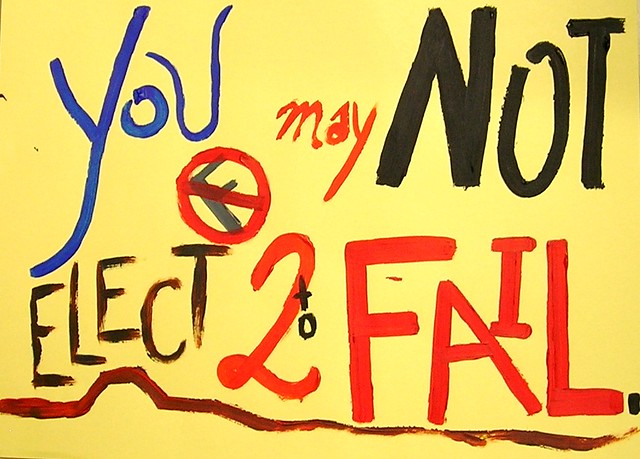
No Fail

"Y'all are askin' me to do too much! It's just too much fam, it's too much!" He sits next to me and is shutting down. His English assignment is basically untouched in front of him. A pen sits idly next to the blank page, waiting to prove its utilitarianism.
The end of the term is less than a week away, and at this moment he is failing English. One failed class means he is behind in credits. Will not graduate in May with his class. Probably won't return next year to be humiliated as a so-called "super senior." Thinks he'll just drop out.
It's a lot of stress and pressure for both him and for me, because his mom is sick and will be saddened if he can't make it; because my school is really pushing an agenda of "F reduction." We are told not to lower our standards, but to reduce the number of failing grades. That means a lot of work, for both him and for me. We sit at a small, round table. I am tired. He is tired. And he is frustrated by the amount of work that still needs to be done. "I ain't fittin' to do this much stuff! It just ain't worth it. I'm never gonna pass. I might as well just drop out."
"If you want to drop out, there's the door. You can go ahead and walk out. But while you're walking, I want you to think about the fact that I am still going to be sitting here. I am feeling your pressure and I know that we are almost out of time, but we can do this. I am going to help you. I want to help you pass this class and graduate on time. But if you're just going to sit here and complain, and fight with me, I'm not going to do it. In the time that you've been sitting here complaining, we could've had one assignment done already!"
Does that sound harsh? Sometimes it seems like a fine line between encouraging a student and challenging them to stop feeling sorry for themselves. Stop talking about how hard it is and just try... But they've experienced such failure already...and received so little support...that sometimes it seems like they just need a big nudge--like a mother bird nudging her fledglings out of the nest.
Oct 14, 2012
The Key

Working with kids who have behavior challenges is never, ever dull. So when I had a couple of quiet days in a row, I knew that there would soon be a volcanic eruption. That eruption came early in the week and lasted several days. What follows below is a true story from my classroom. I share it (and plan to share more each week) because I want you to know that there are many young people whom our society seems to fear, or whose behavior leads them to a place of punishment (sometimes directly to prison)...But those behaviors happen for a reason. It is my job--and the job of my colleagues--to figure out why. So when you read these stories, don't just gasp (the way my husband does) at the shocking nature of the behavior. Don't just shake your head and mutter about "kids today" the way a lot of people do. Think about what a kid must be going through, or what might be happening in their minds, that led them to act a certain way. Really, when you figure out the puzzle of why a behavior is occurring it changes the way you see a person. Empathy is a very powerful thing.
True story:
This week a girl was in study hall and she was very disruptive. She has this enormous belly laugh that made me smile when I first heard it (hard not to laugh along!) But she can roll that laugh for a full hour, non-stop. Her friends seem to enjoy getting her going, making sure that her laugh is all anyone can hear anywhere! Forget studying, thinking, talking, anything! When that laugh is roaring, there is absolutely no way anyone can focus. So she was laughing in study hall and wouldn't move away from her friends. She wouldn't quiet down. She refused adamantly and was referred to the Intervention Center to calm down. When the escort came to get her, she refused to go. Eventually, all other students in study hall were asked to vacate so that staff could try to calm her without any peers goading her on. It was the last period of the day, and when she finally calmed down her mom was called, and she was escorted off school property for the rest of the day. She was told she'd need to spend a day in the Intervention Center to problem-solve and get ready to return to study hall again at some point.
The day after her study hall disruption, she was in my room. She sat quietly in a study carrel at first, completing work that she was missing from class. Another student sat next to her in a separate carrel. (He had been referred to my class the previous day and had vandalized a wall pretty severely. He was doing a great job of earning his way back to class by processing through the incident, and completing his schoolwork.) The girl had a house key on a lanyard. She twirled it the way a lifeguard twirls their whistle...round her finger and back again, round her finger and back again. Eventually that twirling got boring, so she started whipping it around the wall of her study carrel, listening to it thump on the other side. But there was that boy on the other side, so the key kept whizzing by him as it hit the wall next to him. After a couple of near misses to his body, he did what I would have done: when the key came whipping over to his side of the wall he snatched it. The key came off the lanyard and he tossed it toward me. Now, I am totally uncoordinated and clutzy. That key may have been aimed at me, but I didn't see it coming until it hit the floor at my feet.
The key sat there for a moment and the girl said to me, "You need to give that to me."
I said, "No, I don't."
Almost immediately, she got up out of her seat. She headed toward me, and I thought she was going to get the key. She looked up at me mid-step and said, "You need to know that I do fight boys. All the time." As quick as a flash she changed direction and was leaning into the study carrel of the boy who'd been sitting next to her. There she began punching him repeatedly. He sat there, still, as she pommeled him; and I tried to maneuver in between them. Since they were both in a very small, confined space, I couldn't work my way in there. I had to grab her from behind and pull, all the while hollering for an associate who works in the room next door. (My own associate was escorting another student who'd had an earlier crisis back to class.) Help came quickly and together we separated the girl from the boy. I called my administrator on a walkie talkie to ask her what should be done next.
The consequence was that we would call the girl's mom to let her know we were sending her home. Physical violence will not be tolerated at school. Her actions led to one of the very few out-of-school suspensions doled out in my building. My associate escorted her off school property, and she was instructed to stay off the property for a total of three days. I tried calling her mom but got her voice mail. My administrator tried calling later and was able to get through. The girl's mom was very understanding and supportive, but also let my principal know that her family has come upon really hard times. They've lost their housing voucher and are being evicted from their home. They expect to be homeless by the end of the week. At this point, they don't know where they will live or how they will get by.
And so I think about it....how would I feel if I was a young teenager and knew that within days I'd be homeless? What if I'd finally found a way to laugh out loud and was told to be quiet? What if I felt so scared and frustrated about my life that I'd look for any way at all to let some of those feelings out--even going so far as punching someone?
For sure, the reason for the behavior does not excuse it. No matter what is going on in her life, it is not okay to punch someone who was just sitting next to her trying to avoid being hit by a key. There is no place for physical violence in my room, in our school, or in our community.
But now I can see why it happened. Now I can begin to talk to her about less harmful ways of expressing her fear and frustration. I don't know if it will work, but I have to try--not only to help with her behavior, but to see if there is anything at all our school can do to help her family through this hard time. We start our problem-solving journey tomorrow. Keep us in your thoughts and send some positive energy to Iowa for us--especially to her. Her family needs all they can get.
Sep 30, 2012
Triumphs of the Week
.jpg) |
| An invitation I made for our PTO sponsored Read-a-Thon |
Okay, so this week really there were more trials and tribulations than triumphs in my life, but seems like all I really write about are the challenges lately. I need to share a couple of small triumphs!
I don't know if I've ever written about this, but for the past three years I have been active on the PTO (Parent Teacher Organization) board at my children's elementary school. Their school is very diverse--both culturally and economically--and it is often a challenge to figure out how to make all families feel welcome in our PTO. The primary purpose of PTO is to raise funds for school events, materials, and activities that aren't covered by the school budget. But when half or more of our school's families live in poverty, it is a difficult situation. I do not feel comfortable asking children to sell products--PERIOD. But I feel even more uncomfortable asking children who's families are struggling to meet basic needs to give money or sell products. In previous years, our PTO meetings have been contentious at times, with me arguing against product sales and looking for alternatives, and other parents arguing for product sales that include incentives for children. It has literally caused me to lose sleep. I have often felt like leaving the PTO board, but then realized that there would be no dissenting opinion if I did. Half of our families would have no real representation. I kept on going to meetings.
Last spring, I was elected President of the PTO. Our first meeting of the year occurred this week. We just wrapped up the major sales fundraising event of our PTO, and discussed our fundraising options for next year. For the first time ever, a majority of parents present spoke out against our current fundraising practice. Some argued against selling products entirely and suggested we go to a direct donation drive; others argued against selling products from the company that we've been partnering with for the past several years--a company whose staff is very pleasant to deal with but whose products are low-quality and overpriced. Overall, a majority of parents voiced a call for change. It was the first time ever that I was part of the majority. The first time ever where I didn't have to fight tooth and nail to get a differing opinion heard, defending myself from what seemed like a very personal rebuttal to my arguments. It felt good to know that I am not alone in my opinions about asking children to sell products.
Another PTO triumph happened this week when we hosted our first ever Read-a-Thon. This event came about due to a phone call I received over the summer. A local church wanted to give money to a school in need, and hoped that their funds would be used to purchase books. They wanted the books to go directly to children, and hoped that we could find a way to match their donation through pledges. As I mentioned above, our elementary school has a large population of families who struggle to meet basic needs. Asking them to pledge money is extremely difficult for me, so I began to look for other ways to obtain matching funds. The Walmart Foundation has an online grant proposal system that awards up to $1000 per grant request to community organizations that meet certain criteria. I applied for a grant and received $500! In addition, I organized a Read-a-Thon so that families who wanted to donate more could do so.
The funds gained from the local Lutheran Church and their partner, Thrivent Insurance, Walmart, and the families who donated, will go towards purchasing a book for every child in school. Each child will read the book in class, complete school-wide activities related to the book, and invite their families to celebrate reading at a Family Night. At the celebration, there will be family friendly games and activities related to the book, and children will be able to take home their very own copy. It is an excellent event that promotes both literacy and community. I am soooo excited that it will be funded this year by PTO--with absolutely no product sales involved. YES! That is a triumph! :)
Do you participate in your children's Parent-Teacher organization? How do you raise funds?
After our PTO discussion this week, I am looking for more ideas. Anything we can do that does not involve low-quality/high-priced products and asking children to sell things is a good idea in my mind! Please share your ideas in the comments.
Sep 2, 2012
Behavior Challenges
 |
| Flickr Image Credit: Psychology Pictures |
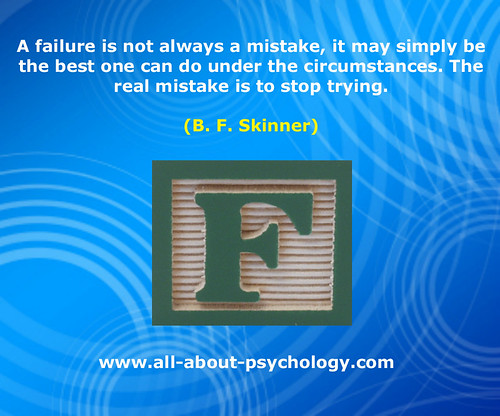
Kids are exhibiting behaviors because they are trying to communicate something. They are most often trying to gain attention from peers or teacher; or trying to avoid/escape something that is unpleasant. If we can figure out what they are trying to communicate and teach them to communicate the need for it in a more appropriate way, the behaviors will decrease and eventually (hopefully) go away.
Example from the trenches:
One of my students is constantly on his phone during English class (I teach English one period of the day and spend the rest of my day offering behavioral interventions/learning supports.) When I speak to other teachers about him, they say they are seeing the same thing in their classes. It doesn't matter how many times you redirect him, ask him, tell him to put it away--he is always on that phone.
Finally, one teacher referred him to my room for a behavioral intervention when he refused to put his phone away. He was upset about being sent out of class, but eventually told me two things: first, kids today are addicted to their phones and adults just don't understand; second, he was kicked out of his house and has no place to stay the night. He is texting people to find a place to sleep.
There was no guesswork involved here--he effectively communicated his needs to me as soon as he was away from his peers and away from the teacher. I tried to let him know that when a teacher asks him to put his phone away and he doesn't, it is perceived as disrespectful. A better way to do things might be to ask permission to use his phone. He argued, "They ain't gonna let me just use my phone!" So I told him I would email his teachers, asking them to give him a one day pass to use his phone if he asked appropriately. (One day only, because I want small steps, and because I don't know the kid well enough to know if he is playing me. I don't want to give him a free pass to use his phone for Facebook in the hallway every day!)
I did email all of his teachers with a request. I let them know that I don't think we can break him of his constant need to use his phone. We need to start small. So for ONE DAY ONLY, if he asks to use it appropriately--please let him use it. He's having some difficulties at home and hopefully he can work through them appropriately.
The next day in my English class, he had his phone out again. He had not asked appropriately to use it. I reminded him, "Remember--today you can use your phone if you ask appropriately."
He said, "Can I please use my phone to text my mama?"
"Thank you for asking appropriately. You may use your phone to text your mama, then please put it back in your pocket." He sent one text message and then put his phone in his pocket for the rest of the period.
In that situation it worked. The theory meshed with practice. We are on "Day One" of a small plan to change a problem behavior. There will be ups and downs. He will relapse and get grumpy about teachers asking him to put his phone away. But we started down the path of appropriate communication.
Things the Behavioral Approach Doesn't Do:
My student communicated two things to me that day he was referred for an intervention, and one of them is--in my mind--more significant than his addiction to his phone. He doesn't have a place to sleep. There is nothing a behavior plan can do to solve that problem. That takes good, old-fashioned human interaction, a support system, and help from outside agencies. It takes a lot of good relationships to help with those problems: relationships with kids, parents, and service providers. Those relationships take time. And when a kid doesn't have a place to sleep, it's hard to figure out where to get help (especially when you're new to the job, like I am.)
 |
| Flickr Image Credit:Psychology Pictures |
The theory makes everything so cut and dried. Behaviors occur to communicate a message. Decipher that message, change how the kid delivers it, end of problem behavior. But what if the message the kid is inappropriately delivering is one of human suffering? In my first weeks on the job, I have received some messages loud and clear, "I am depressed." "I have no place to live." "We can't pay our bills and the lights have been turned off." Somehow, just teaching them more appropriate ways to say those things is not enough.
Behavioral consultants visit our school and tell us how things should be done. Their suggestions are to follow protocols and read from scripts. Everything is de-personalized and sanitary; there is no human element. It is all Pavlov's dogs and Skinner's rats. But how do you tell a kid to express their concerns about life more appropriately without helping to alleviate those concerns? I am learning that this is the true challenge of my new job: a balancing act. Alleviate those who want me to only use a behavioral approach by doing as much of that as I can; but also alleviate the kids' struggles and my own sense of right/wrong by using a humanistic approach--caring and problem-solving--whenever I can.
I pray that the behavioral approach and the humanistic approach are not mutually exclusive. Because there is no doubt in my mind that to be even slightly successful with these kids--I will need both.
Aug 26, 2012
Week 1 Notes: Challenges of the New Job
 |
| This is how crazy my brain feels! Flickr Image Credit: caffeina |
Honestly, I am so busy that I don't have much time to stop and think. There are so many things to do in a new job. I've been trying to prioritize, but there is just so much to learn that it's hard to know where to begin.
First and foremost, I want to build relationships with kids. But I also need to build relationships with my new co-workers. I need to contact parents to start building relationships with them, because no teacher can do good work without the support of parents.
Running a close second in the race for my attention are things like finding supplies (which I largely have to pay for myself), writing lesson plans, figuring out how to use my new laptop and other technological stuff, and keeping up on paperwork.
On top of all that, my family needs me. My kids started school. They have new routines, homework, and extracurricular activities that are starting up again. I am at my wits end trying to figure out how to get it all done. My brain is running non-stop, and it seems like no matter how many hours I put in towards finishing my To Do lists, nothing ever gets done. I am flying by the seat of my pants, every day, which is thrilling! Exciting! And very, very stressful.
Now that I've got one full week under my belt, I can tell you a little bit about my new responsibilities. I've discovered that I really have three distinct roles:
For one hour a day, I offer learning supports to a few kids who have struggles in specific areas of learning. They also have some behavioral challenges that stem from a wide variety of reasons-- personal/family situations, health reasons, or other psychological factors. I am their advocate when they attend classes in general education settings; I must offer them instruction in their areas of struggle to help them improve; and I must monitor their progress in reaching specific learning goals.
For one hour a day, I teach English to a small group of boys with severe behavioral challenges. I plan the lessons, and try to teach reading/grammar/vocabulary/writing while also modeling appropriate behavior, reinforcing appropriate behavior, and trying to ignore inappropriate behavior. It's a tough crew, and I am not yet comfortable in the role of a behaviorist. I had a huge snafu with curriculum: the book I ordered didn't come in time for the start of school so I had to look for something else to teach. I planned several lessons for a second book, only to find out that they'd read it last year. They requested that we read the second book in the Hunger Games Trilogy, Catching Fire, so I am madly writing lessons for that book now, and trying to get my hands on copies of the book for them to read aloud or read along with while I read aloud. I know from experience that problem behaviors are more problematic if kids don't have anything to do in class, which is why I am spending hours and hours trying to make sure I have something for them to do. Our program is so new that there is no set curriculum, no set plans...we are creating as we go. It is exciting, yes...but so, so tough.
The rest of my day is spent either in structured study hall with 1-2 of the kids from the behavior focused program OR supervising/collecting data about kids who had a severe behavioral challenge in their regularly scheduled class. If a student refuses to work repeatedly, cusses at a teacher, or does something that is really interfering with the ability of a class to function, instead of being kicked out of school or suspended, they come to my room. In my room, they must do some problem-solving. They must think about and acknowledge what was inappropriate about their behavior, make a plan to make amends and/or do things differently next time they are in a similar situation, and complete any schoolwork that they missed as a result of their behavior. While they are in my room, we are documenting their ability to problem-solve, monitoring their behavior, and trying our best to give the student the skills they need to succeed back in their classroom. If they can demonstrate that they've got things under control, then they can go back to their regular classes. If they can't, then they stay with me until they can.
It's only been a week, but I can tell you this:
- There will never be a dull moment!
- The team I work with is extremely talented, dedicated, and supportive.
- Deep inside--underneath all of the bravado, anger, and talk--there is a kernel of goodness inside each of the boys I've met so far. I see it already and just hope that they will show me the chink in their armor that will let me in.
I don't know how to be a proper behaviorist. But I know how to care. Hopefully, they will sense that, and tolerate all of my lack of expertise, all of the unknowns and unplanned lessons. Some day, I'll get it together. And so will they. I believe.
Jul 22, 2012
Bad Kids


I heard another story about that kid last week. All school year he's been nothing but trouble. He was caught red-handed in the pantry, breaking into cabinets filled with supplies for the after school program. Soon after, he was caught with fifty dollars that he'd stolen from a teacher's desk.
Last winter I watched him play basketball, calling the boys on the opponent's team, "bitch" (and that is the least foul of his words.) I've seen him get angry and throw things: his desk, a chair, wild punches, tantrums. He is nothing but trouble. The families in our neighborhood have tried to welcome him into our homes to help him, but we've all been burned too many times. He's stolen multiple video games and gaming systems from us, been rude, eaten our food, never given thanks. He curses and cusses in front of the really little kids. He is just bad news.
Kids like him are in our neighborhoods and classrooms across the country. They sit with our kids and expose them to all kinds of filth and foulness. They should just get kicked out of school. Suspended. Expelled. They need to be kept away from our kids. Our kids need to be protected. They don't need to be exposed to such anger and violence. Those kids are headed straight for prison, anyway. There's nothing we can do. They're just bad kids.
When you see him, you can just tell. He's angry. He doesn't have a future because he can't control that anger. He doesn't know the difference between right and wrong. In a lot of ways, that kid is scary. Such anger is hard to control. A loose cannon. You never know what he's going to do and that unpredictability is frightening. He could be a psycho gang-banging drug-dealing killer some day. What a bad kid.
Except...all of that is what we see on the outside. All of that is the external circumstantial evidence. What's going on in there? Really? Who is that kid?
When you talk to him, if you are patient, and you try to crack through the hard shell to get to the soft innards, then you find out that he is hungry. Dad left. Mom doesn't have a job. He's hungry. His only meal is the free lunch offered at school every day and since he is a growing boy of 11 years, it is just not enough. The pantry he got caught breaking into is filled to the brim with food for breakfast and snack at the after school program. He just wants to eat.
The $50 he took from the teacher's desk? He was caught with it at the grocery store, trying to buy food for his little sister. She is home all day without food, too young to go to school and get the free lunch.
The video games and gaming systems he took--he's not playing with them. His one-bedroom apartment doesn't even have a TV. He's been taking them to the gaming store in the strip mall by the grocery store. He sells them there and takes the cash next door to buy food.
He is 11 years old and he is too young to get a job, but he is the sole provider of sustenance for his family. He walks around the neighborhood and sees his classmates riding their bikes, playing in their yards, hanging out and playing football. They don't have to worry about eating. They don't have a daddy who left them. They don't have a mom who is so depressed about losing her job and her husband that she can't get up off the floor of their apartment. They don't have to worry about the eviction notice that just got stuck to their front door. They don't have to worry... and it makes him angry. He is so angry he can feel the rage just rising up from his toes...to his fists...to his head. Just one person says something wrong and he will show them how it feels to hurt like he hurts. Just one thing. Go ahead, say it you mofo. Say it.
Sometimes they say it at school. Sometimes in the middle of a football game on the corner. Sometimes they don't even say anything anyone could really consider an insult, when it comes right down to it. They just say something that reminds him about what they have that he does not. They remind him that he has to find something, some way to feed his little sister again tomorrow. They remind him that he likes his teacher and he wishes he could learn, but eating is more important right now. They remind him that if he steals at school again he might get sent away to some place for bad kids where you get to spend the night. In a way, it might be okay--probably more food than at home, and no eviction notice on the door. But who will feed his sister then?
Angry. So angry. No eleven year old should have to live like that. I'd be angry too.
There really is a kid like that in my neighborhood. Kids just like him really have been in my classroom. Parents of other kids really have said, "he needs to be kicked out," sent away, banished--to protect our kids. Somehow, though, I wish they could see the big picture, the whole picture...who that kid is both inside and out. Because when you really know him, it's hard to believe that anyone can say he's a bad kid. He's in a bad situation and making some bad choices...but he is not a bad kid. He's doing what he can to survive.
And if he's not bad, then you have to wonder about every single human being who does something bad. Are they really a bad person? or are they in bad situations making bad choices, stemming from a life filled with pain and hurt and anger? Are there any bad kids, really?
In the wake of the Aurora, Colorado shootings...this is something I have really been thinking about a lot lately.
Is anyone really, truly bad?
May 29, 2012
A Guest Post on Momsoap
A few weeks ago Martha Wood from Momsoap.com wrote a piece that appeared here on empatheia Yes, This Baby is Mine. Now I am really excited to have a guest post appear on her blog. Head over to Momsoap to check out my piece Pronouns and look around while you're there. Martha isn't afraid to write about anything--race issues, the underbelly of attachment parenting, and the realities of motherhood. She alternately makes me think, laugh, and shake my head as I read about her journey as a mom to a biracial daughter in Texas. Thanks for sharing it all, Martha! And thanks for sharing my piece.
Read my guest post, "Pronouns," here: http://www.momsoap.com/2012/05/guest-post-pronouns/

Read my guest post, "Pronouns," here: http://www.momsoap.com/2012/05/guest-post-pronouns/

May 27, 2012
Graduation and Ball Games
 |
| Image via Flickr/paul.hadsall |
Two of my kids are playing ball right now, so I have softball and baseball on my mind (3-4 games/week plus practices makes it hard to think about anything else, honestly!) I've also attended a few graduations besides my own, been to some graduation parties, and been reading about graduations in the paper. Put the two together--ball games and graduations--and here's what I've been thinking about.
For some kids, playing ball seems to come naturally. They are born with a talent for the game and can connect with the ball just about every time they are at bat. It almost seems like they have an advantage! They know how to play the game, and know how to turn a single into a double, or a double into a triple by being fast and paying attention to the game. For those kids, it almost seems like they're starting out on third base! It's fun to watch their natural talent blossom. They represent the innate beauty of pure athleticism. But there are other kids who start swinging and missing from home plate. They have to use every ounce of strength to hit the ball far enough to make it safely to first base. They have to pay extra close attention to the game so that maybe they can steal second. Then they get stranded at second, and have to wait for the next inning so they can begin the process all over again.
Imagine a game like this: the struggling kid finally gets on second base after two innings of trying. The runner ahead of them on third could potentially score the game winning run. A ball is hit along the third base line. The third base runner heads home and scores the final, winning run of the game. We celebrate that game winning run with fervor and excitement! The team rallies around the winning runner, the crowd hoots and claps and cheers. Meanwhile, the kid who has fought so hard to make a hit and get on base is left alone. Silently running the bases. Touching home just to say that they made it. In the stands, we often don't pay attention to those kids. They don't get our hoots and cheers and high fives, even though their arrival at home plate took much more effort, more work, and more struggle than the home run of the natural athlete. Their run was scored after the game's official ending, so it really doesn't count.
 |
| Image via Flickr /MomMaven |
On Friday, my wonderful former student-turned-current-co-worker held a surprise going away party for me. I was shocked to look around the room and find out how many of the attendees were kids who didn't earn a diploma when they were working with me. They left my program at age 17 or 18, and went on to either get an adult high school diploma, a GED, or to pursue a job. In the statistics I put together for the state at the end of each year, they are dropouts ("failures") and not recognized in any positive way for their accomplishments--even though they had to persevere and show more stamina than many of their peers to get where they are now.
Yesterday I was reading a newspaper story about the ceremony held Friday night for the students graduating from the school I will be teaching at next year. There is a long list of Valedictorians, Salutatorians, and all of their academic achievements. So many kids earned scholarships and are going on to do impressive things at colleges and universities all over the world. 320 graduates, the highest average ACT score in school history, and many other achievements and honors were bestowed upon the class of 2012 at my future place of employment.
But here's the thing...while there are a few stories of Valedictorians and Salutatorians rising up after difficult childhoods, most successful kids started their k-12 educations with:
- At least one parent who graduated from high school and attended some college
- A mom who at least knew about the benefits of breast feeding and didn't feel pressure from social service agencies to sign up for free formula
- A roof over their heads--and most likely the same roof for a good portion of their childhood (in other words, low mobility and lots of routine)
- At least one parent who read to them every day as a toddler
- Access to quality preschool
- At least one parent who could help with homework after school
- Access to quality after-school programming
- Transportation to and from programming after school
- Regular meals, every day, every month, every year
- Clothing that not only fit well, but allowed them to fit in well
The most successful kids have all of that, and more, as they grow up. They are set up for success, and the only thing that limits them is their own free will, their own desire to succeed, their own passion for learning. The top 10% of each graduating class sets itself apart because they are driven! They make a commitment to go above and beyond what most of their classmates do, and I agree that they should be recognized for their accomplishments! But I also wish we could recognize the amazing achievements of some students who didn't start out with all that, and still somehow still make it to graduation.
In the game of life, some kids start out on third base and don't even know it. Others struggle to make it on base, work hard to advance, but sometimes don't make it to home plate until after the game is officially over. I am glad that we celebrate the game winning runs! But shouldn't we also celebrate the kid who keeps coming back, inning after inning, trying their best to make it home--even if their feet don't get to home plate until after the game is over?
There are kids who overcome obstacles like parents who are addicted, homelessness, abuse, the death of a parent, poverty and hunger. They try so hard. They overcome so much. For me, those kids accomplish something that is every bit as amazing as what the top 10% of the class does. I wish there was some way to recognize them, too. I wish commencement ceremonies could honor both the top ten percent, and a few of the kids who kept trying, no matter what life put in their way, and finally made it.
The 11% who worked with me in the alternative program accomplished so much. And I'm sure that among the 320 who graduated from my future school, there are some stories of accomplishment just as great.
Woo hoo! Congratulations! High Five! Even though you didn't make it to home plate in the usual way, or maybe even during the regular game, I applaud all of you graduates out there who finally did it!
WAY TO GO!
WAY TO GO!
May 6, 2012
End of the School Year & Behavior Issues

Why do I mention these two kinds of kids? I've seen it in my own classroom and with my own children--the angst that the end of the year brings for some kids. Here's what I mean:
Some kids only eat at school. Our economy is so tough right now that the numbers of kids receiving Free or Reduced lunch is growing monthly. In Iowa, check the district-by-district numbers of students receiving Free/Reduced lunch by clicking here. Only 3 districts in the state have less than 10% of students enrolled receiving Free or Reduced lunch. 57 districts have more than half of their student population receiving Free/Reduced lunch. Where do these kids eat in the summertime? For some students, the end of the year is a time of worry. They know that they may not get to eat regularly until school starts again. With that kind of worry weighing on you as a child, would you be able to behave well?
In my own classroom, I know that I have students whose only mealtimes happen at school. Some communities like mine have a summer lunch program, where sack lunches are handed out daily in a local park; but not all communities offer a summer lunch program. I worry about my students; and I forgive some of their behaviors at this time of year because I know that they are worried about where their next meals may come from.
Some kids have little or no adult supervision over the summer. Most parents don't get summer vacation. Many families can't afford summer child care or camps. What happens to their kids? Many are left alone. Some parents are faced with deciding to go to work so that they can afford rent and food, or staying home from work to watch kids and receiving public assistance to pay for rent and food. Younger kids know that when summer comes, they are leaving a structured and supervised school environment to go to a very unstructured and unsupervised environment. For the first few days it might seem like fun to do whatever you want to, but after that kids may feel lost. They may feel abandoned. They could feel angry or sad and begin to get into trouble.
In my own neighborhood, there are kids who wander all summer. They bounce from house to house looking for something to do, usually knocking on a door just in time for lunch or dinner. Several boys who are in my son's grade frequent my house for access to snacks, air conditioning, and just some positive interaction. Summer is really hard on them. In May, they know it's coming. Whether they acknowledge it or not, in the backs of their minds they know what the summer holds. They may already be a little bit worried, and their behavior at school often is a reflection of that worry.
Some kids are scared of change. The end of the year means that kids are getting ready for big changes: a new grade next year, a new classroom, a new teacher. For some kids that is really, really scary. Some kids have more than just a new teacher looming because they have huge transitions happening: graduation. Whether it's graduation from elementary school, junior high/middle school, or high school, kids know that their lives are on the verge of changing dramatically. The unknown future looms in front of them. Not knowing what will happen next can be really scary for adults, too! If we have a hard time handling those major life changes, how can we expect kids to handle them? Kids who are pre-graduation, at any age, can have a wide range of reactions: cockiness, sadness, anger and avoidance of school are all things I see in my own classroom and with my own son (who is about to graduate elementary school.)
Those kinds of changes can be even more difficult for kids who have some kind of special need. I think all kids thrive when they are in a stable environment with consistent routines and structure, but kids with special needs absolutely require that structure and routine for day-to-day survival. Variation from the routine can cause some kids to lose their ability to concentrate, focus, and function. All the field trips, field days and fun stuff are drastic changes to the routine. They can cause kids to become lost, worried, and anxious. They don't always have the ability to express those feelings, though, and their behaviors may be the way they express them .
Two of my own children have ADHD, and one also has issues with Anxiety. It has been a rough spring for us so far. Stomach aches from anxiety, anger outbursts towards other students and teachers, inattentiveness and forgetfulness--all of these are issues my own kids have had in the last week or so at school. My kids don't have to worry about being supervised or getting meals over the summer. Can you imagine how a kid who has special needs AND has to worry about food and supervision over the summer might be feeling? Can you imagine how a kid with those issues might act in class?
The point of all this is that sometimes teachers, parents, and community members get frustrated by kids' behavior at the end of the school year and during the summer months. A lot of times, the first reaction we all have is to punish kids with office referrals, detentions, suspensions or calling the police. But the reality is that punishment won't really help most kids.
Think about it: how old were you when you could verbally identify your feelings about something and share them in a reasonable, calm way with an adult? I would bet that many, many adults still can't do it. If we can't maturely talk about our feelings and fears, how can we expect kids to do it? Kids exhibit behaviors because they are communicating something to us. Many times it is fear, worry, or anger at a situation that they are communicating. Instead of punishing them, why not teach them more effective means of communication?
I encourage teachers and parents who deal with kids having end-of-school year behavior issues to talk to your kiddos to see what might really be going on. There is a good chance that all of the changes happening at school are affecting them. Teach them how to communicate those worries. Give them a picture card, survey, matrix or list of feelings and ask them to identify what they're feeling. Help them try to explain why they're feeling that way. Then see if there's something you can do to help them make it better.
I encourage you all to look for and spread the word about any summer lunch programs offered in your communities. I encourage you all to keep your eye out for kids who look lost this summer. Invite them into your yard or your home for a snack and some positive interaction if you can. Don't look away from kids who are alone. Say hello. Interact. Pay attention. That simple contact might be enough to help them feel better, or at least feel connected to someone while school is out for summer.
Apr 29, 2012
Special Education, Suspension, Criminalization of School, Dropout Rates, and Race
 |
| Image Credit/Flickr: soonerpa |
My brain has been abuzz with all kinds of things. Although I do not know the specific details of my new job, I know a lot about the theoretical backing for programs like the one I'm going to work in. Here are the facts:
- African-American students nationwide are labeled as having emotional/behavior disorders and/or learning disabilities and placed in special education programs more often than white students--even though the schools doing that labeling have fewer black students than white students. This is called disproportionate minority representation in Special Education. (See this book and this study for specifics, or just Google the phrase "disproportionate African Americans in special education" to get over a million results.)
- African-American students, specifically black males, are punished more often than white students--even in schools where there are fewer black students than white students. This is called the disproportionate discipline of African-American students. The punishments often take the form of out-of-school suspensions or involve police. Out-of-school suspensions lead to students falling behind in schoolwork, increasing the achievement gap. Police involvement leads to the criminalization of school behavior, and more kids entering the juvenile justice system. (See this article with stats for the 20 biggest school districts in the nation, and this page with links to civil rights studies.)
- The system of zero-tolerance for behavioral issues that is in place in many schools often calls for police involvement in schools. This is the criminalization of school behavior. When we allow behavior in school to be criminalized, we send children into the juvenile justice system. Once a child is in the system, it is extremely difficult for them to get out. This is called the School-to-Prison Pipeline. Since disproportionate numbers of African-American students are facing disciplinary action in schools, it follows that disproportionate numbers of African-American students are entering this pipeline, moving directly from school to prison. (Read the ACLU's fact sheet here and find a book from the Civil Rights Project here.)
- High School Dropout Rates are terrible, especially among poor and minority students. Our nation's dropout rate in 2009 was 8.1%. The dropout rate for white students was 5.2%. For Black students it was 9.3% and for Hispanic students it was 17.6%--again, this is a disproportionate number of students of color. (See the National Center for Education Statistics fact sheet here.)
I don't think so.
For me, the thing that irritates me most about education reform is the trickle down theory: if we focus on the administrators and teachers, things will get better for kids. Reformers all seem to start at the top, and then hope that changes eventually make their way to the kids. That trickle-down approach means that things take years to improve for kids. Districts have to search for the proper teacher training materials, schedule the workshops at least a year in advance to get school board approval, and then they have to assume that all teachers will buy-in to the training. Once the in-service or training occurs, teachers have to find value in the material presented in order to start the process of change. And if they find value, then they have to take things one step further and actually apply their learning to their classrooms. If we're honest about things, that doesn't happen very often. Teachers are stuck in the day-to-day, one minute at a time, running of their classrooms. It takes a lot of determination to step back from the minutiae of day-to-day classroom operations so that we can alter the way we do things. One student's behavior, or a group of students' resistance to something new, and the lack of time to properly plan things, makes it difficult to change.
Instead of focusing on teacher diversity training, I think we should be focusing on changing things immediately and drastically for students. Develop plans for students first, and then make sure teachers adjust. Grassroots education change is what will make things better for kids the fastest.
How do we do that?
Start with the kid. When a behavior occurs, do not call the police. Talk to the kid. When a problem arises, do not instantly suspend a child---talk to him. Teach him. If behavioral expectations aren't being met, consider the fact that perhaps no one has ever specifically taught the kid to meet those expectations. We need to explicitly and directly teach kids how to interact; we can't just assume that they know better. We can't keep punishing kids for doing things they don't necessarily know are wrong. We are educators. We need to teach kids, not kick them out. We need to give students the skills to succeed in school, on the job, and in life by teaching them. That is the only way to stop the school-to-prison pipeline, to end the disproportionate suspensions/labels/dropouts and get kids connected to mainstream society. Research shows that if we can get kids connected to someone/something positive by age 25, their chances of being successful in life improve astronomically. Instead of planning new in-services to teach multicultural communication skills, let's plan a program to directly connect kids to a teacher or community member who can explicitly teach skills that will help them be successful.
And so...that's what's been on my brain lately. I am finishing out this year in my little alternative education classroom and doing the things we've always done to finish the year, but I am also receiving contact from people in the job I've accepted for next year. I am excited to learn more about what that job entails because it really does seem like a vortex of swirling "rightness" is around me--this job is right for me... I feel it. I don't know what the day-to-day nitty gritty of the new job will bring, and I can't really know until I get there. Obviously, there will be many day-to day changes, including these:
- 10 minute commute instead of 40+ minute commute
- 100 teachers in the building instead of just 1 (me)
- 1,400 students instead of 20-30
As I've said, I don't know the nitty-gritty daily-grind details of what my new job entails. But it is directly related to all of the above and involves intervening, problem-solving, and directly teaching kids. I am looking forward to being a part of a program that focuses on students, hoping that what they're taught raises them up without having to wait for change to trickle down.
Subscribe to:
Posts (Atom)
