Showing posts with label race issues. Show all posts

Aug 12, 2012

Newness: The Job, Teen Behaviors & Changing the Status Quo

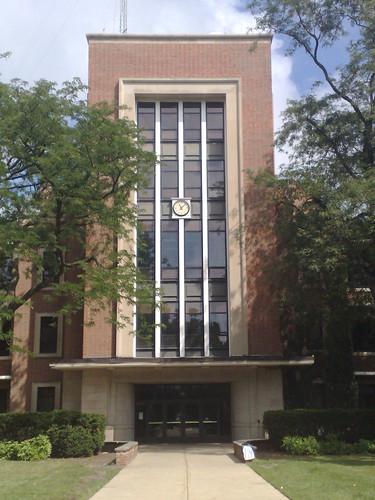
View from the roof of my new school!


In less than a week, it is the official start of school. I'm running around like a crazy woman trying to make sure everything is ready--kids have school supplies, I have lessons planned, and we have the groceries for packing school lunches. The new job gave me a heap of paperwork to fill out for insurance, payroll and all that other stuff. I have a new email address, access to a new-to-me student information management system, and a computer that is very different from the machine I have at home. I got a tour of the building last week and found out where to get copies made. I have a mailbox in the office that actually had mail in it! The little pieces of the new job are starting to come together, but the big picture won't really form until I meet the kids. Soon!

Another rooftop view. Loved that my new principal let us go on the roof!
It has taken a while for me to really understand what my new job is all about. I worried that maybe some of my new co-workers thought I was daft because I keep asking questions and feeling confused. But the questions and confusion are slowing to a trickle--especially after a 2-day training I attended last week. Now, I get it. I understand what I am supposed to be doing and know that I will have lots of support and lots of freedom to figure out how to best do it. It's a good feeling.

This morning I had time to catch up on my Google Reader feed, and found an article that directly relates to the new job. I've written about this issue before here on emapatheia: Bad KidsSpecial Education, Suspension, Criminalization of School, Dropout Rates, and Race; Civil Rights in Education; Imagine: White Students Suspended Disproportionately More than Blacks. Here is a piece from Education Week discussing more data about Black students and suspension--this one relating to Special Education.

______________________

One in Four Black Students With Disabilities Suspended Out-of-School

Students with disabilities are suspended about twice as often as their peers, a new analysis from the Civil Rights Project/Proyecto Derechos Civiles at the University of California, Los Angeles, has found.
Analyzing data that districts submitted to the federal Education Department's office of civil rights, researchers found that the rate of suspension for students with disabilities was about one in 13, compared with 7 percent for students without disabilities.
Most alarming, they said, was that one in four black students with disabilities was suspended at least once during the 2009-10 school year. That figure is 16 percentage points higher than for white students with disabilities. (Nearly one in six African-American students without disabilities was suspended from school during the 2009-10 academic year.)
Some of these students may have an explicit need for help with their behavior outlined in their education plans, which should warrant counseling or appropriate therapy, noted Daniel J. Losen, the director of the Civil Rights Project's Center for Civil Rights Remedies.
Read more at Education Week
__________________
I read this and am proud to be a part of a program to change the status quo in my new school. Our goal is to teach kids with behavioral challenges and disabilities the skills they need to be successful in any setting. We will work hard to adjust our adult behaviors, so that suspension--both in school and out-of-school--is an absolute last resort. Our goal is to reduce the number of times students are referred to the office for disciplinary measures. Instead of punishing kids with behavior issues and treating them like they are "bad kids", our focus is on their knowledge and skills. They aren't "bad kids"--they are kids who are lacking the necessary skills to succeed in a classroom setting. As teachers, is it our job to teach the skills necessary for reading, writing and math...but it is also our job to teach the behavioral skills necessary for academic learning. We can no longer assume that every kids just knows how to study, knows what it means to be "responsible" or "respectful". Those are very vague terms. My job now is to listen to kids who have struggles, help them problem-solve, and teach them (and re-teach them) the skills they need to be successful. 

Programs like the one I will be working in are found mostly in elementary schools, but I haven't heard of many at the high school level. It is very, very exciting to be a part of something I see as ground-breaking. The focus is largely on behavior, and realizing that even though teenagers are in bigger bodies, their behaviors are sometimes not that different from little kids when you think about the why of it.  We watched a video in my training last week to talk about that point (see below.) Maybe it will look familiar to some of you with toddlers!?!  The point was to think about human behavior as having a function: usually to gain or avoid something. Instead of looking at the "bad choices" kids make, we look at their behavior as a form of communication. Instead of saying that a student is "bad" or has no self-control, or that his home life is to blame, we use their behavior as a clue: the student is lacking the skills to  communicate more effectively. That outlook--it changes everything! The kid isn't "bad" anymore, they're trying to tell us something! The way they're telling it isn't necessarily the most effective way, so we need to figure out what they're trying to tell us and teach them a better way to do it. As a society, we seem to understand this concept with kids like the toddler in the video below, but not so much with teenagers. The behavioral approach is used frequently these days with kids who have Autism, too. Why not with teenagers--the most historically misunderstood people on the planet? My new job involves trying to figure out the function of teenaged behavior and teaching more appropriate ways for teens to communicate. Does this make sense to you? I hope so. It is exciting and different and challenging and cutting edge... I am not sure how it will go, but I am looking forward to finding out!

Here's the video from my training. Can you tell what this toddler is trying to gain or avoid through his behavior? (Watch! It's pretty humorously obvious :D)


Jul 15, 2012

Crashing Dreams: Parenting in Reality

Image via Gangway Advertising. The chances of being an NBA All Star whose picture gets displayed on the side of a building are about two in a million. 

Last week I had one of those horrible parenting moments...the ones where you wonder whether or not you've scarred your child for life, knowing that someday there will be a therapist listening to her blame her mother for long-term issues stemming from that day of that moment when she said something awful.

Maybe it wasn't that bad. Maybe it didn't scar her for life. Maybe it was a valuable lesson.

Yeah, right.

Am I just talking myself out of the significance of it all? Did I crash her dream or give her a needed reminder of the realities of life? I guess only time will tell.

What did I say? Well...some words just bubbled out that I'd been thinking about for a long time. My thoughts are all jumbled up because of sports--sports in my house, sports in the news, sports sports sports everywhere. Add that to the fact that my eyes are always seeing the influence of race on society (once your eyes are open it is impossible to close them) and you have a recipe for pre-teen dream crashing.

Here's the gist:

My son plays a lot of sports. As a preschooler he wanted to grow up to be a superhero, but when he realized that there weren't really web-slinging mutants in real life he decided to go for the next best thing: being a professional athlete. In the United States, professional athletes are iconic heroes, showing their guts on the field and living in glory after the game. From age 3-7 he played soccer and studied the Japanese martial arts of Aikido and Shinkendo. At 5 he started tee ball, which morphed into full-fledged baseball (this season he signed up for one team, but was invited to play on two others.) At age 7 he started flag football and now has two years of full-contact tackle under his belt. He's played basketball every season for the past 5 years. This past year he played on two teams during one season, meaning he had a game or practice every single day of the week. Every writing assignment he does for school is about sports. Every book he reads is about sports. You know that phrase "for the love of the game"? That sums up his life's passion so far. He loves to play. And it doesn't matter which game--he loves them all.

As a parent and an informed citizen, I know that the chances of him becoming a professional athlete are  pretty slim. A report put out by the NCAA lists the probability of high school and college athletes going pro, and the numbers are dismal. The NCAA report for men's basketball shows that only 3.2% of high school players make it to the NCAA, and of those only 1.2% make it to the NBA. In real numbers, the report says that in 2011 there were over half a million high school basketball players. Of those, only 48 made it to the NBA Draft after playing in college. The stats are like that across all sports--the chances of going pro are slim to none. Yet everywhere, young boys dream the dream of being a professional athlete. Young boys of color are particularly drawn to the dream of being a professional athlete because the media doesn't really give them many other images of themselves to consider. How many professional men of color do you see in the media who aren't athletes? As a result, boys of color dream about a better life--wealth, fame, and giving back to the community--through sports. My son is no exception to that rule.

He works hard at sports. He practices, exercises, lives, eats, and breathes sports. He is hard-working and talented, but I have always told him that while he's dreaming about going pro he also needs to dream a back-up plan. "In order to be a college athlete, you have to be a college student. So what do you think you might like to study?" We've talked about Sports Medicine, coaching, training, and Sports Law and he knows that there are lots of other opportunities to earn a living in the world of sports that occur off the field. His dream of being a professional athlete has always been tempered with a dose of reality.

So, when his sister started talking about being a professional tennis player I thought it would be a good idea to have a similar chat...

Except I didn't remember to keep in mind that my daughter is a completely different kid than her brother. She has a wide variety of interests and is always trying something new--from art and basketball to acting, softball, and playing the viola. She is a very well-rounded individual so far, who I am sure will be a very intelligent and well-rounded adult. In fact, when she was little her daycare provider predicted that she would be the first woman President of the United States, and our family often reminds her of that fact because it really could come true! She is just that smart, creative, (and gifted in the art of argument--which is both a blessing and a curse in our house.)


Image Credit: Flickr/mrlaugh
Tennis is something she tried years ago and didn't really like because "it's too hot and sweaty." After that first session of lessons, she opted for princess dance camps, acting classes, or art camps during the summer instead. This year, she decided to try tennis again. On the second day of lessons, she announced that she was going pro so that she could travel the world and be a tennis player just like Venus Williams.

When my daughter decided that going pro like Venus Williams was her goal, I instantly wondered why. She has never watched tennis on TV, never read about tennis, and only played for 6 weeks as a first grader! Why is this now her dream?


First thought: my daughter idolizes her older brother and a couple of months ago admitted that her interest in sports is largely due to his interest in sports. Could this just be an attempt to imitate her brother? One thing that's different, though, is she doesn't have the same opportunity to see professional athletes who look like her on TV as he does. They just don't show a lot of women's sports on TV.  


Second thought: what type of professional women do they show on TV?  What  role models for women of color are out there in the media for my daughter to see? 


Really-- think about it. When I did, I realized that she has one main source to see women of color in the media: music videos starring scantily clad singers and dancers.

There is of course, Michelle Obama. She is the First Lady: sophisticated, intelligent, polished, socially active. But she is the wife of the President. It doesn't really compare to what I've been trying to tell my daughter: "YOU can BE the President!" Don't have to be the "wife of " anyone...you can be the President.

All this swirled through my mind, along with all the stats about how slim the chances are for any athlete to make it to the elite level. I told my daughter, "You are so good at so many things! I'm glad you like tennis, but remember that it's really hard to be a professional tennis player."

"Don't try to talk me out of it, Mommy. You're just being negative."

Ugh. Here is where I  inserted foot in mouth. "I'm not trying to be negative, I just want you to be realistic. People who are professional athletes spend a lot of time practicing and they work really hard. Not to mention that tennis is an expensive sport to learn, and we really can't afford to get you the kinds of lessons you'll need to play at the professional level. When Venus and Serena were your age, their family moved to a new town so that they could study in an elite tennis academy. We can't do anything like that! Can't you just play for fun and think about what else you can do when you grow up?"


At that point the tears started falling. The voice turned into a shriek. "You're ruining my dream, Mommy! Why can't I just dream?"


Indeed, why can't she? I felt sooooo badly then. Evil Mom. I wanted to slink down to hide in a hole in the ground.

After a little while, I apologized to her. I told her the truth, which is that as her mom I don't want her to get hurt. I don't want her to dream about something that is so far out of reach--like a career in professional tennis--when she is so talented and smart in so many other areas and could be successful in something more attainable. Realistically, you might ask--is being President more attainable than being a professional tennis player? I don't know. But I know where her talents are--in reasoning, argument, tenacity, creative thinking, and her ability to communicate. Those talents can take her much closer to being President than they can to being the next Venus Williams.

It all backfired, though. Trying to call attention to her talents in an attempt prevent any hurt she might feel if she fails to become the next Venus Williams... well, that's what hurt her. My attempt to save her from hurt is what caused her a lot of pain.

We both felt terrible. We both shed some tears. I worried, and still do, that I scarred her for life.

Thankfully, we  made up later that afternoon. We went to bed on good terms and woke up the next day to get ready for tennis lessons. I tried not to talk about it, but worried that after our previous conversation she wouldn't want to go back to tennis at all. So I asked her, "Are you okay with tennis now?"

She said in a rather low-key way, "Yeah. I think it's a good idea to just play tennis for fun now."

I don't know whether she is crushed and defeated, scarred for life, or just more firmly trenched in reality. It feels to me like she lost some innocence, though. And I might need to visit a therapist myself to get over the guilt I feel for being the one to take that innocence away.

After her lesson (maybe to appease my guilt?) I told her that if she really wanted to pursue a career in tennis I will support her. We will look for scholarships and try to find a teacher who can work with her in the winter. It will mean some sacrifices--like giving up other activities so that we can pay for tennis; but we can do it if she really wants to. I meant it, too. Whatever it takes, we can do it.

Her response? "Mommmmmmy.....I already told you! I just wanna play tennis for fun!"

Hmmm....

What do you think? Should we let our children dream big, no matter how unrealistic? Or should we temper their dreams with some reality? I wish I knew the right answer. I really do...


May 29, 2012

A Guest Post on Momsoap

A few weeks ago Martha Wood from Momsoap.com wrote a piece that appeared here on empatheia Yes, This Baby is Mine.  Now I am really excited to have a guest post appear on her blog. Head over to Momsoap to check out my piece Pronouns and look around while you're there. Martha isn't afraid to write about anything--race issues, the underbelly of attachment parenting, and the realities of motherhood. She alternately makes me think, laugh, and shake my head as I read about her journey as a mom to a biracial daughter in Texas. Thanks for sharing it all, Martha! And thanks for sharing my piece.

Read my guest post, "Pronouns," here: http://www.momsoap.com/2012/05/guest-post-pronouns/


May 13, 2012

Yes, This Baby is Mine

Happy Mother's Day! In honor of this day, I am featuring a guest post from one of the feistiest, funniest,  most thoughtful and thought-provoking mom bloggers I know: Martha, from Momsoap. Thank you so very much, Martha, for sharing your experiences of being a mom on this Mother's Day.

Photo courtesy of Momsoap.com
If you look at our features, my daughter looks exactly like me, not her dad. But most people don't notice it until they get to know us. Most people don't look past the color of our skin.

I'm white. My daughter is, as she puts it, "light brown." Her father is Nigerian, so he is very dark. I'm as waspy as they come, full-on European background and raised in west Texas.

But since becoming the parent to a biracial child, I've become accustomed to  the once hurtful, now simply, banal, question, "Is that your daughter?" Or, "Is she adopted?"

Yes, yes she is my daughter. And no. No, she is not adopted.

I carried her around for nine months. Spent 19 1/2 hours in painful labor, pushed her out and nursed her for a long, long time. She is fully mine.

I made her with him. And we are different colors. The conception doesn't seem to fully register with many people until they see us all together. Or get a glimpse of my daughter's dad, who is now my ex.

Over the past four years, I've been asked if my daughter is adopted; had strangers insinuate that I'm the nanny; poked fun at, until they realize I'm not joking, that she really is mine; and just been stared at in general.

All because my daughter and I have different skin colors.

If you look at us up close, I mean, stop, and look past our skin, we look very much alike. I've been told that my daughter is just a mini version of me, with brown skin and curly brownish/black hair. She is mine, through and through. It's difficult for me to see how people don't see it.

Yet, over and over again, we get questioned.

Once, we were at a funeral of a distant relative. My own flesh and blood looked me in the eye and said, "How long have you had her?"

As I bounced my baby in her Mei Tei, I thought it was a strange way of asking me how old she was, confused, I responded, "She's almost a year old." At that point, I had not yet learned to see how we looked to people outside my own frame of reference.

I had a baby. She was mine.

It never occurred to me that people would question my parentage. Until it started happening.

He went on to tell me that he and his wife as missionaries in third world countries had adopted some biracial children. Too.

Too. It was that word that sent my mind quickly to what he had assumed.

I laughed. "Oh, she's not adopted!"

Stammering for a moment he finally managed to spit out, "Uh, uh, OH! You mean your husband is African American?!"

Once he realized that I had indeed procreated with a man from another race, I thought it best not to bother correcting his assumption that we were also married (we were never married) and move into the realm of a hell-bound sinner who had sex outside of marriage. After all, I was at the funeral of Bible-thumping west Texas Christian. There was no point in asking for a prayer session to bless me away from the eternity of hellfire.

Not to mention, possibly confirming for him the stereotype that white women who sleep with black men are sluts. Yes, another small town Texas stereotype that I battled as a youngster when I began exploring men of different cultures, and had long forgotten after living for nine years in Detroit where mixed race couples were much more common, but still not without stereotypes.

Motherhood to a Biracial Child

Now that it's been a few years into motherhood of a biracial daughter, and I've worked out the basics -- like how to comb her unbelievably thick hair; how often to moisturize her skin; and managing to mostly ignore that mini punch to the gut when someone asks me if she's mine --  I realize that I am in a wonderfully amazing position here in between the racial discussions in our society.

Something I learned from a mentor years ago, and I'll share with you here today, is we do a great job with racial discussions here in the United States. We do the most important thing when it comes to relieving racial tension. We talk about it.

We may not always agree. But we talk. It's the most important thing. To not be afraid to talk about race and ethnicity. Because it's all around us.

And as a white woman, who grew up around lots of racism and negative stereotypes about people with brown skins, I know how and when to measure very subtle racism. I also know how to address to my own people, which is an important part of the talks.

And best of all, I have come to realize that there is an important place for the biracial family in the midst of racial conflicts.

We see both sides. We really do.

Since having my daughter I am truly and honestly able to look quickly past the exterior and see a whole person, no matter what color the skin, what kind of clothes they are wearing, and what side of town they live on.

Many people believe that we are already living in a post-racial society because we have a black president. Because we got rid of Jim Crow laws and because everyone has the right to vote.

But we are far from a post-racial society. There is still racism in our culture. And it's time we talk and try to see the other side. All of us. Because eventually, if you don't already, you will probably have someone in
your family who has different color skin than yours. And they probably won't be adopted.
___


Photo Courtesy of Momsoap.com
Martha Wood lives in Austin, Texas where she is a single, self-employed, work at home mom. She runs a small social media business, and blogs as a freelancer. She also authors her own blog at http://www.momsoap.com where she writes about racism, attachment parenting, and just general motherhood.


Mar 25, 2012

Black is Beautiful: A Message to our Children Inspired by Trayvon

Image Credit: Flickr/werthmedia

For a couple of weeks I've had to focus on things going on in my life, putting one foot in front of the other just to get through. As I spent time yesterday going through thousands of unread stories from fellow bloggers, trying to get caught up, I cried. Several times. 

Honeysmoke recommended this piece by TourĂ© in Time that was the first to move me to tears. His piece is entitled, How to Talk to Young Black Boys About Trayvon Martin, and I don't know which saddened me more: the fact that such a conversation needs to take place between parent and child at all, or the fact that my husband and I have already had that conversation with our son--who is not yet 12. 

AP writer Jesse Washington has a son about the same age as mine. His piece, Trayvon Martin, My Son, and the Black Male Code also pulled at my heart strings. He's had that conversation with his child already, too. His conversation is tempered with personal memories of being an adult man, seen from a distance, and momentarily deemed suspicious by someone in his own family. 

We are a well-trained society when it comes to applying stereotypes.

Pieces written by parents of black/brown children flooded the blogosphere last week. Why? Parents of all children worry about their safety. The Trayvon Martin case has shown that many parents have additional worries. Those who have brown children worry that their safety will be threatened by the very same forces that are supposed to be serving and protecting them. It's not just that a crazy pedophile might snatch our child, it's that a neighborhood watch volunteer might kill him for no reason other than having brown skin in a society that sees all people with brown skin as threats. We inform our children from a young age (my daughters started getting tips at age 7) that they shouldn't bring big bags into any retail store because they may be suspected of shoplifting. We don't allow our son to go to the mall to hang out with friends at all (a cause for major eye-rolling on his part) because they will just be targets for trouble from mall security.  

So much of the time, we have to share messages with our children about how scary it is to be black... How difficult it is to walk around in brown skin...How worried we are for their safety...How much harder they have to try to proves themselves in EVERYTHING so that they can combat stereotypes. 

What we forget to do sometimes, is to remind them that they are beautiful. They are so beautiful! They should be so proud of their heritage and history! No matter what the struggle, no matter how society treats them, they are precious. 

To my children:
You are beautiful. I love you and believe in you, and I will always see you for who you are inside...not just for what is outside--your skin or your clothing.

To all of the black & brown children in the world:
You have a rich and storied history of which you should be proud. Do what you need to do to protect yourself, but never let it diminish your sense of self, your sense of heritage, your love for who you are.

This beautiful song sends such a positive message. Please watch, "You Are Black Gold" by Esperanza Spalding featuring Algebra Blessett.


Every time we need to remind our children about the possibility that what happened to Trayvon Martin could happen to them, let us also remind them that they are precious, like black gold.

Mar 18, 2012

Civil Rights in Education

The results of my Google search on the disproportionate number of black students suspended in U.S. Schools

On March 6, 2012 the U.S. Department of Education released some statistics from its Office for Civil Rights. The statistics show that not much has changed since their last round of stats in 2007. From the press release (which you can read here) :
  • African-American students, particularly males, are far more likely to be suspended or expelled from school than their peers.  Black students make up 18% of the students in the CRDC sample, but 35% of the students suspended once, and 39% of the students expelled.
  • Students learning English (ELL) were 6% of the CRDC high school enrollment, but made up 12% of students retained.
  • Only 29% of high-minority high schools offered Calculus, compared to 55% of schools with the lowest black and Hispanic enrollment.
  • Teachers in high-minority schools were paid $2,251 less per year than their colleagues in teaching in low-minority schools in the same district.
I ask again...what would the reaction be if we changed a few words around? What if the tables were turned? Imagine the outcry if this were the report's findings:
  • White students, particularly males, are far more likely to be suspended or expelled from school than their peers.  White students make up 18% of the students in the CRDC sample, but 35% of the students suspended once, and 39% of the students expelled.
  • Students who are proficient in English (ELP) were 6% of the CRDC high school enrollment, but made up 12% of students retained.
  • Only 29% of majority white high schools offered Calculus, compared to 55% of schools with the lowest white enrollment.
  • Teachers in majority white schools were paid $2,251 less per year than their colleagues in teaching in low-white enrollment schools in the same district.
Nothing will change until white parents and educators start to think about how it would feel if the tables were turned. We need to see all children as our children because in this global village we call home, there is no such thing as other people's children.
___

This is an excellent post challenging the media to focus on these issues  rather than on the usual negative stereotypical stories of crime and violence in urban schools (read problems in schools with high enrollments of people of color). Instead, let's focus on the real issues at hand: discipline, curricula, and teacher quality. It is an interesting argument that I hope you'll take the time to read.

Mar 4, 2012

In the News Again: The N-Word in Education

Image Credit:Flickr/Oxalis37 
Last week I wrote a post about the n-word in education. Two news stories from the Chicago area caught my attention--one coach posted a comment on Facebook using the n-word and was suspended for a year; a teacher used the n-word during class and was also suspended. The motivation behind each educator's use of the word was different, but the outcomes were the same. I made the point that no matter what the motivation, the use of that word hurts.

A few days after publishing that post, I read an Iowa newspaper and found another similar story. Read that story here. The story says that a biracial high school student was walking down the hall with some friends having a lighthearted discussion in which one boy asked another "are you gay?" A teacher overheard this conversation and intervened. According to the story, she
directed him to her classroom, allegedly stating “I’ll show you if it is OK to say things like that.
The complaint alleges that once in the room the teacher asked,
 “How would you like it if I called you a (racial epithet)?” and “How would you like it if someone called you a lazy (racial epithet)?”
The boy's father filed a complaint with the Civil Rights Commission, but it appears that no further action will be taken. The district issued a statement saying that it is a personnel matter, and that due to state and federal privacy laws they are unable to say anything other than "racism will not be tolerated;"  whenever an allegation of racism or discrimination is made, it will be investigated fully.

In my own classroom, I've dealt with students making politically incorrect and/or hurtful comments to each other. Teenagers today (and back in my own teen years, too) say things for shock value, not always realizing that those things are hurtful. It is always difficult to figure out how to make kids understand what it feels like to be on the receiving end of such comments. But one thing I know is that calling someone names to teach them that name-calling is wrong is ineffective. In my book, it falls into the same camp of spanking children to teach them that hitting is wrong, or applying the death penalty to teach people that killing is wrong. It smacks of hypocrisy. If something is wrong, it is wrong. Bullying a bully doesn't make them stop...it just makes them more hurt, more angry, and more likely to bully again.  Using a hurtful word to teach that hurtful words are wrong is not teaching anybody anything.

In addition to that newspaper story, I was informed by my husband that someone hollered the n-word at him from their car recently. He was getting the mail from our mailbox at the time. He says it has happened a few times lately, but until I talked to him about last week's post he hadn't said anything about it to me. He told me that his personal attitude about the n-word leads him to shout back, "That's all you got???" He says that he refuses to allow the n-word--or any word--to hurt him.

I am left wondering how to prepare my children for the very real possibility that they will encounter the n-word--either from a random passerby who shouts from their car, or from a well-intentioned teacher who doesn't realize how hurtful that word is. How do we prepare our children for something like that? I remember my mom teaching me the saying, "Sticks and stones may break my bones, but names can never hurt me." But for most kids, that saying is just not true. Some words hurt. How do you teach your children a) how to avoid using hurtful words and b) how to respond when someone directs hurtful words towards them? I look forward to reading your comments.
_____________
The intention of the teacher mentioned in this post may have been to teach a lesson about the hurtfulness of using the word "gay", but the outcome was just as hurtful due to her use of the n-word.  There are better ways to teach about the hurtful ways people use the word gay. Check out Teaching Tolerance's lesson plan What's So Bad about "That's So Gay"?  It starts with a simple activity: ask your students if they've ever been called a name. Ask them to think about how it made them feel. Get them thinking about what it feels like to be on the receiving end of such names without calling them any names.

Another great resource is ThinkB4YouSpeak.com The following downloadable/printable flyer comes from their website.


Feb 26, 2012

The N-word in Education

Image credit: Flickr/DJOtaku

A white coach in suburban Chicago posts a derogatory comment about Whitney Houston's death on Facebook and is suspended for a year. He says he didn't know he was writing that word. He says he only shares Facebook with friends and family, but now everyone knows he wrote it. He says that some of his best friends are black.  What did he write that stirred up all this controversy? "I'm so sick of reading about this dumb stupid N----- Whitney Houston."

The parent of a former player saw his comment and spread it around. She wonders if he felt that way about her black son when he played on the team...
-------
A white teacher gets suspended in a Chicago school when he begins a discussion about the N-word in his class. The teacher, Lincoln Brown, says that he intercepted a note that was being passed in class. The note had rap lyrics written on it that used the N-word and he thought it was a "teachable moment"---a great time to talk about the history of that word and how it relates the book Huckleberry Finn.  While in the midst of this discussion, his principal did a walk-through and deemed the conversation inappropriate. Lincoln Brown was suspended from teaching, and is now suing the principal for violating his 1st and 5th amendment rights.


According to a Sun Times piece, in class Mr. Brown said: “can anyone explain to me why blacks can call each other a n*****, and not get mad, but when whites do it, blacks get angry.” Brown allowed three students to answer the question.


Mr. Brown's students were 6th graders and mostly black. The principal who suspended him is also black.
-------
Both of these stories stirred up a lot of conversation. Comments on each story show that the n-word is still one of the most charged and powerful words in the American English lexicon. An interesting piece by Nick Chiles (a black man)  on My Brown Baby  argues that Mr. Brown shouldn't suspended because he is opening up a much needed discussion on race. If we don't talk about it, how do we progress towards becoming a multiracial / "post racial" society?


In my mind, the first story is about a stereotypical racist--how do you not know that you typed the n-word in your own Facebook status???  Who uses that word by accident and then follows it up with the cliche excuse "some of my best friends are black?"  But the second one...that one really gets me thinking. It makes me think a lot because the question Mr. Brown poses in class about rap music's use of the n-word is one that my own students ask all the time: "Why is it okay for them, but not for us?" I try to explain the idea of "reclaiming a word," the way the feminist movement tries to reclaim the word "bitch" turning it around to make it a positive. But for me, that whole explanation doesn't work...because no matter how many women reclaim the word "bitch", given a certain context it still hurts to hear it applied. The n-word is no different. No matter how many rappers try to reclaim it and make it their own, it still hurts when a white person says it--no matter how well-intentioned that white person may be. I think that's what Mr. Brown needs to realize. No matter what the motivation for his conversation, now matter how well-intentioned he may be, that word hurts.


As a teacher and a believer in the power of empathy, I am always looking for a way to help my students understand things from a different perspective. I have never been able to find a way to explain the pain caused by the n-word. There really is no way to explain to a white person what a degrading word it is...but the closest to a good explanation I've ever seen comes in the form of humor. White comedian Louis CK openly (and hilariously) discusses his skin privilege, and the fact that there is really nothing that anyone can say that hurts him because of that privilege.

Warning--Louis CK uses crude language


How do you feel about these stories? Is it appropriate to discuss the n-word in a classroom? If so, what's the best way to do it? If not, then how should teachers address questions from their students or address situations like the one Mr. Brown encountered with a student passing a note that included the n-word in rap lyrics?

Feb 12, 2012

White Women Don't Steal? Debunking 5 Stereotypes

Stereotypes are powerful. Once in place it is hard to break them, especially because every stereotype starts somewhere...there is almost always someone who fits the mold. What's troubling is when someone doesn't fit the stereotype, but is treated poorly because of it.

I came across this story by Jessica LaShawn in Chicago Now recently that got me thinking about stereotypes. Jessica was on her way to Las Vegas for the Miss America Pageant. She was asked by the flight attendant to put her new Versace coat in the overhead compartment. At the end of her flight when she stood to retrieve her coat, she saw a woman wearing one just like it. She reflected on the woman's good taste, waited for the aisle to clear, then went to get her coat. But her coat was gone...and she realized that the woman, who she'd thought had similar good taste to her own, had stolen her coat. When Jessica reported this incident to airline security, they didn't believe that her coat was stolen. Why? Because Jessica is black and the woman who left the plane in her coat was white. Apparently, white women don't steal...

Debunking Stereotypes

1. White Women Don't Steal
Image Credit: Flickr/Diamond Geyser
Someone needs to inform Winona Ryder of this fact. I am a huge fan of her work, but she is living proof that those airline security folks that Jessica LaShawn met with are 100% wrong. There are definitely white women who steal.


2. Asians Can't Drive
Charles Kwan via Wikipedia
Marchy Lee via Wikipedia
Image via http://brianwongmotorsports.com/


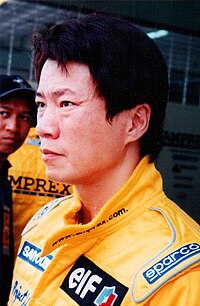
If that's true, then someone needs to tell these guys that they can't drive! Charles Kwan and Marchy Lee race primarily in Asia, but Brian Wong is a Chinese-American racer who lives in California. He is a NASCAR driver, proving that it is not just a sport for white men. Read more about Brian Wong on the Angry Asian Man blog.


3. Black Musicians only play R&B or Hip Hop
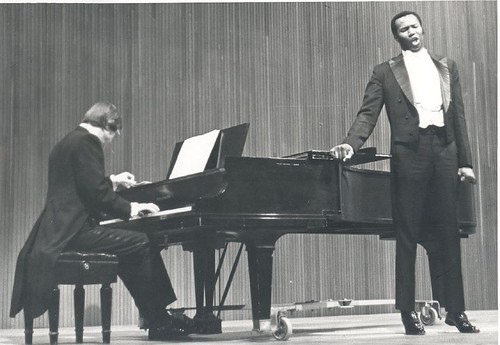
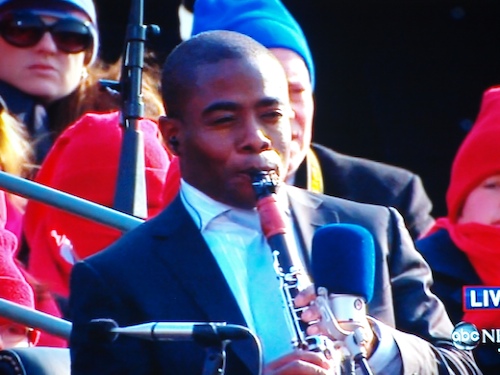
Someone better tell Iowa native Simon Estes that he needs to quit singing opera and try to get his groove on by singing some neo-soul or something... And then go on and tell Anthony McGill, the principal clarinetist at the Metropolitan Opera that he can't play any classical music because black folks don't do classical. Morris Robinson will need to figure out a new path for his life, since his bass singing with symphonies world-wide doesn't fit that stereotype. (Read and listen to more about some current black musicians in the field of classical music here in a podcast and post from WQXR classical radio in New Jersey.)
Image Credit: Flickr/Luther College Photos
Image Credit:Flickr/bo mackison
Image via http://www.morrisrobinson.com/
4. Latina Women are all Maids
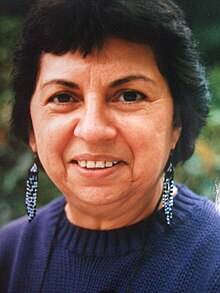
Check out the groundbreaking work of scholar Gloria E. AnzaldĂșa, expert on cultural and social marginalization who wrote poems, books, and changed the academic landscape with her work. She greatly influenced my own thinking when her book This Bridge Called My Back was part of my assigned reading in college. Read about Linda Chavez-Thompson, Vice Chairman of the Democratic National Committee. Learn about New Mexico's current governor, Susana Martinez. These women  most definitely are not maids. They are scholars, politicians, and world-changers...and there are many more Latinas like them across the country.


Gloria AnzaldĂșa via Wikipedia
Linda Chavez-Thompson via Wikipedia
Susana Martinez via Wikipedia


5. Muslims are Terrorists
Tell that to the children who go to school with my own children every day!

My neighborhood has never experienced an act of terrorism. My Muslim neighbors hand out candy on Halloween, take their children to the pool in the summertime, shovel their driveways on snowy days, and attend our school's family nights just like my family and I do. They go to work every day, and take their kids to the same before school program I take my kids to. There has never been an act of terrorism in my Iowa town. Our neighborhood school has never suffered from an act of terrorism. This stereotype is simply not true.

If all Muslims are terrorists, someone also better tell this lady about Dr. Oz...He is a Muslim born in Cleveland, Ohio...look out! His stethoscope must be doing something evil just because he's Muslim, right?
Image via Flickr/nayrb7

Sure, there are definitely white women who don't steal the way Winona Ryder did, and the way the thief who stole Jessica LaShawn's Versace coat did. And there are Asians who don't drive well, Black people who sing R&B, Latinas who are maids, and a very small number of Muslims who are terrorists. Stereotypes start because of a reality. BUT problems begin when people assume that stereotypes are true of ALL people who meet a particular description. 

Not all white women steal just because Winona Ryder does. But we can't assume that all white women are innocent of stealing. Not all Asians are bad drivers just because you've seen one or two who fit the description. Black people don't only perform R&B just because that's all you see on MTV. Latinas can be scholars and governors, despite the fact that the media seems to pigeon-hole them into being maids and nannies. And most Muslims are regular people, raising their kids, just like you and me.


Jan 22, 2012

Teaching Slavery in Schools through Empathy Writing: Insensitive or Powerful?


I remember it pretty clearly--as clearly as someone can remember something that happened 30 years ago. The fact that I remember it at all really means something, because most of what happened 30 years ago is pretty hazy.  I was in junior high school. 7th grade. He was my history teacher. A big, burly, flannel-shirt wearing bearded man that reminded me a lot of Grizzly Adams. He was definitely a gentle bear who you wouldn't want to mess with. He made history come alive for me.

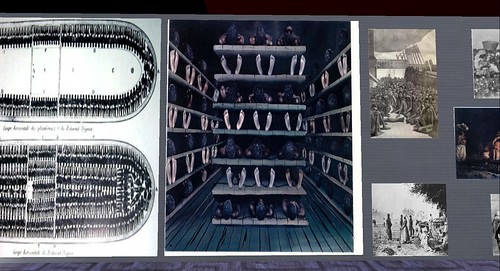
The 7th grade curriculum at my junior high covered what is, in my mind, one of the darkest periods of American History--the Civil War era. Mr. S taught us that the origins of the conflict really came much earlier, with the beginnings of slavery. He taught us about the slave trade in a brutally honest way, asking us to put ourselves in the place of an African, stolen from her family, shackled and stacked against strangers on a ship bound for the U.S., land of "opportunity." His lectures were graphic and disturbing. He wanted us to learn the truth: that human beings are capable of doing terrible things to each other. He wanted us to learn about slavery so that if we ever witnessed someone attempting to steal a human being away from their home and family, we would not stand aside and allow it to happen. He wanted us to understand our present world in the context of what occurred in the past. He believed that by learning history we could prevent humanity from making the same mistakes twice.

Image Credit: Flickr/Olivia Hotshot 
We read slave narratives and looked at primary source documents that left no doubt about man's ability to be inhuman. I will never forget the final assignment for our unit on slavery: a writing project that asked us to  synthesize all we'd learned. "Put yourself in the place of an African who has been stolen from her family, and write a series of journal entries from her perspective." That assignment led to my first experience with the power of empathy.  I put myself in the place of an enslaved African and wrote a heart-wrenching series of journal entries that changed the way I looked at people. In fact, I would argue that it changed me forever.

Flash forward 30 years. I've spent some hours here on this blog thinking about and discussing the issue of cultural appropriation, and how it compares to the inspiration many artists/writers/musicians say they get from learning about another culture. My 7th grade teacher asked me to put myself into the experience of someone else and write about it. That writing was powerful. I learned from the act of writing (but I didn't publish my work, claim to be any kind of expert, or profit from what I wrote. That writing was only for myself and my teacher.)

This week a middle school teacher has come under fire for making a similar assignment. "Pretend you are a slave in the southern United States. Write a journal/diary memoir about your life."  A student felt uncomfortable with this assignment and told his mother, who is biracial, that he didn't want to do it. She says, "For him to pretend to be something he's never been or never will be, that's going too far." She requested action from school administrators and says she has not yet received a satisfactory response.

I am puzzling this out, just like the inspiration vs. appropriation pieces, because I can see both sides of the issue. On the one hand, I know first hand how powerful such an assignment can be if given in the appropriate context. I know, both as a teacher and as a learner, that some of the most powerful learning comes from those moments where we are uncomfortable. Pushing ourselves to stretch our imagination, our math ability, or our understanding of foreign ideas---that is how we learn, and it is not always comfortable or neat. Learning is messy; it stirs things up. But I say all of that as a white woman, whose ancestors weren't slaves. Maybe an assignment asking me to pretend I am someone from my own family, who suffered such inhumanity, would be more than just uncomfortable. It might even be painful.

There were definitely black kids in my junior high school history class. I don't remember talking about anything as serious as our history assignments back then, so I don't know how it felt for my friend Traci to write about her ancestors' suffering. But this news story has given me pause. As my son picks his classes for junior high next year I wonder if he will learn about slavery, if his teacher will ask him to write from the point of view of a slave, and how we will respond to that. 


How would you respond?


Jan 8, 2012

Schools, Finland, Equity, #Occupy


Image via Wikipedia
When I was in college I read the book Savage Inequalities by Jonathan Kozol.  The book, released in 1991, was a startling look at the inequities among public schools. Sometimes the inequities Kozol describes are really hard to read about. Dilapidated school buildings exist on one side of a river while shiny, well-kept buildings exist on the other side of that same river. Why does this inequity exist? Because in the U.S., our public schools are funded mostly by local property taxes. A nice neighborhood with a large tax base will have the funding to make a really nice school building, keep it well-maintained, offer a wide variety of programs, and be up-to-date in its technology. An example of such a school is New Trier High School in Winnetka, IL. According to School Digger (a site that reviews and ranks schools nationwide), New Trier is ranked the 5th best school in the state of Illinois.
New Trier High School. Image Credit: Flickr/eszter

Just 30 miles south of New Trier High School in Chicago is the Chicago Vocational High School. According to School Digger, Chicago Vocational ranks 661st in the state of Illinois.
Chicago Vocational School. Image Credit: Flickr/ reallyboring 
What's the difference between these schools besides 30 miles? Poverty. Winnetka is a suburban middle/upper middle class town. Meanwhile, almost 100%  of Chicago Vocational's students live in poverty.

You may think that since Savage Inequalities came out in 1991 and it is now 2012, things have changed. Think again.  Kozols' later book, The Shame of the Nation, published in 2005, says that things have gotten worse. Now it's not just poverty that leads to inequity, schools are also becoming more and more segregated.

Our government has attempted to right these wrongs through a series of legislation--from No Child Left Behind to Race to the Top. Throughout the course of this legislation, I have read articles about other countries that outperform the U.S. in achievement. One of the countries that has garnered a lot of attention in recent years is Finland. An article from the Atlantic, "What Americans Keep Ignoring about Finland's School Success" is circulating widely on Twitter and in the blogosphere. I read this article and  was struck by a few quotes:
"There are no lists of best schools or teachers in Finland. The main driver of education policy is not competition between teachers and between schools, but cooperation."
"Decades ago, when the Finnish school system was badly in need of reform, the goal of the program that Finland instituted, resulting in so much success today, was never excellence. It was equity."
"That this point is almost always ignored or brushed aside in the U.S. seems especially poignant at the moment, after the financial crisis and Occupy Wall Street movement have brought the problems of inequality in America into such sharp focus. The chasm between those who can afford $35,000 in tuition per child per year -- or even just the price of a house in a good public school district -- and the other "99 percent" is painfully plain to see."
As the 1% focus on keeping their wealth, the gap grows bigger between the haves and have-nots. According to Jonathan Kozol's work, increasingly that gap is also marked by color.

An acquaintance on Google + commented that what works in Finland probably won't work in the U.S. because of size differences. It's such a small country, comparatively. My response? New Trier is only 30 miles from Chicago Vocational High School. The population of Winnetka and Chicago combined is roughly 3 million. The population of Finland is over 5 million. I think that if we start small....perhaps by creating equity between schools that are in the same district, maybe expanding to schools that are within 30 miles of each other, we might see some huge differences. I think we owe it to the kids of our nation to try to level the playing field. Don't you?

ShareThis

Related Posts Plugin for WordPress, Blogger...