Kahlil Gibran said, "Tenderness and kindness are not signs of weakness and despair, but manifestations of strength and resolution." This blog is filled with the musings of a strong and resolved person, who cares deeply about the world and tries to spread light and hope to those who need it most.
May 7, 2013
Voting for Justice
Today is an Election Day in my community. Election Day is something I usually take very seriously. I sincerely believe in using my right to vote as a means of expressing my beliefs, telling public officials how I feel. If I don't vote, I am sending a silent message of acceptance for the status quo. Not voting, to me, is a shame. It means giving up my right to complain about anything after Election Day, because I didn't use my voice in my vote--where it really can make a difference.
But today...I just don't know if I can vote. I see both sides of the issue and can't figure out which side is the one I most believe in; or even if I have consider all the sides at all--because I think this is not just a two-sided issue.
Today, my community is voting for the second time on whether or not to build a new Justice Center. More office space, a modern courtroom, and more jail cells. It's that last part that gets me.
Right now our jails are overcrowded. We are spending lots and lots of money to ship our prisoners to other counties' jails. We could save a lot if we expanded the jail to keep our prisoners here. But the fact of the matter is, that my community is like almost every other in the U.S.A.: a disproportionate number of our prisoners are Black men. Young, black men. And I don't believe that we need more cells to hold those young men. I believe we need more programs to help them: job training programs, more affordable housing, a higher wage.
Building more cells might save the county money. Maybe a lot of money. If there was a guarantee that the money saved would be invested into a program that works to prevent the arrest and re-arrest of the young Black men in my community, I would vote yes. But if that money is not invested in anything but building more cells for prisoners, I can't help but think that my community plans to fill them up.
Mar 31, 2013
The Myth of Failing Schools and the Impact of Socio-Economic Privilege
"Schools are killing creativity!"
"We should teach kids to trust their intuition instead of teaching them to obey."
These are all things I've seen tweeted or posted on blogs in the past week. And each time I read a comment like that I get upset. You may wonder, "WHY? It's true! We are training kids to respond to bells, to sit and be respectful. Our factory model of education hasn't changed even though our society has!"
We are bombarded with messages about failing schools and how to fix them, falling rankings in test scores, and the loss of U.S. ability to compete in the global marketplace. But all of those negative messages don't tell the whole story of what goes on in schools.
There are two big reasons why I get upset by comments like those I've seen on Twitter and in blog comments recently: first, they are blanket statements meant to characterize all schools; and second, they are extremely privileged statements.
Read on to see what I mean...
Like any stereotype--aiming a blanket statement at an entire group of people who share the same religion, ethnicity, race, sexual preference, or gender--stereotypes about public schools HURT. There are so many good schools out there! Check out this "failing" school's amazing success at getting kids motivated to learn, engaging them in their community, and helping them DREAM BIG:
UNDERDOGS- The Story of a Successful Public School from Think Ten Media Group on Vimeo.
Yes, the school in the video is focusing on test scores; but is that killing their creativity? When kids sit and dream about the president visiting their school--is that just blind obedience? The fact is that the assessments the kids take are used as tools to help teachers figure out how to teach them better. Many of the kids in the video started out reading far below grade level, and it was the tests that let teachers know that they needed to do more intensive teaching to help them. It is the assessments that let teachers know when they've been making progress. And that progress can't be made without assessing students regularly to see what they are learning.
If you think that all schools are killing creativity, that all schools teach only how to be blindly obedient workers, then you are making a hurtful, stereotypical statement. You hurt not only the creative students who are successful every day in public schools, but you also hurt those of us who work in public education. Many students and teachers work as partners in the educational process, creatively working together each day toward the goal of learning together. You do an extreme disservice to the thousands of teachers and administrators who put students first each and every day, and to the hundreds of thousands of students who thrive in public schools.
Not only are statements assuming that, "all schools kill creativity," stereotypical, they are also extremely privileged. I often read and hear people complaining about school policies that reward behaviors such as being respectful, responsible, and showing good citizenship. I often hear people complaining that programs like PBIS discourage individuality, kill creativity, and only teach obedience. I believe that most of those complaints come from people who have socioeconomic privilege.
When you grow up with one or two parents who have regular, steady jobs, are able to provide food, shelter and clothing for you, and have a college education--you probably know some things about how mainstream society works. You know that it is considered respectful (to your friends, your boss, your teacher) if you show up on time to appointments. You know that yelling at people in a public place is probably not going to be considered acceptable behavior. You know that it is considered rude to talk about sex in public, that cursing is considered crass, that certain clothing is appropriate in certain situations. When you grow up in an economically stable household with educated parents, you probably have regular check-ups and know about personal hygiene. You are most likely exposed to books before entering kindergarten, and have someone who either reads to you or lets you watch some preschool educational programs on TV that help you learn letter and number identification. You probably know what it's like to have privacy in your own home, and can find a space to be alone. You most likely feel hungry, but don't have to wait a full day or more for a meal. You probably learn at a young age that stealing is wrong, that drugs and alcohol are harmful, and that eating too much junk food isn't healthy.
I grew up in a middle class household with two working, college-educated parents. I learned all of that and more. But there are many, many kids who don't grow up with any of that.
I have spent my 15-year teaching career working with kids who don't have the privileges I had growing up. Do I want my students to think creatively? YES! But to many kids in poverty, the things they think creatively about are how to get their next meal, where to get clothes that fit, and how to make money to support their families----fast. Their intuition tells them that stealing gets them food now. Their instincts tell them that a big chain store has plenty of money already and won't miss a couple of pairs of blue jeans. They creatively look for ways to sneak out of stores with items that will help their families without getting caught.
One of my current students is 16 years old and lives in a 2-parent household. Less than two years ago, the family lived in Chicago. They lived in a part of the city that was no place to raise a family--lots of gun violence and gang activity. They didn't want to stay there, so they moved to Iowa. His parents have had difficulty getting and maintaining jobs, so they have moved around--from apartment, to house, to pay-by-the-day motel--just to keep the family sheltered. At times, my student has lived with as many as 8 other people in a one-bedroom space. He describes an environment where neighbors are not violent (like in Chicago) but are drug users, alcoholics, and sexually active in public. His "normal" does not include any of what was normal for me growing up: a knowledge of language that is appropriate, what it means to be respectful, what it looks like to be polite.
When he first moved here, he learned quickly about some things that are unacceptable in our area. He and his brother saw so many houses with stuff that they'd never had before; they were shocked. They had almost nothing--very little food, very little clothing, and a very small apartment for their large family. They thought about how people with big houses had so much, and could probably make it just fine with fewer things. They wanted to help their family. Intuition told them that it is their responsibility to help feed their family. Following their instincts, they robbed a house. Then they got caught, and were sentenced to several months in juvenile detention. As a result of that whole experience, my student now knows that thinking creatively about how to get new clothes and food for his family is not the best way to think if he wants to stay free. His choice had a consequence. And I am proud to say that at school we are doing our best to kill the kind of creative thinking he was doing when he first moved to Iowa...
See, our society requires some obedience. It requires us to follow certain laws that keep us safe. It requires us to pay our own way, to buy our own food, clothing, and shelter. The only way to pay our own way is to get a job. The only way to get and keep a job is to know what it looks like to be responsible, and respectful. A lot of kids don't learn that at home anymore. And we can lament that fact, we can complain about parents who don't do a good job of teaching their kids, we can blame the economy or the president or any number of other people. But blaming doesn't change the fact that we have lots of kids in schools who aren't growing up with the privilege of knowing how mainstream society works. Many schools have decided that complaining doesn't do any good--we need to teach.
So we teach--about the importance of being on time, about not cursing, about pulling up your pants, about not being on your cell phone when someone is trying to have a conversation with you, about not calling people offensive names. We look for ways to reward students who know how to communicate effectively, to accept feedback, to show up on time. We work on skills that we know are necessary for students to have in the workplace--whether they are fast-food workers or corporate CEOs.
When we don't work on these skills with students who live in poverty, we are continuing the cycle of poverty. When we neglect to share what we have learned through our privilege, we are acting as oppressors. Refusing to share our knowledge of what it takes to be successful in the U.S. is an attempt to maintain our privilege.
Parents or community members who are offended that schools spend time sharing knowledge that comes from privilege may not realize that they are helping to continue the cycle of poverty--but they are. This document from the U.S. Census Bureau discusses child poverty in depth. I encourage you to read through it and see the startling numbers, to think about what they mean. Children in poverty are less likely to be successful in school, less likely to hold regular jobs, more likely to be incarcerated. We need to help kids learn what it will take to be successful. While creative thinking, following intuition, and challenging authority are all important skills that have revolutionized our country, we need to make sure that all children understand that there are also some basic behaviors that we must learn to keep society running smoothly. We can't drive whatever speed we want to, show up to work whenever we feel like it, curse at patrons, or take things that don't belong to us. And we cannot assume that all kids come to school knowing what those of us who grew up with privilege know.
Most schools that focus on behavioral supports are not trying to create automatons who blindly follow directions. They are trying to level the playing field. They are trying to give many students who live in poverty access to the kinds of knowledge that privileged students have access to. Increasingly, our schools are filled with kids who need help learning all sorts of basic skills--not just reading, writing, and math, but also appropriate behavior. Is there really something wrong with teaching all of that?
Labels:
education,
poverty,
privilege,
public schools
Mar 18, 2013
Teaching and School Violence
In December of 2012, the second deadliest act of school violence in America happened at Sandy Hook Elementary School in Newtown, Connecticut. Stories of fear, sadness, and of survival filled the news. Teachers everywhere cried for our fallen colleagues as stories of their heroism spread. Almost everyone in the field of education had to take pause to think, even if only for a brief second, "How would I react if that happened at my school?"
We don't want to think about it. We don't want to think that it could happen. We don't want to admit that it was real.
But regular incidents of school violence make it hard to avoid this thought--it could happen. It could happen anywhere.
Soon after the Sandy Hook shooting, my school announced an in-service on responding to school violence. Our large staff gathered in the cafeteria to listen to a local police officer talk about our current policy--one of locking down classrooms, locking down the building, and having the office be the main source of communication inside and outside of the building. The officer said that recent acts of shooting violence show that maybe the policy of locking down is not the best policy. Maybe teachers and school staff need to have more autonomy in crisis situations. He cited examples of teachers at Sandy Hook Elementary who reacted to the crisis in ways that saved lives--even though their actions may not have been sanctioned by the school crisis plan. New ideas about preparing for school violence indicate that teachers should be able to make decisions themselves--about whether to flee, find a good hiding spot for students, or stand their ground and fight. We watched the video below outlining the choices in a new kind of training--A.L.I.C.E. (Alert, Lockdown, Inform, Counter, Evacuate.)
After watching the video, we had time for Q&A, and then we broke into small discussion groups. We were given scenarios to talk about, asked to hypothetically apply A.L.I.C.E. protocols and take notes about what would need to happen in our school to make the new protocols possible. We sat around discussing what we would do if a student told us that she suspected one of her peers had a gun in his backpack. We talked about what would happen if there was an active shooter in the building who violently attacked the secretaries first, leaving our communications hub without any staff to let the rest of us know what was happening. Everything was very professional, very calm. We took notes about the fact that our school doesn't have the right kind of classroom door locks to lock out an intruder, that our intercom system is not very effective, and really thought about changes that need to happen to keep our school community safe.
And then we got out of in-service and I fell apart. We had spent 2 hours matter-of-factly talking about an active shooter in our building. Some teachers were envisioning throwing kids out the second story window to the courtyard below to keep them alive. We talked about running to nearby houses to escape being shot. I was thinking about the heroes of Sandy Hook and wondering if I would be able to give my life to save my students. Could I really, in an instant, put myself in harm's way to save the life of someone else's child....leaving my own children motherless?
When it comes down to it, I don't think any amount of training is going to answer those questions. Like so many things in life, you really don't know how you'll react until it's happening. But local police and our district administrators want us to keep thinking about how we'll react. They even want us to practice. They say, "We practice fire drills even though there are rarely school fires. We practice tornado drills even though there are rarely tornadoes that touch down on school buildings. We need to practice how to respond to an active shooting situation, even though the likelihood of that situation occurring is small."
So we had a second in-service. This time we met in the theater and the officer in charge of the training asked for volunteers. A group of ten colleagues sat on the stage as victims. They pretended to hide from an active shooter. An eleventh colleague got an orange rubber replica of a handgun, and entered from off-stage. He was instructed to find everyone and pretend to shoot them. Within a few seconds, everyone was dead. The officer then had the shooter go back offstage and told us that we'd just seen the result of a policy that says we must lockdown in a crisis situation. Things could be different if we used A.L.I.C.E. techniques. We could fight back. He handed out tennis balls to the staff that had previously just been hiding, and he asked the pretend-shooter to return. This time, when he entered he was bombarded with tennis balls. Those who were previously victims, now had the time to run, hide, or find something else to use in self-defense. The officer talked about items in our classrooms that can be turned into barricades or projectiles--things that could protect us. He gave tips on how to prevent the shooter from being able to use his gun--hang on to his arm using all of your weight, wrap yourself around his legs so he can't walk.
During this in-service, I found myself daydreaming. I kept trying to bring myself back, to pay attention to what was being said...but I couldn't. I kept shutting it out. I kept saying to myself, "I don't want to think about this. I don't want to think that this could happen. I don't want this to be real."
I don't know how I would react. All I know is that in my job, every day is different. I have spent 15 years working with kids who have significant behavioral and emotional challenges. I never know what kind of day it will be, what will happen. But so far I have survived. I can only hope that if some act of violence happened, I would survive. I don't know if I could rise to the level of heroism shown by Dawn Hochsprung, Victoria Soto and Mary Sherlach, who all lost their lives protecting kids at Sandy Hook Elementary. It is painfully hard to even think about. But it is reality. Teachers have to worry about Core Curriculum, integrating technology, closing the Achievement Gap, evaluations, assessments, diminishing budgets...and how to react to an active shooting event. Somehow, that last part isn't something I ever thought I'd had to prepare for when I decided to become a teacher.
Labels:
in-service,
teaching,
violence
Dec 12, 2012
Featured on BlogHer
This post, published originally here on empatheia is featured on BlogHer today. I am honored to have it recognized and hope that more people think about the impact of race on educational expectations. Please visit BlogHer on facebook or jump in the conversation on Twitter with @BlogHerNews @BlogHerCultures or @HapaMamaGrace. And as always, feel free to leave your comments about NCLB and Race-Based Grading in the comments below.
Dec 9, 2012
NCLB and Race-Based Grading
| Image Credit: Flickr/ amboo who? |
To understand what I mean, you have to know something about No Child Left Behind, the Elementary and Secondary Education Act of 2001. This law required all students, regardless of ability level, race or gender, to be proficient on an approved standardized test by the year 2014. As a teacher of learning and behaviorally challenged students, the law continues to be extremely frustrating. Some students come to school from homes that provide the stability of three meals per day, new clothing when needed, and the loving support of one or two mentally stable parents. Other students come to school to get their only meal of the day from the cafeteria, sleep on the floor of a one-bedroom apartment with 8-10 other family members, and have absent or addicted parents. To expect students from both backgrounds to learn at the same rate is unreasonable. To expect students with significant learning challenges like dyslexia or dyscaclulia to learn at the same rate as their peers who do not have those challenges is unfair. Quite simply, it goes against the intent of another huge education law, the Individuals with Disabilities in Education Act, which attempts to level the playing field by protecting the rights of students with disabilities.
Where does race fit in with all of this? Well, one of the (I think) good things about NCLB is that it requires all schools to collect and share data about student achievement. Prior to 2001, we might have suspected that Hispanic, African-American, Native American and students with disabilities were not doing as well in school as their white peers, but we didn't have any concrete evidence. Now we do. Not only do we know that students of color are not becoming as proficient in reading/math as their white peers, we also know that they are being labeled as disabled much more often than their white peers (maybe because of their lack of proficiency?) When you really look at the big picture it's a bit startling. The data for NCLB is divided into subgroups:
- Economically disadvantaged;
- Special education;
- Limited English Proficient students (also known as ELL---English Language Learners); and
- Students from major racial/ethnic groups.
These nicely divided categories make you think that they are reserved for easily categorized kids. Looking at real kids, though, you see that there isn't much that's nice and neat at all. In most cases kids who are labeled as "not proficient" by NCLB standards fit into multiple, if not all categories. The kids I currently work with are primarily African-Americans who qualify for free/reduced lunch, and have learning disabilities/behavior challenges significant enough to qualify them for special education services. They represent 3 out of the 4 subgroups.
Fact: in our current system, many of the kids who live in poverty are the same as the kids who are in special education. Fact: A disproportionate number of the kids in special education are kids of color. Fact: many kids in poverty are kids of color.
The kids who aren't proficient aren't lots of different kids in separate little groups; they are one large group of kids who have a lot in common--skin color (not white) and socioeconomic status (living in poverty.)
No Child Left Behind demands that we have high expectations for the kids who fit into those subgroups. "High expectations" is one of those catch-phrases that goes along with "Rigor and Relevance," treating all students equally, eliminating cultural stereotypes by making sure we expect the same high quality learning from all of our students. It sounds really good on paper, but in reality setting expectations too high can cause serious problems--especially when we set the exact same high expectation for every student.
Here's what I mean:
Suppose you grew up in a house where it was expected that you learn to play piano. You practiced for 30 min. every day for 4 years between the ages of 5 and 9. Then when you were 9, the government decided that everyone must learn to play piano. You can't graduate from elementary school without being 90% proficient on a Liszt piano concerto. You totally lucked out, because you already have experience playing piano! Other kids, though, didn't even know that the piano existed. You are all the same age, and in the same grade; but you have a distinct advantage when it comes to being proficient because you already know how to play some piano. On a scale of Liszt concerto proficiency that goes from 0 to 10, you're starting at a 4 or 5, while your peers are at a 0. But you all have the exact same amount of time to get to a 10 on that proficiency scale in order to graduate. It hardly seems fair, right?
Apparently, that analogy describes what NPR called, "Grading Kids Based on Race." Instead of asking students who are in poverty/of color/in special education/English Language Learners/and not proficient to make the exact same progress as white, middle class, non-disabled, English speaking peers some schools are differentiating. From the NPR piece:
For example, in the District of Columbia, by the end of the 2016/17 academic year, the goal for reading is that there be 70 percent proficiency for black students and that for white students it be 94 percent proficiency. So that's obviously a 24 percentage point difference. But black students are so far behind their white peers right now in D.C. that they're being asked to make a much greater rate of growth.
There are still high expectations, but now the expectations take into account the students' present level of performance. In the piano analogy, you, who had 4 years of piano lessons, are expected to grow from a 4 to a 9 on the proficiency scale. Your peers, who started out not knowing what a piano was, are expected to go from a 0 to a 5. Everyone grows 5 points on the scale. Everyone had the same amount of instruction. Everyone was expected to make significant progress. The school just didn't expect everyone to come from the same background, have the same set of experiences, and end up at exactly the same place. It's a whole different situation.
So grading based on race--it sounds really, really flawed. But maybe, really, it isn't. Maybe it's a way to level the playing field a little. Maybe it's a starting point that will allow students of color to begin catching up to their white peers. Maybe high--but reachable--expectations will give way to higher expectations in the future.
What do you think about the idea of grading based on race presented in the NPR article? The comment section is open for your thoughts.
Labels:
achievement gap,
education,
NCLB,
race
Dec 4, 2012
Life in the Fast Lane: Working Mom & 3 Tweens
I can't even remember the last book I read for pleasure. Time to exercise is almost nil. My kids are eating on the go almost nightly because I don't have time to cook. My house....well, at least the laundry is kept up somewhat because we need to wear clothes!
But as busy as I am (as we are as a family) I can't really say I have complaints. Look at the beauty of it all:
My kids are getting BIG. Each night, my 12 year old son gives me a hug goodnight and stands on his tiptoes so that we are eye to eye. I am just over 5'9", and he is just over 5'4" in 7th grade. Each night, I stare in amazement into his eyes, remembering that not very long ago he fit in the crook of my arm. We argue about chores, homework, and his lack of ability to remember anything unless it is attached to his body (he would forget his head if it wasn't attached, I swear!) When I can, I watch him play basketball (7 practices and 2-4 games/week) but mostly I drive him to his stuff and pick him up again. When I drop him off, he walks off towards a group of friends from junior high school that I don't know. He interacts with them in a way that is new to me. His age won't reflect it for a few more months, but he truly is a teenager now--from his pimple-dotted nose to his rolling eyes. But he is still my baby, and those nightly hugs when he looks at me, eye to eye, remind us both of what it was like when his favorite things were Blue's Clues and collecting rocks.
My middle daughter is going to be 11 this month. She is in a phase I remember well--the beginning of puberty. She is struggling to feel comfortable with her changing body and experimenting with how she looks. She wants to hide her new femininity by wearing baggy tee shirts, but experiment with it by trying new hair styles. She worries a lot (she always has) but the things she worries about have changed a little. She worries about big picture things more--like saving humanity from _____________ (fill in the blank with your favorite plague.) She started a school bakery--which means whenever we have "free" time on weekends, we are baking. She sells the products after school to her classmates and teachers, then donating the proceeds to our Parent Teacher Organization. Though she is selling sweets, she specified that she wants the funds from the bakery to be limited to the purchase of P.E. equipment. How proud am I? Very. She has an amazing heart, loves sweets, and knows how to balance out that love of sweets by exercising! She also played volleyball for the first time this year, starts basketball in a few weeks, takes tap dancing, hip hop and acting classes, got a part in a play that will be performed in January, AND started playing the trombone. When I am not driving her brother to his stuff, I am driving her to her stuff--classes, practices, rehearsals every single day. Yes, you can call me "Taxi Mom."
My youngest daughter will turn 9 just after the New Year. Much to her older sister's chagrin, she is about to pass her up, height-wise. The most frequent feedback I get about my youngest is this: "She TOWERS over EVERYONE!" Yes, she does. She is literally head and shoulders above the rest of her class, and there is only one boy taller in the grade above her. Yet, despite her height she is still just a third grader. Lately she seems to have regressed to the maturity level of a toddler. Veruca Salt comes to mind--"I want the world, I want the whole world! Don't care how...I want it now!" (Check out the original Charlie and the Chocolate Factory video here.) When my daughter doesn't get what she wants, she throws herself into a tizzy of crying, screaming, and carrying on that really takes me back in time to the toddler years. It is a classic case of tween terror: "I'm getting so big and grown up that I need to regress for a while to the comfort of being little." She has these fits pretty regularly and I have to send her to her room, ignore her for a while to let her know that I'm not falling for the theatrics, and she can't have what she wants (chocolate at bed time, a cell phone of her own, whatever other inappropriate for an-almost-9-year-old demand that she is making at the moment.) Every 5 minutes or so, I go to her room and remind her that if she keeps crying she will make herself sick. She sniffles some snot and then wails a little louder. I walk away until another 5 minutes have passed. (Any behavior focused teachers out there will recognize this as "neutral prompting"--teaching is an awful lot like parenting!) Eventually, she comes to the realization that I am not going to give in and she walks out of her room like nothing ever happened. She carries on with her life, and then clings to me all night long. She is wandering out in life: playing basketball on a club team twice a week, taking dance, acting and singing classes, participating in a garden club and a Girl Scout troop...but when she gets home she needs to cuddle in close. Venturing out into the world can be scary business! She really reminds me of a toddler--you know that stage where they learn to walk and can get away from Mama, but when they get too far they come running back to hug your legs, feel safe again.
They are busy. And I am still working at my new job, learning things, and getting to know the system. These are crazy times, but I love it all. Life is good!
But as busy as I am (as we are as a family) I can't really say I have complaints. Look at the beauty of it all:
![]() |
| My babies are all growing up! |
My kids are getting BIG. Each night, my 12 year old son gives me a hug goodnight and stands on his tiptoes so that we are eye to eye. I am just over 5'9", and he is just over 5'4" in 7th grade. Each night, I stare in amazement into his eyes, remembering that not very long ago he fit in the crook of my arm. We argue about chores, homework, and his lack of ability to remember anything unless it is attached to his body (he would forget his head if it wasn't attached, I swear!) When I can, I watch him play basketball (7 practices and 2-4 games/week) but mostly I drive him to his stuff and pick him up again. When I drop him off, he walks off towards a group of friends from junior high school that I don't know. He interacts with them in a way that is new to me. His age won't reflect it for a few more months, but he truly is a teenager now--from his pimple-dotted nose to his rolling eyes. But he is still my baby, and those nightly hugs when he looks at me, eye to eye, remind us both of what it was like when his favorite things were Blue's Clues and collecting rocks.
My middle daughter is going to be 11 this month. She is in a phase I remember well--the beginning of puberty. She is struggling to feel comfortable with her changing body and experimenting with how she looks. She wants to hide her new femininity by wearing baggy tee shirts, but experiment with it by trying new hair styles. She worries a lot (she always has) but the things she worries about have changed a little. She worries about big picture things more--like saving humanity from _____________ (fill in the blank with your favorite plague.) She started a school bakery--which means whenever we have "free" time on weekends, we are baking. She sells the products after school to her classmates and teachers, then donating the proceeds to our Parent Teacher Organization. Though she is selling sweets, she specified that she wants the funds from the bakery to be limited to the purchase of P.E. equipment. How proud am I? Very. She has an amazing heart, loves sweets, and knows how to balance out that love of sweets by exercising! She also played volleyball for the first time this year, starts basketball in a few weeks, takes tap dancing, hip hop and acting classes, got a part in a play that will be performed in January, AND started playing the trombone. When I am not driving her brother to his stuff, I am driving her to her stuff--classes, practices, rehearsals every single day. Yes, you can call me "Taxi Mom."
My youngest daughter will turn 9 just after the New Year. Much to her older sister's chagrin, she is about to pass her up, height-wise. The most frequent feedback I get about my youngest is this: "She TOWERS over EVERYONE!" Yes, she does. She is literally head and shoulders above the rest of her class, and there is only one boy taller in the grade above her. Yet, despite her height she is still just a third grader. Lately she seems to have regressed to the maturity level of a toddler. Veruca Salt comes to mind--"I want the world, I want the whole world! Don't care how...I want it now!" (Check out the original Charlie and the Chocolate Factory video here.) When my daughter doesn't get what she wants, she throws herself into a tizzy of crying, screaming, and carrying on that really takes me back in time to the toddler years. It is a classic case of tween terror: "I'm getting so big and grown up that I need to regress for a while to the comfort of being little." She has these fits pretty regularly and I have to send her to her room, ignore her for a while to let her know that I'm not falling for the theatrics, and she can't have what she wants (chocolate at bed time, a cell phone of her own, whatever other inappropriate for an-almost-9-year-old demand that she is making at the moment.) Every 5 minutes or so, I go to her room and remind her that if she keeps crying she will make herself sick. She sniffles some snot and then wails a little louder. I walk away until another 5 minutes have passed. (Any behavior focused teachers out there will recognize this as "neutral prompting"--teaching is an awful lot like parenting!) Eventually, she comes to the realization that I am not going to give in and she walks out of her room like nothing ever happened. She carries on with her life, and then clings to me all night long. She is wandering out in life: playing basketball on a club team twice a week, taking dance, acting and singing classes, participating in a garden club and a Girl Scout troop...but when she gets home she needs to cuddle in close. Venturing out into the world can be scary business! She really reminds me of a toddler--you know that stage where they learn to walk and can get away from Mama, but when they get too far they come running back to hug your legs, feel safe again.
They are busy. And I am still working at my new job, learning things, and getting to know the system. These are crazy times, but I love it all. Life is good!
Nov 18, 2012
What Would You Do?
Here's an example:
In my old job, a student transferred in from another district. Within days of her entry into my classroom, we started having a lot of conflict. Girls were arguing with each other or not speaking to each other at all; school work was interrupted; every day there was a new battle erupting. When I took the girls aside, I discovered that all of the conflict was occurring due to comments made on Facebook or in text messages sent outside of school. A lot of gossip and hearsay was being spread through social media. The first opportunity for the girls to see each other face to face happened at school, when the fireworks would start...and those fireworks distracted EVERYONE from schoolwork. Keep in mind, none of these issues were occurring before our new student enrolled.
I contacted parents and tried to arrange a sort of mediation between the girls. When I spoke to the mother of our newest student, she told me, "This isn't the first time this has happened. Other girls are always picking on my daughter! She is always the target of bullies, and it doesn't matter where we go. We've moved six times and put her in six different schools, but the same thing keeps happening! Why can't any of you teachers stop those other girls from picking on my daughter?"
That's when I was smh.
Is it just me? Or does it make more sense to think that maybe, just maybe, since the woman's daughter has experienced the same problems in six different settings, that maybe it is the daughter who is instigating the issues with other girls? It is hard for parents to hear negative things about their kids, but after six different schools report the same issues, wouldn't you start to see a pattern? And if she doesn't see a pattern, then how do I change the situation to make it better for everyone involved?
In that situation, I tried to delicately let the mom know of my suspicion that her daughter was not just a victim. I encouraged the other girls involved to print out pictures of their Facebook walls, and save their text messages so that we would have concrete evidence. I didn't want to loudly accuse, but did want to calmly let the mom know that her daughter was a participant in the situation. When I carefully presented the evidence of her daughter's involvement, the mom promptly removed her daughter from our school and moved again. That was high school number seven for a 16 year-old junior who only had enough credits to be counted as a beginning freshman due to all of the moving around. I never had the chance to teach that girl how to deal with conflict in a more appropriate way because her mom removed her from the program.
Afterwards, I kept wondering, "Am I the only one who sees the pattern? Am I the only one shaking my head?" And then I realized that even if I was the only one who saw the reason behind the problem, it didn't change the fact that there was a problem. No one was getting any work done due to conflict, and every conflict included that girl. I needed to do something, and can only hope that gathering evidence to show the parent that her daughter was involved in some negative behaviors was the right thing to do.
I am questioning myself again now because of more situations that have come up. I am a very "glass half full" kind of person, and it is hard for me to think that anyone is going to purposefully try to do something negative.
With kids, I constantly think about the why of their negative behavior---I never accept that they are doing something just to be "evil." They are doing it because they don't know better, or they're upset about something--they're hungry, they're tired...there is always a reason for the behavior. I try to figure out what that reason is and do my best to either make the reason for their anger/frustration go away, or teach them a better way to deal with it.
With adults, I have always held the assumption that there will be a certain level of maturity involved. I assume that someone else already taught them how to not take their frustrations out on peers. I assume they know how to communicate effectively, and how to advocate for themselves in order to make their situations better. I am rapidly learning that this is not the case. Many adults also do negative things for a reason: they are upset, hungry, tired, in pain, or worried about issues beyond their control. Many adults struggle--just as much as kids do--to appropriately communicate their concerns.
Recently, I have encountered three adults in three separate settings who are experiencing major struggles to be effective in their roles. In one case, the adult doesn't seem to know that she is struggling--just knows that none of her colleagues like her and wonders why. In another case, a program is at risk of being shut down because of the way the adult interacts with her students and colleagues.
How do you help adults in those situations? I am a teacher of kids. Is it even my job to try to help them? Should I try to teach adults the same lessons that I teach kids? Is it appropriate to say to a colleague, "It seems like you're really struggling right now?" or is that something better left to an administrator?
One thing I know is that if I don't want to spend my days smh, I need to do something differently. If things need to change, I can't just wait for someone else to change them. I need to do something. It is risky to step into another adult's problems, but it will also be risky to sit by and watch a colleague continue on a destructive path.
What do you do when colleagues communicate inappropriately? What would you do?
Labels:
communication,
education,
problem-solving,
respect,
teaching,
workplace
Nov 4, 2012
No Fail
"Y'all are askin' me to do too much! It's just too much fam, it's too much!" He sits next to me and is shutting down. His English assignment is basically untouched in front of him. A pen sits idly next to the blank page, waiting to prove its utilitarianism.
The end of the term is less than a week away, and at this moment he is failing English. One failed class means he is behind in credits. Will not graduate in May with his class. Probably won't return next year to be humiliated as a so-called "super senior." Thinks he'll just drop out.
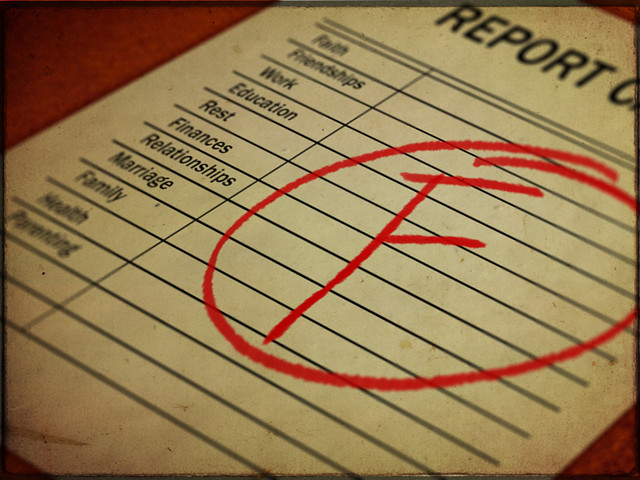
It's a lot of stress and pressure for both him and for me, because his mom is sick and will be saddened if he can't make it; because my school is really pushing an agenda of "F reduction." We are told not to lower our standards, but to reduce the number of failing grades. That means a lot of work, for both him and for me. We sit at a small, round table. I am tired. He is tired. And he is frustrated by the amount of work that still needs to be done. "I ain't fittin' to do this much stuff! It just ain't worth it. I'm never gonna pass. I might as well just drop out."
"If you want to drop out, there's the door. You can go ahead and walk out. But while you're walking, I want you to think about the fact that I am still going to be sitting here. I am feeling your pressure and I know that we are almost out of time, but we can do this. I am going to help you. I want to help you pass this class and graduate on time. But if you're just going to sit here and complain, and fight with me, I'm not going to do it. In the time that you've been sitting here complaining, we could've had one assignment done already!"
Does that sound harsh? Sometimes it seems like a fine line between encouraging a student and challenging them to stop feeling sorry for themselves. Stop talking about how hard it is and just try... But they've experienced such failure already...and received so little support...that sometimes it seems like they just need a big nudge--like a mother bird nudging her fledglings out of the nest.
Labels:
at-risk youth,
education,
teaching
Oct 14, 2012
The Key
Working with kids who have behavior challenges is never, ever dull. So when I had a couple of quiet days in a row, I knew that there would soon be a volcanic eruption. That eruption came early in the week and lasted several days. What follows below is a true story from my classroom. I share it (and plan to share more each week) because I want you to know that there are many young people whom our society seems to fear, or whose behavior leads them to a place of punishment (sometimes directly to prison)...But those behaviors happen for a reason. It is my job--and the job of my colleagues--to figure out why. So when you read these stories, don't just gasp (the way my husband does) at the shocking nature of the behavior. Don't just shake your head and mutter about "kids today" the way a lot of people do. Think about what a kid must be going through, or what might be happening in their minds, that led them to act a certain way. Really, when you figure out the puzzle of why a behavior is occurring it changes the way you see a person. Empathy is a very powerful thing.
True story:
This week a girl was in study hall and she was very disruptive. She has this enormous belly laugh that made me smile when I first heard it (hard not to laugh along!) But she can roll that laugh for a full hour, non-stop. Her friends seem to enjoy getting her going, making sure that her laugh is all anyone can hear anywhere! Forget studying, thinking, talking, anything! When that laugh is roaring, there is absolutely no way anyone can focus. So she was laughing in study hall and wouldn't move away from her friends. She wouldn't quiet down. She refused adamantly and was referred to the Intervention Center to calm down. When the escort came to get her, she refused to go. Eventually, all other students in study hall were asked to vacate so that staff could try to calm her without any peers goading her on. It was the last period of the day, and when she finally calmed down her mom was called, and she was escorted off school property for the rest of the day. She was told she'd need to spend a day in the Intervention Center to problem-solve and get ready to return to study hall again at some point.
The day after her study hall disruption, she was in my room. She sat quietly in a study carrel at first, completing work that she was missing from class. Another student sat next to her in a separate carrel. (He had been referred to my class the previous day and had vandalized a wall pretty severely. He was doing a great job of earning his way back to class by processing through the incident, and completing his schoolwork.) The girl had a house key on a lanyard. She twirled it the way a lifeguard twirls their whistle...round her finger and back again, round her finger and back again. Eventually that twirling got boring, so she started whipping it around the wall of her study carrel, listening to it thump on the other side. But there was that boy on the other side, so the key kept whizzing by him as it hit the wall next to him. After a couple of near misses to his body, he did what I would have done: when the key came whipping over to his side of the wall he snatched it. The key came off the lanyard and he tossed it toward me. Now, I am totally uncoordinated and clutzy. That key may have been aimed at me, but I didn't see it coming until it hit the floor at my feet.
The key sat there for a moment and the girl said to me, "You need to give that to me."
I said, "No, I don't."
Almost immediately, she got up out of her seat. She headed toward me, and I thought she was going to get the key. She looked up at me mid-step and said, "You need to know that I do fight boys. All the time." As quick as a flash she changed direction and was leaning into the study carrel of the boy who'd been sitting next to her. There she began punching him repeatedly. He sat there, still, as she pommeled him; and I tried to maneuver in between them. Since they were both in a very small, confined space, I couldn't work my way in there. I had to grab her from behind and pull, all the while hollering for an associate who works in the room next door. (My own associate was escorting another student who'd had an earlier crisis back to class.) Help came quickly and together we separated the girl from the boy. I called my administrator on a walkie talkie to ask her what should be done next.
The consequence was that we would call the girl's mom to let her know we were sending her home. Physical violence will not be tolerated at school. Her actions led to one of the very few out-of-school suspensions doled out in my building. My associate escorted her off school property, and she was instructed to stay off the property for a total of three days. I tried calling her mom but got her voice mail. My administrator tried calling later and was able to get through. The girl's mom was very understanding and supportive, but also let my principal know that her family has come upon really hard times. They've lost their housing voucher and are being evicted from their home. They expect to be homeless by the end of the week. At this point, they don't know where they will live or how they will get by.
And so I think about it....how would I feel if I was a young teenager and knew that within days I'd be homeless? What if I'd finally found a way to laugh out loud and was told to be quiet? What if I felt so scared and frustrated about my life that I'd look for any way at all to let some of those feelings out--even going so far as punching someone?
For sure, the reason for the behavior does not excuse it. No matter what is going on in her life, it is not okay to punch someone who was just sitting next to her trying to avoid being hit by a key. There is no place for physical violence in my room, in our school, or in our community.
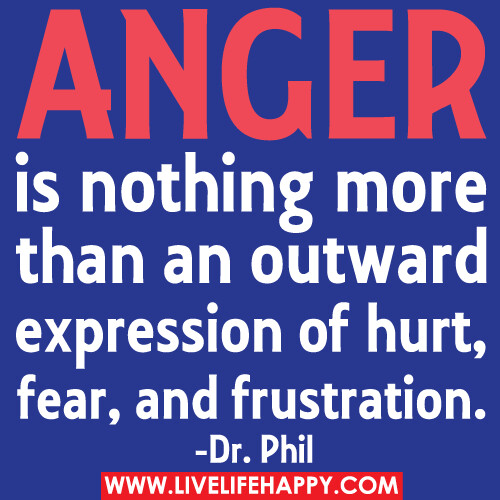
But now I can see why it happened. Now I can begin to talk to her about less harmful ways of expressing her fear and frustration. I don't know if it will work, but I have to try--not only to help with her behavior, but to see if there is anything at all our school can do to help her family through this hard time. We start our problem-solving journey tomorrow. Keep us in your thoughts and send some positive energy to Iowa for us--especially to her. Her family needs all they can get.
Labels:
at-risk youth,
behavior,
education,
teaching
Sep 30, 2012
Triumphs of the Week
![]() |
| An invitation I made for our PTO sponsored Read-a-Thon |
Okay, so this week really there were more trials and tribulations than triumphs in my life, but seems like all I really write about are the challenges lately. I need to share a couple of small triumphs!
I don't know if I've ever written about this, but for the past three years I have been active on the PTO (Parent Teacher Organization) board at my children's elementary school. Their school is very diverse--both culturally and economically--and it is often a challenge to figure out how to make all families feel welcome in our PTO. The primary purpose of PTO is to raise funds for school events, materials, and activities that aren't covered by the school budget. But when half or more of our school's families live in poverty, it is a difficult situation. I do not feel comfortable asking children to sell products--PERIOD. But I feel even more uncomfortable asking children who's families are struggling to meet basic needs to give money or sell products. In previous years, our PTO meetings have been contentious at times, with me arguing against product sales and looking for alternatives, and other parents arguing for product sales that include incentives for children. It has literally caused me to lose sleep. I have often felt like leaving the PTO board, but then realized that there would be no dissenting opinion if I did. Half of our families would have no real representation. I kept on going to meetings.
Last spring, I was elected President of the PTO. Our first meeting of the year occurred this week. We just wrapped up the major sales fundraising event of our PTO, and discussed our fundraising options for next year. For the first time ever, a majority of parents present spoke out against our current fundraising practice. Some argued against selling products entirely and suggested we go to a direct donation drive; others argued against selling products from the company that we've been partnering with for the past several years--a company whose staff is very pleasant to deal with but whose products are low-quality and overpriced. Overall, a majority of parents voiced a call for change. It was the first time ever that I was part of the majority. The first time ever where I didn't have to fight tooth and nail to get a differing opinion heard, defending myself from what seemed like a very personal rebuttal to my arguments. It felt good to know that I am not alone in my opinions about asking children to sell products.
Another PTO triumph happened this week when we hosted our first ever Read-a-Thon. This event came about due to a phone call I received over the summer. A local church wanted to give money to a school in need, and hoped that their funds would be used to purchase books. They wanted the books to go directly to children, and hoped that we could find a way to match their donation through pledges. As I mentioned above, our elementary school has a large population of families who struggle to meet basic needs. Asking them to pledge money is extremely difficult for me, so I began to look for other ways to obtain matching funds. The Walmart Foundation has an online grant proposal system that awards up to $1000 per grant request to community organizations that meet certain criteria. I applied for a grant and received $500! In addition, I organized a Read-a-Thon so that families who wanted to donate more could do so.
The funds gained from the local Lutheran Church and their partner, Thrivent Insurance, Walmart, and the families who donated, will go towards purchasing a book for every child in school. Each child will read the book in class, complete school-wide activities related to the book, and invite their families to celebrate reading at a Family Night. At the celebration, there will be family friendly games and activities related to the book, and children will be able to take home their very own copy. It is an excellent event that promotes both literacy and community. I am soooo excited that it will be funded this year by PTO--with absolutely no product sales involved. YES! That is a triumph! :)
Do you participate in your children's Parent-Teacher organization? How do you raise funds?
After our PTO discussion this week, I am looking for more ideas. Anything we can do that does not involve low-quality/high-priced products and asking children to sell things is a good idea in my mind! Please share your ideas in the comments.
Sep 16, 2012
The Angry Young Man
One particular student is on my mind this week. He is in the back of my brain, nagging and pulling--like a thread that needs to be unknotted. He is an enigma to me because I have not yet seen that kernel of goodness that I can always see in every single teenager I meet. I know it's in there, but I haven't dug deep enough to find it yet.
He is angry. Oh, so very, very angry. As I try to teach the parts of speech he mutters under his breath, "Where's the real teacher. You ain't no real teacher." He tells me I'm ugly. "Stop talkin' to me. I don't want you talkin' to me." It goes on and on, day in day out.
Sometimes, though, he answers a question in class. He names a character from the book we're reading. He participates briefly. It is those moments that keep me going. I know he is in there. Somewhere. Trying to get out. There is a young man who wants to learn, who wants to care and be cared about. I know it.
Then it goes back to the muttering under his breath. Anger personified. Verbally vomiting negativity like he's been infected by a viral hatred.
You may ask, "How do you put up with that? Why would you want to work somewhere where a teenaged boy insults you day in and day out?" Some days I wonder. But most days I know...
I do what I do because children don't have a choice about what family they are born into. Children don't have a choice about how their parents treat them. I know that this boy learned his foulness from a rotten apple that did not fall far from the tree on which it grew. I know that when a young man is so skilled at issuing verbal abuse at such a young age, it can only be because he learned it at a younger age from someone else.
Is it too late to change the tide? Is it too late to teach him to be more positive? I honestly don't know. But I do know that I couldn't live with myself if I didn't try.
Labels:
at-risk youth,
behavior,
teaching,
Teens
Sep 9, 2012
The Golden Rule
It seems so simple. Treat other people the way you want to be treated.
Yet, it seems that many of us forget this very simple concept on a daily basis.
This week I had a lot of conversations with my students. We tried to problem-solve specific situations in school, and we also talked about things that happen in our community. The vast majority of my students this year are young, Black men. They tell me stories that echo things I've heard from my husband for years. Many people in our community do not treat Black men according to the Golden Rule--treat other people the way you would like to be treated.
All of the scenarios I described above are incidents that both my husband and my current students have shared with me recently. After hearing all of their stories, I can't help but wonder what happened to the Golden Rule. Seems to me that such a simple, universal rule could solve a lot of problems.
Yet, it seems that many of us forget this very simple concept on a daily basis.
- How would you feel if you were riding the bus and there was an open seat next to you, but person after person took one look and decided to stand up instead of sitting next to you?
- How would you feel if people walking on the sidewalk towards you glanced at your face, got a frightened expression, and crossed to the other side to avoid you?
- How would you feel if your 5 year-old child was crying by the side of the road and person after person just passed her by without stopping to offer help? What if each passerby who refused to stop called the police to report you for negligence instead ?
- How would you feel if you were walking to work and someone who passed you by in a car rolled up their windows and locked their doors in fear of you--even though you'd done nothing threatening at all?
This week I had a lot of conversations with my students. We tried to problem-solve specific situations in school, and we also talked about things that happen in our community. The vast majority of my students this year are young, Black men. They tell me stories that echo things I've heard from my husband for years. Many people in our community do not treat Black men according to the Golden Rule--treat other people the way you would like to be treated.
All of the scenarios I described above are incidents that both my husband and my current students have shared with me recently. After hearing all of their stories, I can't help but wonder what happened to the Golden Rule. Seems to me that such a simple, universal rule could solve a lot of problems.
- What if every teacher treated the students in their classroom as if they were her/his own children?
- What if you treated every person you saw in the grocery store like a member of your own family?
- What if we really looked beyond what's outside (skin color, eye shape, hair type, body size, clothing style) and treated everyone like one of our own?
Labels:
empathy,
stereotypes
Sep 2, 2012
Behavior Challenges
| Flickr Image Credit: Psychology Pictures |
Kids are exhibiting behaviors because they are trying to communicate something. They are most often trying to gain attention from peers or teacher; or trying to avoid/escape something that is unpleasant. If we can figure out what they are trying to communicate and teach them to communicate the need for it in a more appropriate way, the behaviors will decrease and eventually (hopefully) go away.
Example from the trenches:
One of my students is constantly on his phone during English class (I teach English one period of the day and spend the rest of my day offering behavioral interventions/learning supports.) When I speak to other teachers about him, they say they are seeing the same thing in their classes. It doesn't matter how many times you redirect him, ask him, tell him to put it away--he is always on that phone.
Finally, one teacher referred him to my room for a behavioral intervention when he refused to put his phone away. He was upset about being sent out of class, but eventually told me two things: first, kids today are addicted to their phones and adults just don't understand; second, he was kicked out of his house and has no place to stay the night. He is texting people to find a place to sleep.
There was no guesswork involved here--he effectively communicated his needs to me as soon as he was away from his peers and away from the teacher. I tried to let him know that when a teacher asks him to put his phone away and he doesn't, it is perceived as disrespectful. A better way to do things might be to ask permission to use his phone. He argued, "They ain't gonna let me just use my phone!" So I told him I would email his teachers, asking them to give him a one day pass to use his phone if he asked appropriately. (One day only, because I want small steps, and because I don't know the kid well enough to know if he is playing me. I don't want to give him a free pass to use his phone for Facebook in the hallway every day!)
I did email all of his teachers with a request. I let them know that I don't think we can break him of his constant need to use his phone. We need to start small. So for ONE DAY ONLY, if he asks to use it appropriately--please let him use it. He's having some difficulties at home and hopefully he can work through them appropriately.
The next day in my English class, he had his phone out again. He had not asked appropriately to use it. I reminded him, "Remember--today you can use your phone if you ask appropriately."
He said, "Can I please use my phone to text my mama?"
"Thank you for asking appropriately. You may use your phone to text your mama, then please put it back in your pocket." He sent one text message and then put his phone in his pocket for the rest of the period.
In that situation it worked. The theory meshed with practice. We are on "Day One" of a small plan to change a problem behavior. There will be ups and downs. He will relapse and get grumpy about teachers asking him to put his phone away. But we started down the path of appropriate communication.
Things the Behavioral Approach Doesn't Do:
My student communicated two things to me that day he was referred for an intervention, and one of them is--in my mind--more significant than his addiction to his phone. He doesn't have a place to sleep. There is nothing a behavior plan can do to solve that problem. That takes good, old-fashioned human interaction, a support system, and help from outside agencies. It takes a lot of good relationships to help with those problems: relationships with kids, parents, and service providers. Those relationships take time. And when a kid doesn't have a place to sleep, it's hard to figure out where to get help (especially when you're new to the job, like I am.)
| Flickr Image Credit:Psychology Pictures |
The theory makes everything so cut and dried. Behaviors occur to communicate a message. Decipher that message, change how the kid delivers it, end of problem behavior. But what if the message the kid is inappropriately delivering is one of human suffering? In my first weeks on the job, I have received some messages loud and clear, "I am depressed." "I have no place to live." "We can't pay our bills and the lights have been turned off." Somehow, just teaching them more appropriate ways to say those things is not enough.
Behavioral consultants visit our school and tell us how things should be done. Their suggestions are to follow protocols and read from scripts. Everything is de-personalized and sanitary; there is no human element. It is all Pavlov's dogs and Skinner's rats. But how do you tell a kid to express their concerns about life more appropriately without helping to alleviate those concerns? I am learning that this is the true challenge of my new job: a balancing act. Alleviate those who want me to only use a behavioral approach by doing as much of that as I can; but also alleviate the kids' struggles and my own sense of right/wrong by using a humanistic approach--caring and problem-solving--whenever I can.
I pray that the behavioral approach and the humanistic approach are not mutually exclusive. Because there is no doubt in my mind that to be even slightly successful with these kids--I will need both.
Labels:
at-risk youth,
behavior,
education,
teaching
Aug 26, 2012
Week 1 Notes: Challenges of the New Job
| This is how crazy my brain feels! Flickr Image Credit: caffeina |
Honestly, I am so busy that I don't have much time to stop and think. There are so many things to do in a new job. I've been trying to prioritize, but there is just so much to learn that it's hard to know where to begin.
First and foremost, I want to build relationships with kids. But I also need to build relationships with my new co-workers. I need to contact parents to start building relationships with them, because no teacher can do good work without the support of parents.
Running a close second in the race for my attention are things like finding supplies (which I largely have to pay for myself), writing lesson plans, figuring out how to use my new laptop and other technological stuff, and keeping up on paperwork.
On top of all that, my family needs me. My kids started school. They have new routines, homework, and extracurricular activities that are starting up again. I am at my wits end trying to figure out how to get it all done. My brain is running non-stop, and it seems like no matter how many hours I put in towards finishing my To Do lists, nothing ever gets done. I am flying by the seat of my pants, every day, which is thrilling! Exciting! And very, very stressful.
Now that I've got one full week under my belt, I can tell you a little bit about my new responsibilities. I've discovered that I really have three distinct roles:
For one hour a day, I offer learning supports to a few kids who have struggles in specific areas of learning. They also have some behavioral challenges that stem from a wide variety of reasons-- personal/family situations, health reasons, or other psychological factors. I am their advocate when they attend classes in general education settings; I must offer them instruction in their areas of struggle to help them improve; and I must monitor their progress in reaching specific learning goals.
For one hour a day, I teach English to a small group of boys with severe behavioral challenges. I plan the lessons, and try to teach reading/grammar/vocabulary/writing while also modeling appropriate behavior, reinforcing appropriate behavior, and trying to ignore inappropriate behavior. It's a tough crew, and I am not yet comfortable in the role of a behaviorist. I had a huge snafu with curriculum: the book I ordered didn't come in time for the start of school so I had to look for something else to teach. I planned several lessons for a second book, only to find out that they'd read it last year. They requested that we read the second book in the Hunger Games Trilogy, Catching Fire, so I am madly writing lessons for that book now, and trying to get my hands on copies of the book for them to read aloud or read along with while I read aloud. I know from experience that problem behaviors are more problematic if kids don't have anything to do in class, which is why I am spending hours and hours trying to make sure I have something for them to do. Our program is so new that there is no set curriculum, no set plans...we are creating as we go. It is exciting, yes...but so, so tough.
The rest of my day is spent either in structured study hall with 1-2 of the kids from the behavior focused program OR supervising/collecting data about kids who had a severe behavioral challenge in their regularly scheduled class. If a student refuses to work repeatedly, cusses at a teacher, or does something that is really interfering with the ability of a class to function, instead of being kicked out of school or suspended, they come to my room. In my room, they must do some problem-solving. They must think about and acknowledge what was inappropriate about their behavior, make a plan to make amends and/or do things differently next time they are in a similar situation, and complete any schoolwork that they missed as a result of their behavior. While they are in my room, we are documenting their ability to problem-solve, monitoring their behavior, and trying our best to give the student the skills they need to succeed back in their classroom. If they can demonstrate that they've got things under control, then they can go back to their regular classes. If they can't, then they stay with me until they can.
It's only been a week, but I can tell you this:
- There will never be a dull moment!
- The team I work with is extremely talented, dedicated, and supportive.
- Deep inside--underneath all of the bravado, anger, and talk--there is a kernel of goodness inside each of the boys I've met so far. I see it already and just hope that they will show me the chink in their armor that will let me in.
I don't know how to be a proper behaviorist. But I know how to care. Hopefully, they will sense that, and tolerate all of my lack of expertise, all of the unknowns and unplanned lessons. Some day, I'll get it together. And so will they. I believe.
Aug 19, 2012
Random Phone Pics
All summer I've read posts on other people's blogs with random photos from their phone. I could swear I saw a couple from Tara at Me and the Mexican and maybe more from Tracy at Latinaish...but I can't find the links to those specific posts :( If you find them, or any others, please post them below because I want to give credit where credit is due for the idea I am about to borrow! If you want to share some random pics from your phone on your own blog, feel free to link up in the comments.
I plugged my phone into my computer and realized that I hadn't transferred any pictures in a loooong while. Here's a photographic sampling of how we spent our summer:
![]() |
| Rest stop on our way home from traveling to Chicago-land. |
![]() |
| After their eye exam, they tried on un-needed glasses that they thought were 70s styles. Vision: perfect. Fashion sense: hmmmm.... |
![]() |
| At our local 4th of July parade! |
![]() |
| My All-Star at batting practice before a big tourney |
![]() |
| A new Costco opened near us. I thought things there were cheap there!?! Prada bag = $1016.99 |
![]() |
| Tennis lessons! A vision in orange (what you wear is just as important as how you play, right? :) |
![]() |
| Both daughters at swim lessons. The afro is in the sunny spot :) |
![]() |
| Both girls conquered the diving board for the first time ever! One in, one on, and bro climbing up the ladder. |
![]() |
| The view I had for 14 years from my old desk. This is the window sill that held my family pictures. It was hard to say goodbye, but I am thrilled about my new space! |
![]() |
| Allergy testing for my son was no fun. But he is NOT allergic to anything...YAY! |
![]() |
| Art Camp: proud of the panda! |
![]() |
| You're never too big to enjoy swinging at the park! |
![]() |
| Sisters. My fave pic of the summer! |
![]() |
| Famous! He is on the jumbo-tron! |
Aug 15, 2012
Crashing Dreams: Featured on BlogHer!
Soon after I published the piece, it was featured on Multicultural Familia, an online magazine to which I contribute.
Subscribe to:
Posts (Atom)


.jpg)