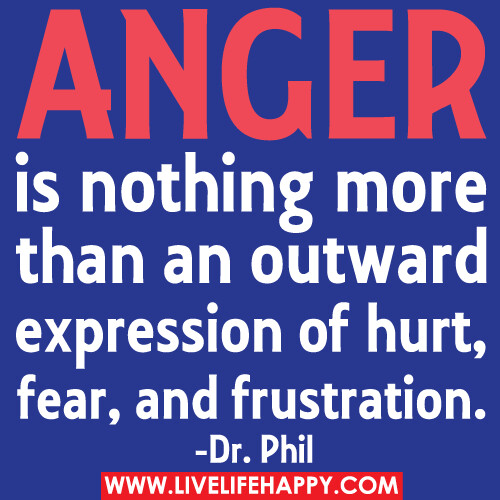
Kahlil Gibran said, "Tenderness and kindness are not signs of weakness and despair, but manifestations of strength and resolution." This blog is filled with the musings of a strong and resolved person, who cares deeply about the world and tries to spread light and hope to those who need it most.
Showing posts with label behavior. Show all posts
Oct 14, 2012
The Key
Working with kids who have behavior challenges is never, ever dull. So when I had a couple of quiet days in a row, I knew that there would soon be a volcanic eruption. That eruption came early in the week and lasted several days. What follows below is a true story from my classroom. I share it (and plan to share more each week) because I want you to know that there are many young people whom our society seems to fear, or whose behavior leads them to a place of punishment (sometimes directly to prison)...But those behaviors happen for a reason. It is my job--and the job of my colleagues--to figure out why. So when you read these stories, don't just gasp (the way my husband does) at the shocking nature of the behavior. Don't just shake your head and mutter about "kids today" the way a lot of people do. Think about what a kid must be going through, or what might be happening in their minds, that led them to act a certain way. Really, when you figure out the puzzle of why a behavior is occurring it changes the way you see a person. Empathy is a very powerful thing.
True story:
This week a girl was in study hall and she was very disruptive. She has this enormous belly laugh that made me smile when I first heard it (hard not to laugh along!) But she can roll that laugh for a full hour, non-stop. Her friends seem to enjoy getting her going, making sure that her laugh is all anyone can hear anywhere! Forget studying, thinking, talking, anything! When that laugh is roaring, there is absolutely no way anyone can focus. So she was laughing in study hall and wouldn't move away from her friends. She wouldn't quiet down. She refused adamantly and was referred to the Intervention Center to calm down. When the escort came to get her, she refused to go. Eventually, all other students in study hall were asked to vacate so that staff could try to calm her without any peers goading her on. It was the last period of the day, and when she finally calmed down her mom was called, and she was escorted off school property for the rest of the day. She was told she'd need to spend a day in the Intervention Center to problem-solve and get ready to return to study hall again at some point.
The day after her study hall disruption, she was in my room. She sat quietly in a study carrel at first, completing work that she was missing from class. Another student sat next to her in a separate carrel. (He had been referred to my class the previous day and had vandalized a wall pretty severely. He was doing a great job of earning his way back to class by processing through the incident, and completing his schoolwork.) The girl had a house key on a lanyard. She twirled it the way a lifeguard twirls their whistle...round her finger and back again, round her finger and back again. Eventually that twirling got boring, so she started whipping it around the wall of her study carrel, listening to it thump on the other side. But there was that boy on the other side, so the key kept whizzing by him as it hit the wall next to him. After a couple of near misses to his body, he did what I would have done: when the key came whipping over to his side of the wall he snatched it. The key came off the lanyard and he tossed it toward me. Now, I am totally uncoordinated and clutzy. That key may have been aimed at me, but I didn't see it coming until it hit the floor at my feet.
The key sat there for a moment and the girl said to me, "You need to give that to me."
I said, "No, I don't."
Almost immediately, she got up out of her seat. She headed toward me, and I thought she was going to get the key. She looked up at me mid-step and said, "You need to know that I do fight boys. All the time." As quick as a flash she changed direction and was leaning into the study carrel of the boy who'd been sitting next to her. There she began punching him repeatedly. He sat there, still, as she pommeled him; and I tried to maneuver in between them. Since they were both in a very small, confined space, I couldn't work my way in there. I had to grab her from behind and pull, all the while hollering for an associate who works in the room next door. (My own associate was escorting another student who'd had an earlier crisis back to class.) Help came quickly and together we separated the girl from the boy. I called my administrator on a walkie talkie to ask her what should be done next.
The consequence was that we would call the girl's mom to let her know we were sending her home. Physical violence will not be tolerated at school. Her actions led to one of the very few out-of-school suspensions doled out in my building. My associate escorted her off school property, and she was instructed to stay off the property for a total of three days. I tried calling her mom but got her voice mail. My administrator tried calling later and was able to get through. The girl's mom was very understanding and supportive, but also let my principal know that her family has come upon really hard times. They've lost their housing voucher and are being evicted from their home. They expect to be homeless by the end of the week. At this point, they don't know where they will live or how they will get by.
And so I think about it....how would I feel if I was a young teenager and knew that within days I'd be homeless? What if I'd finally found a way to laugh out loud and was told to be quiet? What if I felt so scared and frustrated about my life that I'd look for any way at all to let some of those feelings out--even going so far as punching someone?
For sure, the reason for the behavior does not excuse it. No matter what is going on in her life, it is not okay to punch someone who was just sitting next to her trying to avoid being hit by a key. There is no place for physical violence in my room, in our school, or in our community.
But now I can see why it happened. Now I can begin to talk to her about less harmful ways of expressing her fear and frustration. I don't know if it will work, but I have to try--not only to help with her behavior, but to see if there is anything at all our school can do to help her family through this hard time. We start our problem-solving journey tomorrow. Keep us in your thoughts and send some positive energy to Iowa for us--especially to her. Her family needs all they can get.
Labels:
at-risk youth,
behavior,
education,
teaching
Sep 16, 2012
The Angry Young Man
One particular student is on my mind this week. He is in the back of my brain, nagging and pulling--like a thread that needs to be unknotted. He is an enigma to me because I have not yet seen that kernel of goodness that I can always see in every single teenager I meet. I know it's in there, but I haven't dug deep enough to find it yet.
He is angry. Oh, so very, very angry. As I try to teach the parts of speech he mutters under his breath, "Where's the real teacher. You ain't no real teacher." He tells me I'm ugly. "Stop talkin' to me. I don't want you talkin' to me." It goes on and on, day in day out.
Sometimes, though, he answers a question in class. He names a character from the book we're reading. He participates briefly. It is those moments that keep me going. I know he is in there. Somewhere. Trying to get out. There is a young man who wants to learn, who wants to care and be cared about. I know it.
Then it goes back to the muttering under his breath. Anger personified. Verbally vomiting negativity like he's been infected by a viral hatred.
You may ask, "How do you put up with that? Why would you want to work somewhere where a teenaged boy insults you day in and day out?" Some days I wonder. But most days I know...
I do what I do because children don't have a choice about what family they are born into. Children don't have a choice about how their parents treat them. I know that this boy learned his foulness from a rotten apple that did not fall far from the tree on which it grew. I know that when a young man is so skilled at issuing verbal abuse at such a young age, it can only be because he learned it at a younger age from someone else.
Is it too late to change the tide? Is it too late to teach him to be more positive? I honestly don't know. But I do know that I couldn't live with myself if I didn't try.
Labels:
at-risk youth,
behavior,
teaching,
Teens
Sep 2, 2012
Behavior Challenges
| Flickr Image Credit: Psychology Pictures |
Kids are exhibiting behaviors because they are trying to communicate something. They are most often trying to gain attention from peers or teacher; or trying to avoid/escape something that is unpleasant. If we can figure out what they are trying to communicate and teach them to communicate the need for it in a more appropriate way, the behaviors will decrease and eventually (hopefully) go away.
Example from the trenches:
One of my students is constantly on his phone during English class (I teach English one period of the day and spend the rest of my day offering behavioral interventions/learning supports.) When I speak to other teachers about him, they say they are seeing the same thing in their classes. It doesn't matter how many times you redirect him, ask him, tell him to put it away--he is always on that phone.
Finally, one teacher referred him to my room for a behavioral intervention when he refused to put his phone away. He was upset about being sent out of class, but eventually told me two things: first, kids today are addicted to their phones and adults just don't understand; second, he was kicked out of his house and has no place to stay the night. He is texting people to find a place to sleep.
There was no guesswork involved here--he effectively communicated his needs to me as soon as he was away from his peers and away from the teacher. I tried to let him know that when a teacher asks him to put his phone away and he doesn't, it is perceived as disrespectful. A better way to do things might be to ask permission to use his phone. He argued, "They ain't gonna let me just use my phone!" So I told him I would email his teachers, asking them to give him a one day pass to use his phone if he asked appropriately. (One day only, because I want small steps, and because I don't know the kid well enough to know if he is playing me. I don't want to give him a free pass to use his phone for Facebook in the hallway every day!)
I did email all of his teachers with a request. I let them know that I don't think we can break him of his constant need to use his phone. We need to start small. So for ONE DAY ONLY, if he asks to use it appropriately--please let him use it. He's having some difficulties at home and hopefully he can work through them appropriately.
The next day in my English class, he had his phone out again. He had not asked appropriately to use it. I reminded him, "Remember--today you can use your phone if you ask appropriately."
He said, "Can I please use my phone to text my mama?"
"Thank you for asking appropriately. You may use your phone to text your mama, then please put it back in your pocket." He sent one text message and then put his phone in his pocket for the rest of the period.
In that situation it worked. The theory meshed with practice. We are on "Day One" of a small plan to change a problem behavior. There will be ups and downs. He will relapse and get grumpy about teachers asking him to put his phone away. But we started down the path of appropriate communication.
Things the Behavioral Approach Doesn't Do:
My student communicated two things to me that day he was referred for an intervention, and one of them is--in my mind--more significant than his addiction to his phone. He doesn't have a place to sleep. There is nothing a behavior plan can do to solve that problem. That takes good, old-fashioned human interaction, a support system, and help from outside agencies. It takes a lot of good relationships to help with those problems: relationships with kids, parents, and service providers. Those relationships take time. And when a kid doesn't have a place to sleep, it's hard to figure out where to get help (especially when you're new to the job, like I am.)
| Flickr Image Credit:Psychology Pictures |
The theory makes everything so cut and dried. Behaviors occur to communicate a message. Decipher that message, change how the kid delivers it, end of problem behavior. But what if the message the kid is inappropriately delivering is one of human suffering? In my first weeks on the job, I have received some messages loud and clear, "I am depressed." "I have no place to live." "We can't pay our bills and the lights have been turned off." Somehow, just teaching them more appropriate ways to say those things is not enough.
Behavioral consultants visit our school and tell us how things should be done. Their suggestions are to follow protocols and read from scripts. Everything is de-personalized and sanitary; there is no human element. It is all Pavlov's dogs and Skinner's rats. But how do you tell a kid to express their concerns about life more appropriately without helping to alleviate those concerns? I am learning that this is the true challenge of my new job: a balancing act. Alleviate those who want me to only use a behavioral approach by doing as much of that as I can; but also alleviate the kids' struggles and my own sense of right/wrong by using a humanistic approach--caring and problem-solving--whenever I can.
I pray that the behavioral approach and the humanistic approach are not mutually exclusive. Because there is no doubt in my mind that to be even slightly successful with these kids--I will need both.
Labels:
at-risk youth,
behavior,
education,
teaching
Aug 26, 2012
Week 1 Notes: Challenges of the New Job
| This is how crazy my brain feels! Flickr Image Credit: caffeina |
Honestly, I am so busy that I don't have much time to stop and think. There are so many things to do in a new job. I've been trying to prioritize, but there is just so much to learn that it's hard to know where to begin.
First and foremost, I want to build relationships with kids. But I also need to build relationships with my new co-workers. I need to contact parents to start building relationships with them, because no teacher can do good work without the support of parents.
Running a close second in the race for my attention are things like finding supplies (which I largely have to pay for myself), writing lesson plans, figuring out how to use my new laptop and other technological stuff, and keeping up on paperwork.
On top of all that, my family needs me. My kids started school. They have new routines, homework, and extracurricular activities that are starting up again. I am at my wits end trying to figure out how to get it all done. My brain is running non-stop, and it seems like no matter how many hours I put in towards finishing my To Do lists, nothing ever gets done. I am flying by the seat of my pants, every day, which is thrilling! Exciting! And very, very stressful.
Now that I've got one full week under my belt, I can tell you a little bit about my new responsibilities. I've discovered that I really have three distinct roles:
For one hour a day, I offer learning supports to a few kids who have struggles in specific areas of learning. They also have some behavioral challenges that stem from a wide variety of reasons-- personal/family situations, health reasons, or other psychological factors. I am their advocate when they attend classes in general education settings; I must offer them instruction in their areas of struggle to help them improve; and I must monitor their progress in reaching specific learning goals.
For one hour a day, I teach English to a small group of boys with severe behavioral challenges. I plan the lessons, and try to teach reading/grammar/vocabulary/writing while also modeling appropriate behavior, reinforcing appropriate behavior, and trying to ignore inappropriate behavior. It's a tough crew, and I am not yet comfortable in the role of a behaviorist. I had a huge snafu with curriculum: the book I ordered didn't come in time for the start of school so I had to look for something else to teach. I planned several lessons for a second book, only to find out that they'd read it last year. They requested that we read the second book in the Hunger Games Trilogy, Catching Fire, so I am madly writing lessons for that book now, and trying to get my hands on copies of the book for them to read aloud or read along with while I read aloud. I know from experience that problem behaviors are more problematic if kids don't have anything to do in class, which is why I am spending hours and hours trying to make sure I have something for them to do. Our program is so new that there is no set curriculum, no set plans...we are creating as we go. It is exciting, yes...but so, so tough.
The rest of my day is spent either in structured study hall with 1-2 of the kids from the behavior focused program OR supervising/collecting data about kids who had a severe behavioral challenge in their regularly scheduled class. If a student refuses to work repeatedly, cusses at a teacher, or does something that is really interfering with the ability of a class to function, instead of being kicked out of school or suspended, they come to my room. In my room, they must do some problem-solving. They must think about and acknowledge what was inappropriate about their behavior, make a plan to make amends and/or do things differently next time they are in a similar situation, and complete any schoolwork that they missed as a result of their behavior. While they are in my room, we are documenting their ability to problem-solve, monitoring their behavior, and trying our best to give the student the skills they need to succeed back in their classroom. If they can demonstrate that they've got things under control, then they can go back to their regular classes. If they can't, then they stay with me until they can.
It's only been a week, but I can tell you this:
- There will never be a dull moment!
- The team I work with is extremely talented, dedicated, and supportive.
- Deep inside--underneath all of the bravado, anger, and talk--there is a kernel of goodness inside each of the boys I've met so far. I see it already and just hope that they will show me the chink in their armor that will let me in.
I don't know how to be a proper behaviorist. But I know how to care. Hopefully, they will sense that, and tolerate all of my lack of expertise, all of the unknowns and unplanned lessons. Some day, I'll get it together. And so will they. I believe.
Aug 12, 2012
Newness: The Job, Teen Behaviors & Changing the Status Quo
![]() |
| View from the roof of my new school! |
In less than a week, it is the official start of school. I'm running around like a crazy woman trying to make sure everything is ready--kids have school supplies, I have lessons planned, and we have the groceries for packing school lunches. The new job gave me a heap of paperwork to fill out for insurance, payroll and all that other stuff. I have a new email address, access to a new-to-me student information management system, and a computer that is very different from the machine I have at home. I got a tour of the building last week and found out where to get copies made. I have a mailbox in the office that actually had mail in it! The little pieces of the new job are starting to come together, but the big picture won't really form until I meet the kids. Soon!
![]() |
| Another rooftop view. Loved that my new principal let us go on the roof! |
This morning I had time to catch up on my Google Reader feed, and found an article that directly relates to the new job. I've written about this issue before here on emapatheia: Bad Kids; Special Education, Suspension, Criminalization of School, Dropout Rates, and Race; Civil Rights in Education; Imagine: White Students Suspended Disproportionately More than Blacks. Here is a piece from Education Week discussing more data about Black students and suspension--this one relating to Special Education.
______________________
One in Four Black Students With Disabilities Suspended Out-of-School
By Nirvi Shah on August 8, 2012 9:10 AM
Students with disabilities are suspended about twice as often as their peers, a new analysis from the Civil Rights Project/Proyecto Derechos Civiles at the University of California, Los Angeles, has found.
Analyzing data that districts submitted to the federal Education Department's office of civil rights, researchers found that the rate of suspension for students with disabilities was about one in 13, compared with 7 percent for students without disabilities.
Most alarming, they said, was that one in four black students with disabilities was suspended at least once during the 2009-10 school year. That figure is 16 percentage points higher than for white students with disabilities. (Nearly one in six African-American students without disabilities was suspended from school during the 2009-10 academic year.)
Some of these students may have an explicit need for help with their behavior outlined in their education plans, which should warrant counseling or appropriate therapy, noted Daniel J. Losen, the director of the Civil Rights Project's Center for Civil Rights Remedies.
Read more at Education Week
__________________
__________________
I read this and am proud to be a part of a program to change the status quo in my new school. Our goal is to teach kids with behavioral challenges and disabilities the skills they need to be successful in any setting. We will work hard to adjust our adult behaviors, so that suspension--both in school and out-of-school--is an absolute last resort. Our goal is to reduce the number of times students are referred to the office for disciplinary measures. Instead of punishing kids with behavior issues and treating them like they are "bad kids", our focus is on their knowledge and skills. They aren't "bad kids"--they are kids who are lacking the necessary skills to succeed in a classroom setting. As teachers, is it our job to teach the skills necessary for reading, writing and math...but it is also our job to teach the behavioral skills necessary for academic learning. We can no longer assume that every kids just knows how to study, knows what it means to be "responsible" or "respectful". Those are very vague terms. My job now is to listen to kids who have struggles, help them problem-solve, and teach them (and re-teach them) the skills they need to be successful.
Programs like the one I will be working in are found mostly in elementary schools, but I haven't heard of many at the high school level. It is very, very exciting to be a part of something I see as ground-breaking. The focus is largely on behavior, and realizing that even though teenagers are in bigger bodies, their behaviors are sometimes not that different from little kids when you think about the why of it. We watched a video in my training last week to talk about that point (see below.) Maybe it will look familiar to some of you with toddlers!?! The point was to think about human behavior as having a function: usually to gain or avoid something. Instead of looking at the "bad choices" kids make, we look at their behavior as a form of communication. Instead of saying that a student is "bad" or has no self-control, or that his home life is to blame, we use their behavior as a clue: the student is lacking the skills to communicate more effectively. That outlook--it changes everything! The kid isn't "bad" anymore, they're trying to tell us something! The way they're telling it isn't necessarily the most effective way, so we need to figure out what they're trying to tell us and teach them a better way to do it. As a society, we seem to understand this concept with kids like the toddler in the video below, but not so much with teenagers. The behavioral approach is used frequently these days with kids who have Autism, too. Why not with teenagers--the most historically misunderstood people on the planet? My new job involves trying to figure out the function of teenaged behavior and teaching more appropriate ways for teens to communicate. Does this make sense to you? I hope so. It is exciting and different and challenging and cutting edge... I am not sure how it will go, but I am looking forward to finding out!
Here's the video from my training. Can you tell what this toddler is trying to gain or avoid through his behavior? (Watch! It's pretty humorously obvious :D)
Programs like the one I will be working in are found mostly in elementary schools, but I haven't heard of many at the high school level. It is very, very exciting to be a part of something I see as ground-breaking. The focus is largely on behavior, and realizing that even though teenagers are in bigger bodies, their behaviors are sometimes not that different from little kids when you think about the why of it. We watched a video in my training last week to talk about that point (see below.) Maybe it will look familiar to some of you with toddlers!?! The point was to think about human behavior as having a function: usually to gain or avoid something. Instead of looking at the "bad choices" kids make, we look at their behavior as a form of communication. Instead of saying that a student is "bad" or has no self-control, or that his home life is to blame, we use their behavior as a clue: the student is lacking the skills to communicate more effectively. That outlook--it changes everything! The kid isn't "bad" anymore, they're trying to tell us something! The way they're telling it isn't necessarily the most effective way, so we need to figure out what they're trying to tell us and teach them a better way to do it. As a society, we seem to understand this concept with kids like the toddler in the video below, but not so much with teenagers. The behavioral approach is used frequently these days with kids who have Autism, too. Why not with teenagers--the most historically misunderstood people on the planet? My new job involves trying to figure out the function of teenaged behavior and teaching more appropriate ways for teens to communicate. Does this make sense to you? I hope so. It is exciting and different and challenging and cutting edge... I am not sure how it will go, but I am looking forward to finding out!
Here's the video from my training. Can you tell what this toddler is trying to gain or avoid through his behavior? (Watch! It's pretty humorously obvious :D)
Labels:
behavior,
communication,
race issues,
special education,
suspension,
teaching
May 6, 2012
End of the School Year & Behavior Issues
Why do I mention these two kinds of kids? I've seen it in my own classroom and with my own children--the angst that the end of the year brings for some kids. Here's what I mean:
Some kids only eat at school. Our economy is so tough right now that the numbers of kids receiving Free or Reduced lunch is growing monthly. In Iowa, check the district-by-district numbers of students receiving Free/Reduced lunch by clicking here. Only 3 districts in the state have less than 10% of students enrolled receiving Free or Reduced lunch. 57 districts have more than half of their student population receiving Free/Reduced lunch. Where do these kids eat in the summertime? For some students, the end of the year is a time of worry. They know that they may not get to eat regularly until school starts again. With that kind of worry weighing on you as a child, would you be able to behave well?
In my own classroom, I know that I have students whose only mealtimes happen at school. Some communities like mine have a summer lunch program, where sack lunches are handed out daily in a local park; but not all communities offer a summer lunch program. I worry about my students; and I forgive some of their behaviors at this time of year because I know that they are worried about where their next meals may come from.
Some kids have little or no adult supervision over the summer. Most parents don't get summer vacation. Many families can't afford summer child care or camps. What happens to their kids? Many are left alone. Some parents are faced with deciding to go to work so that they can afford rent and food, or staying home from work to watch kids and receiving public assistance to pay for rent and food. Younger kids know that when summer comes, they are leaving a structured and supervised school environment to go to a very unstructured and unsupervised environment. For the first few days it might seem like fun to do whatever you want to, but after that kids may feel lost. They may feel abandoned. They could feel angry or sad and begin to get into trouble.
In my own neighborhood, there are kids who wander all summer. They bounce from house to house looking for something to do, usually knocking on a door just in time for lunch or dinner. Several boys who are in my son's grade frequent my house for access to snacks, air conditioning, and just some positive interaction. Summer is really hard on them. In May, they know it's coming. Whether they acknowledge it or not, in the backs of their minds they know what the summer holds. They may already be a little bit worried, and their behavior at school often is a reflection of that worry.
Some kids are scared of change. The end of the year means that kids are getting ready for big changes: a new grade next year, a new classroom, a new teacher. For some kids that is really, really scary. Some kids have more than just a new teacher looming because they have huge transitions happening: graduation. Whether it's graduation from elementary school, junior high/middle school, or high school, kids know that their lives are on the verge of changing dramatically. The unknown future looms in front of them. Not knowing what will happen next can be really scary for adults, too! If we have a hard time handling those major life changes, how can we expect kids to handle them? Kids who are pre-graduation, at any age, can have a wide range of reactions: cockiness, sadness, anger and avoidance of school are all things I see in my own classroom and with my own son (who is about to graduate elementary school.)
Those kinds of changes can be even more difficult for kids who have some kind of special need. I think all kids thrive when they are in a stable environment with consistent routines and structure, but kids with special needs absolutely require that structure and routine for day-to-day survival. Variation from the routine can cause some kids to lose their ability to concentrate, focus, and function. All the field trips, field days and fun stuff are drastic changes to the routine. They can cause kids to become lost, worried, and anxious. They don't always have the ability to express those feelings, though, and their behaviors may be the way they express them .
Two of my own children have ADHD, and one also has issues with Anxiety. It has been a rough spring for us so far. Stomach aches from anxiety, anger outbursts towards other students and teachers, inattentiveness and forgetfulness--all of these are issues my own kids have had in the last week or so at school. My kids don't have to worry about being supervised or getting meals over the summer. Can you imagine how a kid who has special needs AND has to worry about food and supervision over the summer might be feeling? Can you imagine how a kid with those issues might act in class?
The point of all this is that sometimes teachers, parents, and community members get frustrated by kids' behavior at the end of the school year and during the summer months. A lot of times, the first reaction we all have is to punish kids with office referrals, detentions, suspensions or calling the police. But the reality is that punishment won't really help most kids.
Think about it: how old were you when you could verbally identify your feelings about something and share them in a reasonable, calm way with an adult? I would bet that many, many adults still can't do it. If we can't maturely talk about our feelings and fears, how can we expect kids to do it? Kids exhibit behaviors because they are communicating something to us. Many times it is fear, worry, or anger at a situation that they are communicating. Instead of punishing them, why not teach them more effective means of communication?
I encourage teachers and parents who deal with kids having end-of-school year behavior issues to talk to your kiddos to see what might really be going on. There is a good chance that all of the changes happening at school are affecting them. Teach them how to communicate those worries. Give them a picture card, survey, matrix or list of feelings and ask them to identify what they're feeling. Help them try to explain why they're feeling that way. Then see if there's something you can do to help them make it better.
I encourage you all to look for and spread the word about any summer lunch programs offered in your communities. I encourage you all to keep your eye out for kids who look lost this summer. Invite them into your yard or your home for a snack and some positive interaction if you can. Don't look away from kids who are alone. Say hello. Interact. Pay attention. That simple contact might be enough to help them feel better, or at least feel connected to someone while school is out for summer.
Labels:
behavior,
education,
poverty,
public schools,
special needs,
students,
summer
Subscribe to:
Posts (Atom)